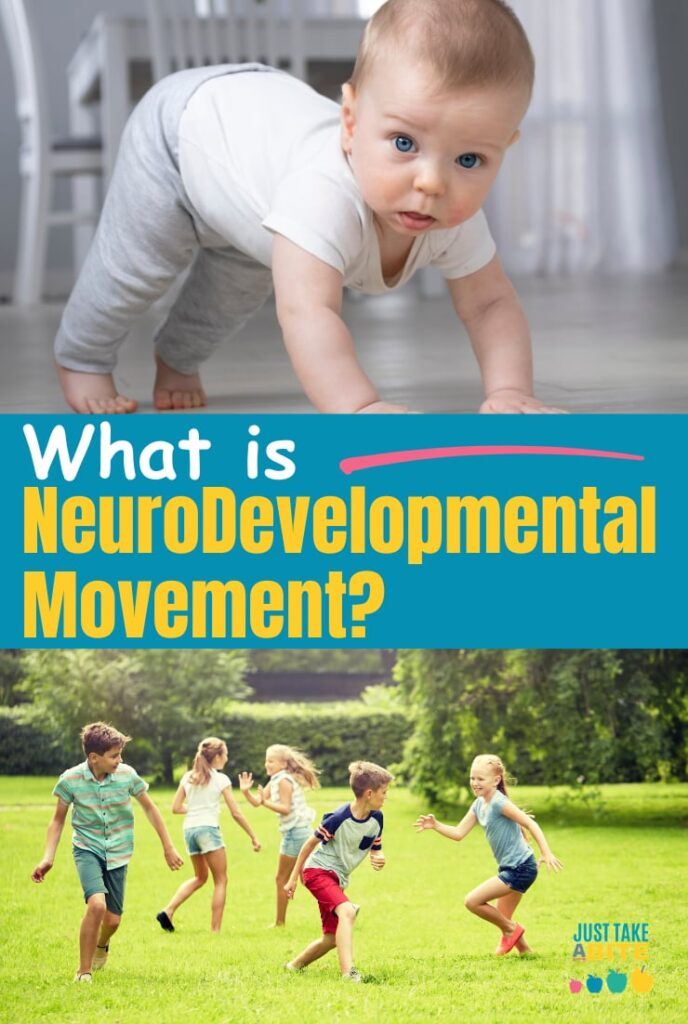
Is your child struggling with learning, behavior, mood, and regulation? NeuroDevelopmental Movement Therapy may be the solution you’ve been searching for.
Imagine you’re watching your child learn to crawl. She’s been doing little pushups for weeks. Even rocking on hands and knees a little bit. One day as she’s laying on her tummy, she finally starts some forward motion.
As the days go on you chuckle a bit every time she belly crawls because it looks like she’s training to be in the army. She’s pushing along with her right foot while pulling herself forward with her hands. Sometimes she almost seems to spin in circles because of her laughable movement.
Development takes time, so you don’t give it a second thought.

Developmental Movement for Children
Before you know it, your daughter is on all fours, creeping along. Now it looks like she’s a bike with a kickstand, still sticking that right leg out. You make sure to get some good videos to show her when she’s older.
Let’s pause for a moment here. Is this just a funny story or something that actually matters? How many parents don’t remember their child having an odd crawl?
The truth is that movement absolutely matters.
Every child should go through the same sequence of developmental movements from the womb on. Any deviations in these movements can have consequences down the road.
What are NeuroDevelopmental Movements?
The human brain develops at different levels, starting with the medulla and spinal cord and moving up through the pons and midbrain levels. This development happens in the first year of life. Beyond this a child’s brain starts to develop at the cortical (or thinking/logical) level.
Each of these developmental stages coordinates with specific movements and sensations of the body. For example, at the pons level of development (around 2 to 7 months of age), a child begins to develop horizontal eye tracking and an accurate perception of heat, cold, pain, and hunger. A child also begins to belly crawl at this stage.
Each sensory input and motor output at a particular developmental level is critical for optimal brain function. If any movement is skipped or done incorrectly symptoms may show up later.

NeuroDevelopmental Movement Disorders
While there is no way to predict how a gap in development will impact a particular child, there are many common symptoms and diagnoses that can be classified as NeuroDevelopmental Movement disorders.
Some common neurodevelopmental gap symptoms include:
- Academic struggles with reading, writing, spelling, or math
- Poor pencil grip and handwriting
- Poor executive function
- Lack of focus
- Lack of body control
- Extreme anger
- Lack of feeling of hot and cold (dress inappropriately for the weather)
- Lack of hunger/picky eating
- Lack of feeling pain
- Lack of coordination
- Social awkwardness
- Bed wetting into the elementary years
- Hyperactivity
- Lack of empathy
- Symptoms associated with ADD/ADHD, OCD, ODD, and Dyslexia
This isn’t the full list, but it’s already quite lengthy. Many parents will see something on this list that their child struggles with.

What is a NueroDevelopmental Movement Program?
The modern-day strategies for handling most neurological disorders is two-fold:
- Behavior modification
- Medication
Sadly, these are life-long modalities that require a lot of time, energy, and money. And often they don’t actually work.
On the other hand, a NeuroDevelopmental Movement Therapy program replicates the developmental sequence to rewire neural pathways and actually eliminate the problem. There are no weekly appointments for therapy, no learning new ways to handle every situation, and no medical interventions.
NeuroDevelopmental Movement® evaluates skills at different developmental levels, and considers reflexes, movement, and sensory development. If there are gaps at any level, work is begun at the lowest level to enhance functionality and complete the required developmental task, by replicating the activities that a neurologically typical child instinctively utilizes to integrate the brain.
NeuroDevelopmental Movement Exercises
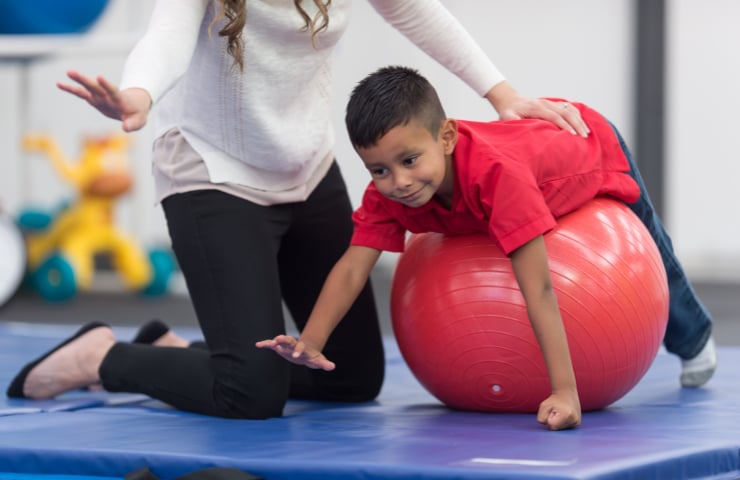
Exercises as part of an NDM program include specific movement, reflexes, and sensory integration. For example, most children must relearn to belly crawl and hands-and-knees creep correctly for proper neurodevelopment. They must also learn how to properly move from homologous to homolateral to cross pattern movements.
Exercises can take anywhere from 30-60 minutes per day. A child may graduate from the program between 6 months and 3 years, depending on the degree of developmental gaps and the consistency of the exercises.
How is NDM Different from Reflex Integration?
Reflexes play a key role in development and neurological function. However, they are only one part of the equation. Specific reflexes provide the operating instructions to the brain. But the rest of the program must run and produce the proper outputs.
This is why NeuroDevelopmental Movement Therapy uses a combination of specific movements, reflexes, and sensory work. All three are required in order to actually rewire neural pathways. You must have both the inputs and the outputs.
Does Behavior Modification Work for Developmental Gaps?
One of the most common challenges of my clients is that their child seems to learn something one day or one minute even and then forget it the next. Maybe you look your child in the eye and tell him not to color on the wall. You even make him repeat the instructions back to you. Five minutes later…he has colored on the wall. It feels maddening.
Or maybe you are helping your child learn the alphabet. One day you teach her the letter N. You trace the letter. You talk about what sound it makes. You sing a fun song about the letter N. Perhaps you even make a fun bird nest craft to reinforce what you’re teaching. The next day you point to the letter N and ask what letter it is. She looks at you with confusion as if she’s never seen the letter before.
The bottom line is that you can use a variety of tactics to try to teach and reinforce behavior. You can incorporate all of the senses, use reminders, and set up a whole-house environment geared toward your child’s behavior. But if you are not actively working on changing the brain, you are simply making a lot of work for yourself. The end results is a well-trained parent and a child that has not learned anything.
Can NDM be Done at Any Age?
While early intervention can prevent challenges down the road, NeuroDevelopmental Movement Therapy can be utilized at any age to rewire neural pathways. Whether a child is just learning to crawl or someone is moving into a nursing home, NDM has benefits.
How Do I Get Started with NeuroDevelopmental Movement?
One of the most amazing things about an NDM program is that it can be done from the comfort of your own home. No need to drive to the therapist multiple times a week. But in order to get started, your child needs an assessment.
A developmental assessment looks at how the brain is functioning at the pons and midbrain levels (the pre-cortical levels). With this information as the starting point, a trained NeuroDevelopmental Movement Consultant can then create a personalized program for you to do with your child daily at home.
Some consultants work only in-person, while others are able to assess a client virtually. Learn more about my work with clients in Michigan HERE or find a consultant closer to you HERE.
A reassessment should be performed every three months to assess progress and make adjustments to the program.

Should NeuroDevelopmental Movement Therapy be Combined with Nutritional Therapy?
NeuroDevelopmental Movement is a complete program for rewiring neural pathways. That being said, there may be additional imbalances contributing to your child’s struggle. One of the biggest factors in a child’s health is his or her nutrition. A deficiency or imbalance in vitamins and minerals can be also be part of the root cause.
For this reason, it’s highly effective to combine Nutritional Therapy with NeuroDevelopmental Movement for a complete program. The mind and the body work together to create true health.
Does NeuroDevelopmental Movement Work?
NDM almost sounds too good to be true. Does it actually work? Let me share my experience.
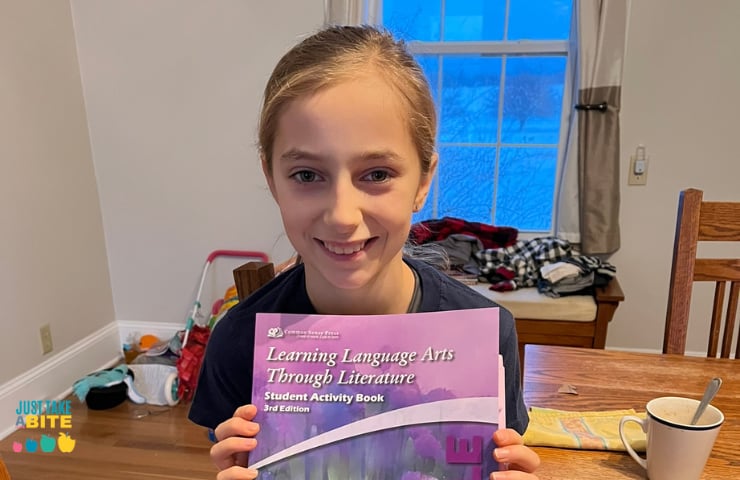
My daughter was struggling with schoolwork and reading. Things just weren’t clicking no matter which curriculum or method we tried. In third grade she got the official diagnosis of severe Dyslexia.
Shortly after her diagnosis, I heard about NeuroDevelopmental Movement Therapy. I knew immediately it was the answer I was searching for. The real solution.
I became certified in NDM, not only for my own daughter, but to help other children as well.
After six months of committing to my daughter’s NDM program every day, she graduated. At her second reassessment my daughter had no signs of developmental gaps at the pons and midbrain level.
But what really matters is that she is now reading at grade level. Before NDM she wouldn’t even try to read. Now, she’s joyfully reading books that are hundreds of pages long.
Not only did we see improvement in her ability to read, but she also became much more regulated, independent, and confident. She is also excelling in her piano and viola playing.
We didn’t spend hundreds of dollars for weekly tutors or therapists. But we did get to spend lots of quality time together. And my daughter felt empowered to achieve her full potential.
My daughter is just one example of the power of NeuroDevelopmental Movement. The stories are endless.

Developmental Gaps From the Start
This post started with a funny story about a child with a kickstand leg. But the reality is that this is an early sign of developmental gaps and should not be ignored.
We live in a culture where kids are distracted and “contrapted” from a young age. Bumbo seats, bouncers, swings, screens,…they all inhibit proper development.
Proper neurodevelopment requires movement and connection. This means parents must engage with their young children and let them move and explore unhindered. A good rule of thumb for infants is 50% of their waking hours held/in a carrier and 50% of the day on the floor in a safe environment.
Proper development begins in the womb. But even if there are gaps for known or unknown reasons, NeuroDevelopmental Movement may be the solution you’re searching for. Learn more about getting started HERE!