Ever heard of the Vitamin A Detox Diet? Wondering if it is the cure you’ve been searching for or just the next dietary fad? This is our family’s journey on the VAD Diet and why we stopped it after a year.
I hope this is the last one.
The last post I ever write saying why yet another diet failed.
The last time I go to an extreme in the search for healing.
The last prescribed diet I ever attempt.
Though I can’t make any guarantees. I’m a tactile learner. I have to try things before I can assess them.
But I’ve done it before. I’ve done all sorts of experimenting with high this, low that, add this, remove that. Then I went on the GAPS Diet in 2010 and got my health way off track. After recovering from it, I told myself I’d never do it again.
Well, never say never. I did it again.
What is the Vitamin A Detox Diet
In November of 2018 I embarked on the Vitamin A Detox Diet, spear-headed by Grant Generux and Dr. Garrett Smith.
The theory is that Vitamin A is not actually a vitamin, instead it is a toxin. I wrote about it in detail in my post answering the question “Is Vitamin A Really a Vitamin?” It was my first post on Vitamin A – published exactly one year ago today!
I thought it was the answer I was looking for. I did a lot of reading and research. My infant was struggling with breastfeeding issues that nothing seemed to help. So I dove in.
The basic idea is to eat a very low Vitamin A diet in order to drain the body of stored Vitamin A. This in turn should resolve most health problems.
Good theory. Not so good practical application. And not sufficient evidence to support it aside from extreme examples.
Why We Stopped the VAD Diet
Our journey started out great. I cut out high Vitamin A foods. I did HTMA to assess my body’s needs. I faithfully took my supplements. Even when the recommendations seemed to change on a daily basis. Add this. Wait, no, that will make you worse. Try this. Oh, wait, that’s not good at all (if only I could have all of the money back that I wasted on strange supplements that either didn’t work or made things worse!).
This food is on the ok list. Now it’s horrible. Oh, now it’s ok again. I knew it was a new theory and we were all learning. But the wishy-washy recommendations were a red flag.
The original time-frame of the diet was anywhere from one to six months. That seemed doable. But as time went on it kept extending – one year, two years, five years. Hmmm…
We did see some progress at first.
Then we got to the 6-7 month mark. And things changed.
I went from feeling good to my digestive system basically shutting down overnight. And six months later it still is not very functional. It’s been a hard setback to accept as I had worked so hard for years to get where I was.
My oldest went back to struggling with focus.
My eight-year-old’s eczema and food reactions started coming back.
My five-year-old’s leg pains and poor appetite returned.
My nursling started to sleep poorly and react to foods again.
Basically it all came crashing down.
I know how it goes. Detox is a crazy process. Sometimes you go two steps forward and one step back. So we stuck with it. I thought maybe it was just a bump in the road to full healing. But that bump turned into one month, then two, then three,…
It wasn’t detox at all. It was deficiency.
Does a Low Vitamin A Diet Cause Deficiencies?
I intentionally worked with a naturopathic doctor when embarking on the VAD Diet to avoid problems. As I mentioned, I was breastfeeding and of course run down from lack of sleep. I didn’t want to make things worse.
But even with multiple HTMAs, my increasing deficiencies were not addressed. I had to figure that out on my own.
The biggest deficiencies from the VAD Diet that I experienced were:
- magnesium
- all of the B vitamins, especially B1
- an imbalance of macrominerals
- zinc
- possibly Vitamin E
- and likely Vitamin A!
As time went on some of my symptoms got worse and worse. These included:
- tinitus (ringing ears – multiple times daily)
- tingling hands and feet/extremities going numb
- low energy
- low milk supply
- inability to focus/think clearly
- slow digestion
- food intolerances
- gallbladder pain
- eye twitching
- excessive thirst/inability to hydrate
- candida/yeast/rashes/itching
- edema
- hypothyroid
I hit my breaking point. The definition of insanity is doing the same thing over and over expecting different results. Well, I was going insane. I had to change directions. And I did.
At first I was going to go gradually. But then my body started to crave so many nourishing foods. I just let go of rules and ate what sounded good. It was wonderful!
I have still had to use supplements to get back in balance. My body is so depleted from pregnancy, breastfeeding, and restriction. It is going to take a while to get where I need to be. I look forward to the day when I don’t have a pile of supplements to take every morning!
Does Vitamin A Impact Thyroid Health?
I briefly want to address thyroid health. I was diagnosed with hypothyriodism in 2006. I’ve been on medication to control it ever since.
Ultimately my goal is to heal enough to get off of medication and control things with diet and lifestyle. But so far I’m not there. And I suspect I won’t get there until I am done breastfeeding and have some time to focus on just my health. I’ve been pregnant or breastfeeding for the past twelve years!
So for now I need medication. While on the VAD Diet I started lowering my dose. I thought I was getting better. I heard others talking about improving thyroid health. So I took a risk and reduced my medication. But I think it was a big mistake.
I started to feel all of the same symptoms I had after my miscarriage in 2013. Weight creeping up no matter how little I eat or how much I exercise. Feeling puffy all the time. Lowered body temperature. Extra tired. Sluggish digestion. All of my hypothyroid symptoms returned.
In June of 2018 my thyroid labs were great! Then I started lowering my meds on the VAD Diet. In February of 2019 my levels were getting worse. But I ignored the numbers. I felt ok for a little while. Then not so much.
I just had a new round of bloodwork (January 2020). Sure enough, it shows things have gotten worse. Actually a lot worse. I need to really bump up my medication dose. Back to where I started. I know it’s temporary, but still disheartening. My Free T3 has not been this low in years. In June of 2018 it was at the top of the range (ideal). Now it is at the bottom. My Free T4 is on the low end as well. It should be mid-range.
Now I know why I’ve been feeling some of my old symptoms return. I’m in a serious hypothyroid state right now.
So does Vitamin A impact thyroid health? I think so. There are many factors. But a low Vitamin A diet is not a diet I would recommend for improving thyroid health. It definitely made my thyroid issues worse. 
Is Vitamin A Essential for Kids?
So far I’ve mostly talked about my own health. But I do want to address my kids as well. They were all on the diet. Though I never had my oldest three on full restriction. And in hindsight I’m so glad! They were able to transition off the diet pretty easily and have been making strides ever since.
Thankfully they still ate some eggs and pork to help minimize deficiencies.
What I really want to focus on is my toddler. He was on the full diet with me from day one. We ate the same foods.
On the whole he seemed to do well for a while. He was growing well and nursing well.
But there was one major red flag that I should have picked up on sooner. His speech.
All of my kids have been early talkers. My oldest knew all of her letters and could count to twenty before she was two! So when my youngest wasn’t saying anything by his first birthday I was concerned.
Just as we were starting the diet (7/8 months old) he was starting to talk. He was saying “mama” and “chick” (when he saw our chickens) and “out” (when he wanted to go outside).
And then that all stopped. No more words. Just “eh” every time he wanted to say something. He was frustrated. We were all frustrated.
I could tell he’s very smart. He loves to read and will sit through book after book and you can tell he remembered every picture and knew what everything was. But he couldn’t say anything. There was a disconnect.
I have heard others complain of this symptom as well – they can’t find the right words or finish sentences. There is some type of miscommunication between the brain and the mouth. And it impacted my son big time.
Until we stopped the diet. It was crazy. Within a couple weeks he started saying more. And now he basically repeats every word he hears. He says all of his siblings names. He names every animal and picture in the books we read. It’s so fun to see him be able to communicate effectively.
Just the other day my husband commented, “His speech has exploded in the last two months!” It truly has. My Father-in-law also commented on my son’s speech when he visited for Christmas. He couldn’t believe the difference. His poor little body was deficient as well. I’m so glad we are getting him back to full health! It gives me such joy.
Whether it is Vitamin A or the other deficiencies that had the biggest impact I can’t say. I’ll probably never know. But I do know that the VAD Diet negatively impacted his development.
I also wanted to mention his size. While his speech was delayed, his growth was off the charts! That might sound like a good thing, but I’m not sure. At his last checkup he was in the 97th percentile for height. If you’ve ever seen my family, you know that we aren’t even remotely close to anything called tall.
Most people think my eleven-year-old is seven or eight because she is so short. I’m only 5’3″. My husband isn’t very tall either. So having our youngest several inches taller than his siblings were at this age seems strange.
It could just be a different mix of genes. We have extended relatives that are tall. But it could also be the diet. I have heard some claim they are getting taller on the VAD Diet. I also heard the other day that one of the best predictors of longevity is height, specifically the shorter you are, the longer you’ll live. If those statements are both true, then it would seem that the VAD Diet is shortening life span. Just an observation. But I’ll be curious to see if his growth continues at this pace or if it slows down now that we are off the diet.
Interestingly, a few days before publishing this post a reader that had been on the VAD Diet contacted me and expressed concern over her young son’s growth – how tall he was! So there may be something to it.
Why Salt is Important for Health
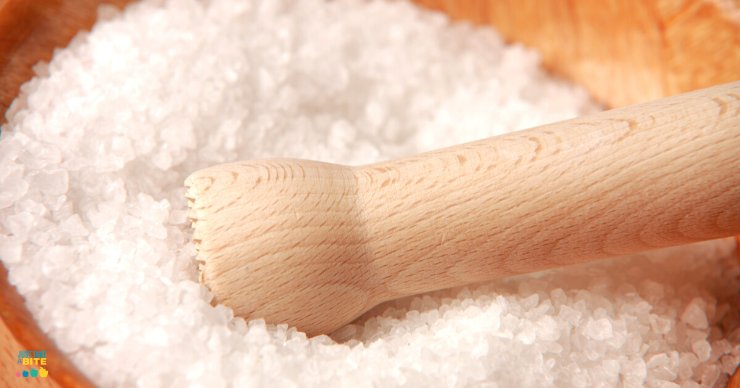
When starting the VAD Diet and working with my ND, I was told to stop eating unrefined sea salt – that it contained toxins. So I switched the family to basic salt – sodium chloride.
At first I also added potassium chloride to it to get a balance of minerals. But the potassium gave me horrible anxiety. So I quit that.
Back to just plain salt.
But it never felt right. I could hardly taste it. I had to put so much on my food. Not a big deal I thought.
But it started to be a big deal when I could never get hydrated. I would guzzle glass after glass of water without quenching my thirst. I even added extra salt to my liquids, but it didn’t help.
Then my legs started swelling on a daily basis.
My electrolytes were so out of balance. My sodium intake was too high compared with my other macrominerals.
As we were coming off the VAD Diet I switched back to Real Salt. It was wonderful!
I could taste my food again. I could feel things absorbing. My insatiable thirst went away, and my swelling went down.
Why Healing Diets Fail
Last year I tried a new diet that made big promises. And it failed us. In quite a few ways as you can see. But it’s not the only one. Ultimately most healing diets fail.
That may sound extreme. I mean, they all have some merit and of course success stories. But they also have potential problems.
All healing diets have their own spin on what food/nutrient/component is toxic/inflammatory/etc. They all have their own spin on what is healing and restorative.
But at the end of the day they are all restricted diets. And any restricted diet done long term is going to cause problems – not only deficiencies and imbalances, but also anxiety, mental struggles and orthorexia for some.
You can find some healing with pretty much any major dietary change. It doesn’t have to be a diet with a label. Any time we shake things up, it will help our bodies do some detox and healing. Within about two weeks of starting the VAD Diet I had a noticeable detox. I wish I would have stopped there.
This is why most people see progress on any healing diet for up to six months. But as they go longer they see problems arise. Their bodies get out of balance. Deficiencies are created. They have lost their ability to eat intuitively and based on their needs day in and day out.
So if you want some healing – a little detox to propel your health forward -just make a change. If you eat a lot of nuts, cut them out for a month. If you eat an apple every day, switch to grapes for a few weeks.
Any time you eat the same foods over and over you could be creating some inflammation.
Don’t jump right to a restricted diet as the solution. Just make a change. After a few weeks your body will naturally do a little detox and rebalancing and you’ll probably feel better.
It’s good for your microbiome to make changes and feed different bacteria. That doesn’t require a long-term restrictive diet.
Life After the VAD Diet
So, now what? How are we eating and how are we feeling? That is what most people ask me.
First, I don’t have any rules about how we eat. Just real, whole foods that sound good and that we tolerate. That’s it.
My girls drink raw milk. My boys don’t tolerate it. The oldest three eat eggs. My youngest doesn’t tolerate them. We all eat homemade sourdough. But other than that we are gluten-free.
I’m always playing around with foods and finding out what balance and ratios work best for us. It varies day-to-day. But it is highly individual.
As I study to become a Nutritional Therapy Practitioner I am reminded of the importance of bio-individuality. We each have a unique set of genes, stresses, circumstances, health issues, environments, and more. Even the weather and the seasons play a role. So how we live and eat on a daily basis is so individual. There is no one-size-fits-all approach.
That is how I will approach my practice, my one-on-one work with clients. Every person has different needs and by looking at both the big picture and the details we can help figure out what works best for them.
A few areas of progress since going off the diet (mostly my own) have been:
- ear ringing is rare
- eye twitch is gone
- gallbladder pain is gone
- tingling in hands is gone
- excessive thirst is gone
- swelling is mostly gone
- skin is clear and healthy and soft – no more cysts!
- hair regrowth like crazy
- more energy and the desire to move! I’ve even done a little jogging (instead of slow walking) and have increased the intensity on my stationary bike.
- milk supply is good
- able to think and focus much better
- toddler’s speech
Some things that we’re still working on:
- digestion
- liver health
- candida/yeast
- hypothyroid
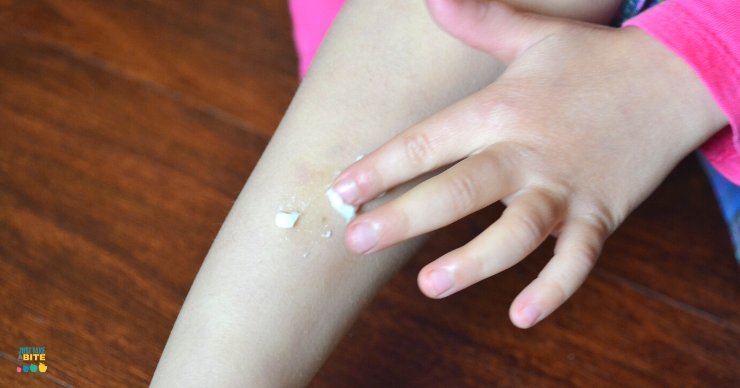
- daughter’s leg pains (we use magnesium lotion for them)
- food intolerances for everyone
 The Emotional Component of Healing Diets
I also wanted to mention the emotional, mental and social impact of a highly restrictive diet. We are used to having food restrictions. We’ve been dealing with food allergies for six years. And before I even had kids I was playing around with diet.
But limiting our food choices to such an extreme takes a toll on the family. My husband was frustrated that our menu was so limited and that we couldn’t eat anywhere besides home. We even had a garden full of food that only he was eating.
It puts a strain on relationships. And it’s hard to feel so different. Not only are you going against the grain with the way most people eat (Standard American Diet). But you are also going against your group of real food friends. It’s very isolating.
Is Vitamin A Toxicity Real?
That’s a tough question to answer. I do think that you can become toxic from just about anything in large enough amounts. And there are numerous case studies of patients with hypervitaminosis A. So I do think it’s a real condition (my opinion).
But is Vitamin A a toxin in and of itself? I don’t think so (again, my opinion). I’ll leave it at that. Do your own research to come to a conclusion.
Is the Vitamin A Detox Diet Healthy?
This is another tough question since there are so many unknowns. And again, it’s very individual.
At this point in time I can’t recommend the VAD Diet to anyone. Even after writing a whole book on how to do the diet with kids, I can’t support it.
I took my book down. Even though I spent a lot of time and energy creating it. Even though it was one of my few income sources at the moment. I don’t do things just for money.
There is no real way of knowing if the progress we made at the start of the diet was from the reduced Vitamin A or if it was simply from making a big diet change and adding supplements. What I do know is that done long-term it caused serious deficiencies.
To me a detox diet is meant to be both healing and short-term. You get a toxin out and then get back to being able to eat a wide variety of food. If the toxin is in most of the food, it’s not really a detox diet. It’s a permanent lifestyle of restriction. And if that lifestyle is only sustainable with supplements because it’s causing deficiencies, it’s not a good one. Just like I don’t think a vegan diet is healthy.
If I want to detox aluminum from my body, I follow a protocol. Then once it’s out, my body is functional and I can eat a variety of food, still trying to minimize exposure to aluminum. If the toxin is in the food, then a return to “normal” is not possible. Or if you do return to what was your normal diet, then it’s hard to say you believe Vitamin A it a toxin. Else you wouldn’t consume it.
And if it is a toxin, why is it in so many foods? There are still too many questions that just don’t have good answers.
A better long-term solution is to work on the health and function of your digestive system, liver, and gallbladder. If they are healthy, your detox pathway is healthy, and you can deal with toxins effectively.
The End of the VAD Diet
As I wrap up this post, I am putting an end to my involvement with the VAD Diet for the time being. Or maybe for good. I’ll watch from a distance. It is an interesting theory. And I’m curious to see how others fare on the diet.
But I will not be writing or talking about it any more.
I am disabling the comments on this post. I have given my reasons for why we stopped and talked about our journey. This is where it ends for us. If you have an earnest question you are always welcome to email.
I am heading into 2020 with renewed energy and focus. I am getting back to my passion – to give parents hope that they can overcome any feeding challenge.
I am focusing on my schooling to become an NTP and be certified to do HTMA (hair tissue mineral analysis). I am focusing on opening my practice to work one-on-one with moms and kids.
And I’m excited to continue expanding my Eating Styles Membership.
Lest anyone think I regret the past year, I don’t. Sure there are things I would have done differently had I known then what I know now. But that is how I learn. And boy have I learned a LOT this past year.
Not only about my own health and my family’s health, but health in general. I have learned what I believe and how I want to move forward.
I have also learned to be careful who I work with and associate with. Character means a lot to me. I’ve had numerous amazing partnerships this year, but also a couple that do not align with my beliefs. In the future I will be a bit more cautious before I work with individuals and brands.
I’m learning about the work of Ancel Keys right now in the book The Big Fat Surprise by Nina Teicholz. I thought this quote about him was very profound and holds true for so many trying to do groundbreaking work in health and nutrition.
Keys wanted his hypothesis to be presumed right until proven wrong. Yet – and this is an important point – science is not like the justice system. Whereas Americans are presumed to be innocent until proven guilty, scientific knowledge is just the opposite: a hypothesis must not be presumed right until a pile of significant evidence grows up behind it, and even then, you can never be entirely sure. All that one can ever really say is that the preponderance of the evidence tends to support one idea over another. Keys’s unwavering belief in his own hypothesis, even in its formative stages and even in the face of conflicting evidence, however, suggests he was willing to stray from these scientific principles to defend it.
The fame and the desire to be right overpowers the desire to actually practice good science.
I loved this quote as well:
Resisting these ‘idols of the mind,’ as the great seventeenth-century theorist Francis Bacon dubbed them, is exactly what the scientific method tries to do. A scientist must always try to disprove his or her own hypothesis. Or, as one of the great science philosophers of the twentieth century, Karl Popper, described, ‘The method of science is the method of bold conjectures and ingenious and severe attempts to refute them.’
If someone makes a health claim and only tries to show you support of it, question them. A good scientist will try to DISPROVE his or her hypothesis. If there is no way to disprove it, then it might be valid. But if there are numerous cases/studies that don’t support it – that is a red flag. To me, that is what is happening with the Vitamin A Detox Diet. Proponents are trying to prove it, but not allowing any talk of cases where it is disproved.
As Pete Ahrens stated in 1957:
When unproved hypotheses are enthusiastically proclaimed as facts, it is timely to reflect on the possibility that other explanations can be given for the phenomena observed.
In other words, there is far too much we don’t know yet to so boldly claim that Vitamin A is a toxin and has no purpose for the human body. This being a very small-scale epidemiological study does not prove anything. Maybe cutting some of the high Vitamin A foods simply changes one’s fatty acid balance, giving more anti-inflammatory fatty acids to balance the pro-inflammatory ones? There are many ways to look at it.
Lastly, I did want to say that today’s post was about the main reasons we stopped the VAD Diet. There is definitely more to the story on both a personal and professional level. But I choose to keep that private. So if what I wrote seems a bit incomplete, it is. But it will have to do.
Just today in my devotions I read this:
Fulfilling God’s purpose is better than popularity. Loving God’s people is better than pleasure. Having God’s peace is better than possessions. – Pastor Rick Warren
That pretty much sums up my mindset heading into 2020.
Does a Healthy Diet Exist?
Absolutely healthy diets exist! But you won’t read about them in a best-seller or an eCourse. What is healthy is up to you. Your body knows what it needs.
I have not tried AIP, keto, carnivore, or even a candida or parasite cleanse. I don’t really intend to either. In the end they generally lead to the same destination. Not listening to your body’s needs and nutrient deficiencies.
A healing protocol should be temporary. Supplementation should be temporary. Any deviation from a balanced diet should be temporary and just a stepping stone to get back to variety and good health.
What that looks like is different for every individual. The time-frame is individual. Circumstances are individual.
I know we live in a world where everyone is looking for a magic pill or cure or that one thing that will turn everything around. Even in the realm of real food where grains are the root of all health problems and liver is a life-source. We all just want to feel good.
But feeling good will not come from one supplement or one dietary change. Feeling good takes work every single day. It takes moving your body, getting enough sleep, minimizing toxin exposure, taking time to relax, chewing well, and more. Health is a lifestyle, not a detox diet or vilifying a single food or nutrient.
Thank you for going on this journey with me. I hope you have learned right along with me, and I hope you are ready to pursue a healthy lifestyle as we enter the New Year.
With that I’m saying goodbye to the Vitamin A Detox Diet. Time to move on.