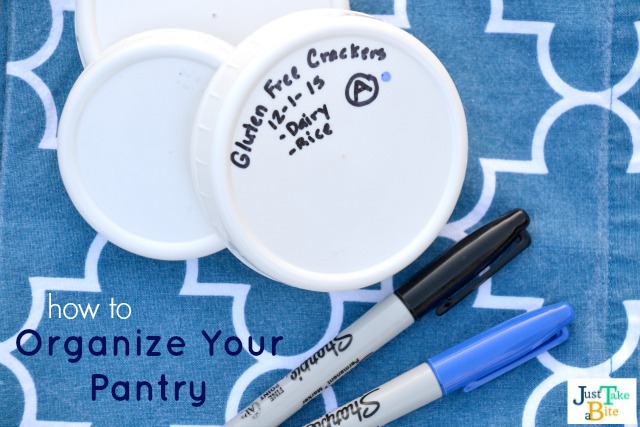
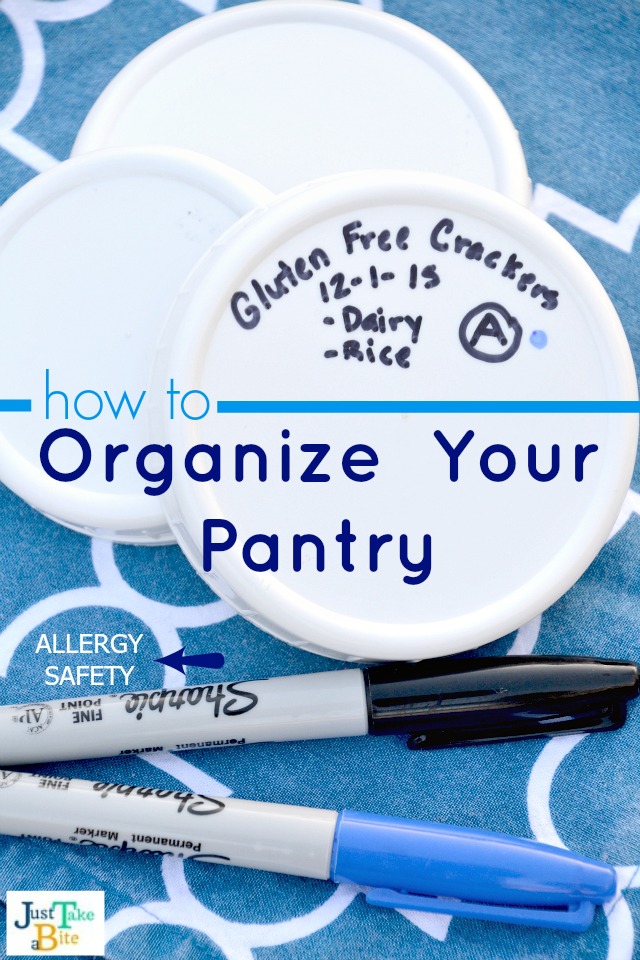
Start the new year with some organization! Here are my top pantry organization tips for allergy safety.
There’s no way around it. Living with food allergies is a challenge.
What’s worse? When you have multiple family members with different allergies!
If I combine all of my kids’ allergies we are pretty much allergic to everything. That is not an exaggeration. Our allergies even include foods like rice, potatoes, apples and chicken.
It goes without saying that I have to be very organized to keep everyone safe. Especially my toddler that will put anything she finds in her mouth.
Whether you have one child allergic to one food or a host of allergies spanning the whole family these tips will help you stay organized and keep everyone safe.
Even if you don’t have any allergies these tips will help you keep your pantry organized and easy for kids and baby-sitters to navigate.
This is actually my second HTMA. I did my first with my local NP a few years ago. But this post is about my most recent HTMA.
I had intended to write about it much sooner since I did my HTMA in May! But I really didn’t have anything to write about for a long time. This has been such a slow process for me. And discouraging at times when I hear of other people that see improvement in a matter of weeks.
Here we are six months later…and not a whole lot has changed.
What is HTMA?
But before I get into the details of my story I just wanted to quickly mention what HTMA is.
According to Dr. Wilson,
“Hair tissue mineral analysis…is a soft tissue mineral biopsy that uses hair as the sampling tissue.
The test measures the levels of 20 or more minerals in the hair with an accuracy of plus or minus about 3%. This is about the same level of accuracy as most blood tests, or a little better.”
“Minerals are sometimes called the ‘sparkplugs’ of the body. They are needed for millions of enzymes as co-factors, facilitators, inhibitors and as part of the enzymes themselves. As a result, they have a great deal to do with the health of our bodies. By analyzing mineral imbalances in the body, one can learn a lot about the causes and correction of hundreds of common physical and mental health conditions.
A specific class of minerals, the toxic metals, are also extremely important today due to a nutritionally depleted food supply and the presence of environmental toxicity almost everywhere on planet earth. Studying toxic metals is thus very important today to monitor their spread and learn about their many damaging effects upon the bodies of human beings, animals, plants and other organisms.
Even more can be learned about human and animal health by studying the ratios of the major minerals in the body. This is a more complex area, but a very important and fruitful one. Finally, by studying more complex patterns of minerals in the body, one can learn even more about human health and disease.”
Basically HTMA gives a window into your body, your mineral levels and how they all interact with each other. This information can help you supplement (without guessing) to get things in balance.
My results.
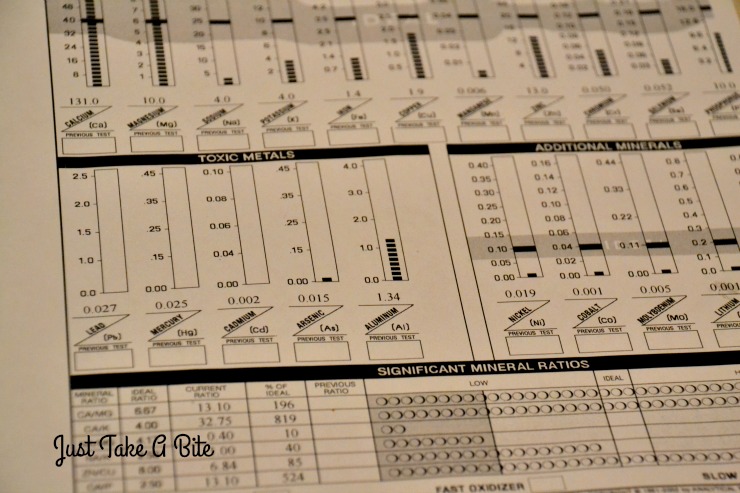
I did my HTMA in May with Lydia from Divine Health From the Inside Out. I was not the least bit surprised when the results came back that nothing was in the normal/ideal range for me.
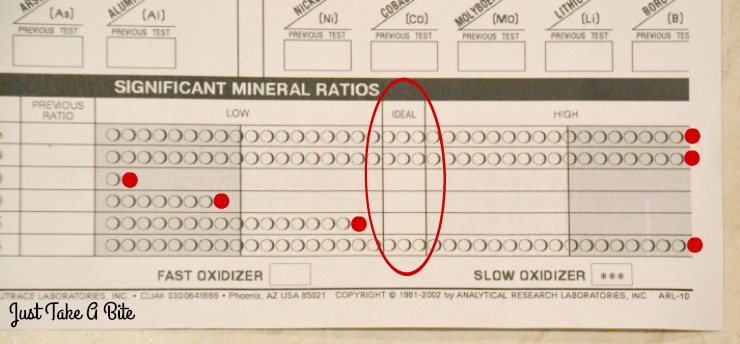
Just about everything was low…except the two things I thought would be low. Calcium and magnesium were high!
Having all of these lows and highs creates major imbalances and my mineral ratios were way off.
I got a whole write up and game plan to address these imbalances. Great! I’m on my way to better health.
I wanted to get my vitamin and mineral levels up because I am breastfeeding. But my daughter’s allergies made that more of a challenge than I had hoped. It’s a double problem…I’m deficient partly because of her…and I can’t do anything about it because of her. When I want to do something about it FOR her!
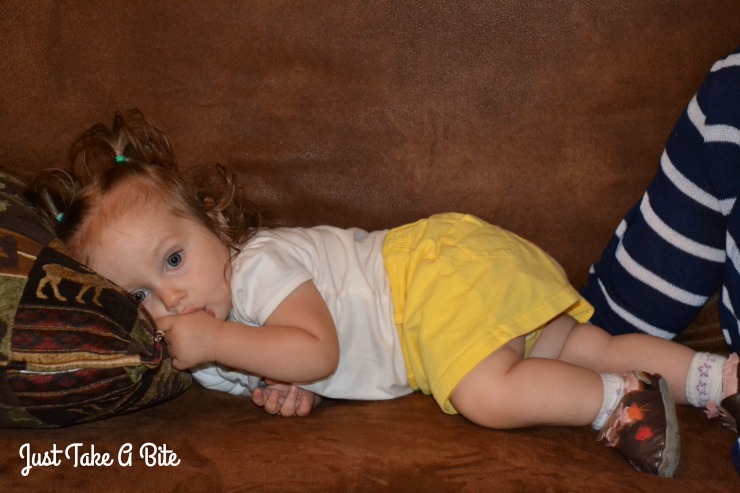
All of this was happening at the same time my daughter had just developed a new round of allergies and wouldn’t eat and it seemed like I was cutting things out left and right. My poor baby was literally starving.
(It’s actually hard for me to even look at this picture because I know she was so hungry and in pain. This was about our lowest point.)
I couldn’t tell what was bothering her. And adding supplements on top of that did not help.
I started a special multivitamin…only to realize it had Vitamin A PALMitate. Not so great for a baby with a palm allergy. She was screaming in pain after I took that.
I started a new hcl supplement to help digestion. Again, major issues. I stopped taking them and after more research discovered the betaine comes from beets. My daughter can’t handle any kind of root.
I was supposed to take a vitamin A supplement but never even got started because it too was from palm.
I started a new probiotic and had severe die off reactions and had to take a break and start MUCH slower on the dose.
Basically nothing was working. I couldn’t take any of the supplements. Plus I just didn’t have the time or energy to focus on myself when my daughter was in such rough shape. She was barely eating and I had to put all of my time and energy into her health. And I couldn’t risk trying anything else new.
A new start.
Here I am, six months later. I’m no longer in a daze from being up all night with an infant and under constant stress and worry about a baby that is undernourished and unhealthy.
It is finally time to give my own health some attention.
I have gone over my HTMA game plan quite a few times. Most recently I made my own chart of how all of the different minerals and ratios relate and what health issues they contribute to.
What I learned.
Here are some of the things I’ve learned both from Lydia and from my own research.
I am a slow oxidizer. This means my body requires a lot more oxygen and energy to digest food. Basically I have a slow metabolism. So I need roughly 60% carbohydrates, 25% protein and 15% fat in my diet. This is HARD for me since I love healthy fats and know just how beneficial they are. Not to mention I think breastfeeding moms need plenty of fat.
It doesn’t matter how healthy a food is – if you can’t digest it, it doesn’t do you any good. For a slow oxidizer like me this relates to fats and protein. Both are full of vitamins and minerals. But they are so hard for me to digest. Until I improve digestion I need to keep my intake of both on the lower side.
The first step in my healing journey is to improve digestion through betaine + hcl and probiotics. I have started the probiotics. I need to find a betaine supplement not made from roots.
With such a high tissue calcium level I can’t take any vitamin D. That means NO cod liver oil! Instead I need to really increase vitamin A to assist this. And since most vitamin A supplements are from palm that means I need to eat more liver!
I also need to get sodium, potassium, iron, copper, manganese, zinc, chromium, phosphorus and selenium levels up. This would be so much easier if I could eat any food I wanted.
What I didn’t like.
Here are a few things that I didn’t completely agree with.
One size fits all diets don’t usually work for me. While the slow oxidizer diet is pretty broad, it still is too restrictive for my current required diet. I wish I could eat according to the suggested diet. But for now I have to do the best I can with the options I have. Which includes eating gluten.
The diet recommends a little too much water and fiber in my opinion. For someone with a slow metabolism (i.e. a slow oxidizer) water intake should be quite low. And any liquids should be salted. Also, my body can’t handle much fiber at all. I can’t do any kind of whole nut/seed/grain. The bran must be removed or I am in a lot of pain. Yes, we do need some fiber. But I don’t think we need large quantities. It can aggravate an already inflamed digestive tract.
Although slow oxidizers need a lot of carbohydrates, the diet suggests mostly low starch carbohydrates. I need a lot of starch in my diet else my body temperature will plummet and I’ll have no energy. That is why I need plenty of grains in my diet. Along the same lines the diet says that if you feel hungry after a meal you ate too much starch. That seems kind of silly to me. If you are hungry after a meal it means you need more food! It doesn’t mean you ate too much. I almost always keep munching while I’m cleaning up dinner. And I don’t gain an ounce. I just needed more food. I actually tried cutting back on starch a few days ago to see how it would go. I could barely walk up the stairs to put my kids to bed in the evening because I had no energy. It felt like I was climbing a mountain and my legs couldn’t go any farther. I’m not a fan of the low starch idea.
The verdict.
If you are looking to improve your health, I definitely recommend trying HTMA. It will give you a good picture of what is going on in your body and where you are lacking.
Here are a few tips that just about everyone can use to improve vitamin and mineral levels and digestion.
Chew each bite of food very thoroughly, at least 15 – 20 times, before swallowing.
Eat in a relaxed environment. Sit down and take your time. Sitting on the floor to eat can help.
These are easy sources of lots of vitamins and minerals. Include the ones you tolerate in your diet weekly.
So here I am with pretty much the same health status I had six months ago when I did my HTMA. Does that mean it didn’t work? No. I just couldn’t do much to change my health.
I know I haven’t made much progress due to dietary and supplemental restrictions. But I’m doing what I can. I am trying to move forward right now by increasing my liver consumption to get more vitamin A. I continue to increase my probiotic dose. I take molasses daily for potassium. I use Natural Calm for magnesium. I try to eat plenty of vegetables and carbohydrates.
I know I could use more sleep. Hopefully that will improve as my little one gets older.
I would love to do a retest at some point. I would also love to get all of my family members tested. I’m sure my kids have some imbalances.
It is nice to finally focus on my health now that my daughter’s allergies are under control and she is thriving.
All of the information I’ve been given makes more sense now that I’m not in a fog from an infant and constant stress. So I can start making progress with healing.
I’ll end the way I started.
Does hair tissue mineral analysis really work?
Absolutely!
Does it mean you’ll be feeling great in a few weeks?
Probably not. Especially if you are like me and have multiple set backs.
But it is definitely worth it to assess your health!
Have you ever done HTMA?
I’d love to hear your story!
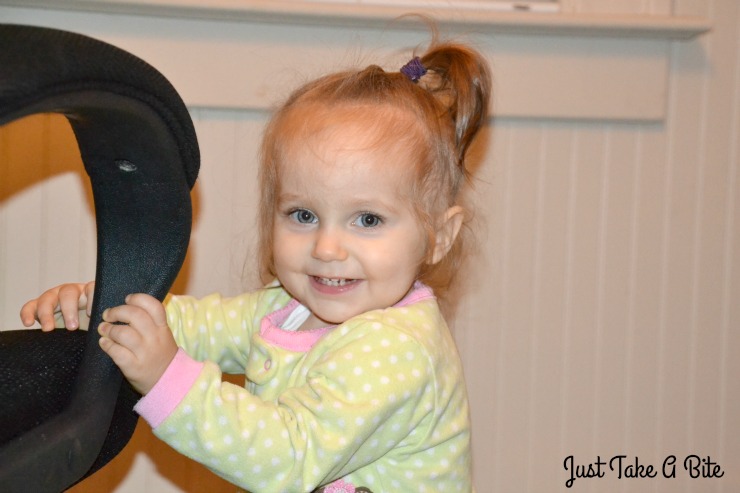
(My heart overflows with joy and gratitude looking at this picture of my happy, healthy, little fighter. She is a true gift and a miracle.)
In order for me to support my blogging activities, I may receive monetary compensation or other types of remuneration for my endorsement, recommendation, testimonial and/or link to any products or services from this blog. It will not change the cost of any products or services for you.
Are you eating gluten free? Or have you wondered if you should? Today I’m at Kitchen Stewardship sharing my story about why I was eating gluten free…and then stopped. And why I’m thankful for wheat!
Some people think eating gluten free is a fad. Some say you only need to avoid gluten if you have an allergy.
At the opposite end of the spectrum are the people that think all grains should be avoided by everyone for good health and for autoimmune conditions. The word “wheat” makes them cringe. I ate that way for a while on GAPS but found out the hard way it wasn’t for me.
Then there are those in the middle that are eating gluten free due to celiac disease, hypothyroidism, allergies, digestive impairment and a host of other health ailments. Or simply to try to feel better.
All of my kids have allergies. So I cut out gluten as part of our effort to heal their bodies. We have all been eating gluten free for quite a few years now.
This decision has had a big impact on my children’s behavior and ability to focus. Once or twice a year I give them a small amount of gluten to see how their bodies are doing. So far they still react very strongly. My son literally goes crazy. My daughter seems like she is in another world.
I truly love gluten free living and enjoy cooking and baking gluten free foods. I’ve got tons of gluten free recipes here.
What went wrong.
Then along came baby number three last year. And things got a little crazy.
In order for me to support my blogging activities, I may receive monetary compensation or other types of remuneration for my endorsement, recommendation, testimonial and/or link to any products or services from this blog. It will not change the cost of any products or services for you.
When the cold or flu hits, when allergies flare or when kids can’t settle down don’t reach for a pill. Instead try some simple natural remedies.
When it comes to natural remedies I am definitely a novice.
I know food backwards and forwards. But herbs, oils and spices? Salves and tinctures? Come again?
Keep it simple.
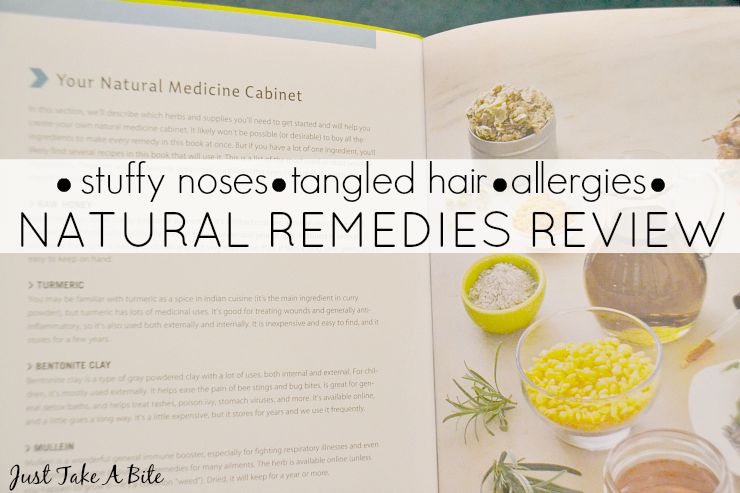
You can imagine my delight when I flipped through Natural Remedies for Kids and saw just how easy it is to make so many natural treatments at home!
And I really do mean easy. Because if they weren’t I would have just put the book back down.
Natural Remedies is so easy to follow and find what you need. The advice is practical and straight forward.
Easy tips.
There are common sense tips like braiding long hair to keep it from getting tangled at night. Yes, I used that one immediately on my daughter! Then there is no need for any detangler (though if you need one there is a recipe for it).
Allergy treatments.
I have talked a lot about my daughter’s environmental allergies and struggles with clogged sinuses. Natural Remedies has an easy recipe for allergy syrup that is on my to-do list.
In the mean time we’re trying nettle tea. I had no idea it was so good for allergies.
There is really some kind of remedy for just about every common concern. It includes respiratory ailments, colds, flu, skin and hair issues, bumps and bruises and even emotional problems (like hyperactivity and anxiety).
Start small.
I am slowly building my supply for my natural medicine cabinet, starting with some of the more common and cheaper ingredients (like turmeric and nettle leaf). I will gradually add on as I become more familiar with and more comfortable with natural remedies.
One of the things that I love so much about finally going down this path (aside from the fact that it was one of my goals for this year that had been going by the wayside) is that I can make things that are safe for my youngest. Pretty much all OTC medications (both conventional and natural/homeopathic) contain some form of palm or coconut.
Save money.
You can still get Natural Remedies for Kids at a discount price right now. I’d snatch it up! This will be my go-to resource this winter.
And if you have a child like mine that is a sponge and loves to read anything and everything let them take a look and learn right along with you!
Natural Remedies for Kids is a resource that will benefit the entire family and help promote a natural lifestyle and overall health. If you are new to natural remedies or just looking to expand your knowledge this book is for you.
I have been compensated for my time commitment to review this product. However, my opinions are entirely my own and I have not been paid to publish positive comments.
In order for me to support my blogging activities, I may receive monetary compensation or other types of remuneration for my endorsement, recommendation, testimonial and/or link to any products or services from this blog. It will not change the cost of any products or services for you.
If you’ve been a reader here very long you know that I’ve tried just about every “diet” possible. I went from the Standard American Diet (SAD) to real food. I’ve been low fat, high fat, low carb, high carb, grain free, gluten free, nut free, dairy free, egg free…just about everything you can think of.
It took a lot of trial and error, but I finally realized that I don’t have to follow any prescribed diets. I need to eat in a way that keeps my body nourished and makes me feel good. What that entails is a little different for everyone.
I am still a firm believer in eating a real food diet with lots of traditional foods. We also have food allergies in our house that we have to take into account. Those two factors combined give us a guide for how we eat.
Going on this long journey of figuring out how to eat created quite an obsession with food. There have been times that I couldn’t think about much else. I would get so stressed about choosing the “right” food that it didn’t even matter what I was actually eating because the anxiety outweighed any benefits of whatever I chose.
I used to hate eating with other people because I felt so isolated by food restrictions.
Now I have to watch my kids say no to things a lot. When they are offered some sort of “treat” it is tough to say no. It’s hard to feel different or left out. I get anxiety trying to make the right choices for my kids and know when to stick to my “rules” and when to just let it go.
There is a lot of emotion tied to eating, especially when it comes to community and events.
What is the first thing that comes to mind when you think about going to a baseball game? Eating a hot dog.
What is a fun summer treat? Ice cream from an ice cream stand or the ice cream truck.
Now with fall activities in full swing kids are bombarded with offers of treats and snacks wherever they go.
For some people it’s hard to enjoy events without the traditional food involved. It tugs at your emotions. You have fond memories of doing these things as a child. It’s part of the experience.
I’ve been there. I’ve felt it. I feel it every time my child gets invited to a birthday party or we go to someone’s house or we go to an event. But I have finally come to a place where I realize one thing:
It’s Just Food.
That’s all. Food.
Now I choose to focus my attention on the experience and relationships.
We have to bring food with us no matter where we go. But I have yet to see my kids go hungry or feel like they were unhappy or dissatisfied after eating. I love to see the contentment on their faces as they enjoy whatever they are given and run off to have fun without putting any thought into it.
When my family goes to a baseball game we either eat before we go or I bring most of our food. Do my kids care? Not at all. They simply want to have fun at the game. They don’t care if their hot dog came from home or from the concession stand. To be honest they don’t even care about eating much at all. They are fascinated by what’s going on around them. It’s harder for Mom and Dad to separate the experience from the food.
When my daughter goes to dance class she doesn’t need a sucker at the end to feel like she did a good job or to make her enjoyment of dance any different. It’s not about the food.
So, how do you get to this point? Here are a few tips:
Take the emotions out.
Relax – look at the big picture if you are feeling stressed about a situation and remember it’s just food. You probably won’t remember if you got to eat a piece of cake at a party. But you will remember how much fun you had with your family or friends.
Make new memories that don’t revolve around food. If you go to an amusement park, focus on the rides and excitement. If you go to a sporting event, focus on the game and the atmosphere. If you are going to church or school, focus on what you are learning and building friendships.
Keep it simple – enjoying an apple at the zoo is just as good as having an ice cream cone. Food doesn’t have to be complicated.
Set a good example for your children – if you don’t make a big deal about food, eating differently or restrictions your kids won’t think much of it either.
Food does not have to be the center of everything. Instead focus on what really matters. Take the stress out of eating. Simply eat what works for you, be thankful for it and enjoy it.
It does take work and thought to eat well. But beyond that remember that it’s just food. Relax. Enjoy what works for you. And enjoy life.
Every time I think about writing what I learned in 2013 my mind goes in a million directions. I learned so much. I learned it all the hard way – through first hand experience.
I know I’m not alone. I know I’m not the only one struggling with these problems. So I want to share my journey with others in the hopes that someone else doesn’t have to go through the struggles like I did.
So here is my attempt at sharing some of these lessons. I hope to go into more detail on some of the topics in separate posts later. For now, here is some of what I learned in 2013 (and over the last ten years).
1. Eat enough food.
I fell into this trap for many years. And I see it in so many well-meaning sites and books. Time and time again it is suggested that women should eat 1200 – 1500 calories a day to loose weight and be healthy. This is far too little to sustain your health.
Unless you are on complete bedrest and can barely move your body most women should eat a minimum of 2,000 calories a day. You should consume even more than that if you are active and exercise. If you starve your body it will not function well. If you feed your body you’ll feel great. Combining enough quality food with moderate exercise is a great way to maintain your health in the long term.
2. Eat what works for your body.
Don’t follow a prescribed diet (GAPS, Paleo, low carb, etc.) just because someone else says it’s great.
This is another lesson I had to learn the (very) hard way. I’ve been on every diet you can think of to try to feel good. For me it was never about losing weight. I just wanted to feel good and heal my body. So I tried the IBS diet, low fat, high fiber, dairy free, egg free, wheat free, red meat free, grain free, GAPS, low carb,…I’ve tried them all.
Where did that get me? Feeling worse than when I started. Over the last 10 years I have learned to eat what works for my body. And that is what makes me feel good.
Just because your friend tried eating paleo and feels great doesn’t mean it’s the perfect diet for you. Just because someone says grains are evil doesn’t mean they don’t work for you.
I have read over and over about how things like potatoes, bananas and root vegetables are “safe” starches and much better for you than grains. I am living proof that this is not true for everyone. If I eat potatoes and bananas I will be in so much pain. But I MUST eat gluten free grains daily to feel good.
All this boils down to – don’t restrict your diet just because someone else says it’s good. Eat a variety of real food that makes you feel good and gives you the energy you need. Don’t cut foods (real food) out of your diet if they aren’t causing you problems. You won’t find your “perfect” diet in any book. You have to figure out what works for you.
3. Real food is great! But sometimes it can be beneficial to stray away from it.
I know this sounds contradictory to what my site is all about. But it’s true. I still firmly believe in fueling your body with healthy, homemade real food…most of the time.
But depending on the state of your health, there are times when you can benefit from some less than ideal foods. For someone that has been on a strict diet (like paleo or GAPS) and is underfed and unhealthy, processed foods can be a great jumpstart to getting back to full health. Processed foods are easy to digest (yes, frozen pizza is often easier to digest than a big plate of vegetables). It is also easy to quickly increase your calorie intake with processed foods.
I am not recommending this as a permanent solution to health by any means. But it can be beneficial if you are recovering from undereating or a condition called orthorexia. Once your body is not starving anymore you can go back to eating real, quality food. You just have to be sure to eat plenty of it.
Having bad morning sickness was a good way to break me of my orthorexia. I do love to fuel my body properly with quality food. But sometimes I can be too strict about it…and it fuels my OCD and anxiety. I had to just learn to eat whatever I could manage for the last couple months. I am really looking forward to getting back to eating mostly healthy food. My body is ready for it. But it was nice to have a break and just eat whatever I wanted. It was a great way to change my mindset and figure out how to find balance.
4. Don’t drink too much water.
One of the best things I did for my health in 2013 was to stop drinking so much water. There really is no science behind the 8 glasses a day rule. And if you really think about it, it doesn’t make sense to force yourself to drink water. If your body needs fluids it will let you know.
Drinking too much water is a great way to slow down your metabolism, lower your body temperature and feel cold all the time. It will also flush the vitamins and minerals out of your body.
5. Get plenty of sleep.
This sounds like common sense. But there are probably very few people that actually get enough sleep. For a healthy individual seven hours of uninterrupted sleep is the minimum needed. Most people need at last eight. And for someone that has been sleep-deprived for a while nine or ten hours is ideal.
Quality sleep with no problems falling or staying asleep is a sign of good health. While you sleep is also the time when your body repairs itself. So if you’re trying to heal and you’re not getting enough sleep you’re setting yourself up for failure.
I went for years and years getting very poor sleep. I had too much to get done in a day to spend my time sleeping. But at some point I just had no energy and could barely function. It has been great over the last couple months to get nine or ten hours of sleep a day (night time + a nap). My body really needed it. Hopefully soon I can stop taking a nap every day and just stick with my eight hours a night and have it be sufficient.
Even if every other part of your lifestyle is ideal, if you’re not getting enough sleep you won’t feel your best.
6. Exercise is great…if you are eating and sleeping enough.
If you are not eating or sleeping enough, it can be beneficial to take a break from exercise. When you do exercise it’s good to do a variety of things like weight lifting, yoga and walking. You don’t have to push yourself to extremes to be healthy and fit. Too much aerobic exercise may be harmful.
I used to run every single day. And do nothing else. Now I still enjoy running. But I don’t do it every day. Actually I haven’t done any running in a long time because my body was not healthy enough. When I was healing I stuck to short walks and bikes. I also did gentle yoga. I got new weights for Christmas…but haven’t been able to use them. Maybe by next Christmas I’ll be able to start lifting weights 🙂
Move your body doing what you enjoy. Make sure to do a variety of things to work all parts of your body. And combine it with enough food and enough sleep. That is the way to stay healthy.
7. Basal body temperature can tell you a lot about your health.
Basal body temperature is your temperature when you first wake up in the morning. Another great thing I did for my health in 2013 was to check my temperature every single morning and keep a spreadsheet of it.
Your bbt can tell you if your metabolism is working well or not. For women it can also tell you when you ovulate/how your hormones are functioning. So it is a good indicator of health (since metabolism is a key factor in health). It is also great for understanding fertility and either getting pregnant or preventing pregnancy.
A healthy individual with a well-functioning metabolism should have a bbt of at least 97.8 F in the morning. Higher is even better. You can also check your temperature throughout the day to get an idea of how your food and activity level impacts your body temperature. It will help you see what keeps you warm (boosting metabolism) or makes you cold (suppressing metabolism). Then you can adjust your lifestyle accordingly.
For women, bbt is lower (but still usually around the 97.8 range for a healthy individual) in the first half of your cycle when estrogen is dominant and progesterone is low. When you ovulate there is often a temperature drop for one day. Then after ovulation progesterone increases, raising your temperature.
It will take a few months of charting your temperature to get an idea of how your body works and to see if there are any patterns. For example, as I was healing and charting my bbt there wasn’t really a pattern that I noticed at first. My cycles were not regular. But after a while I noticed that if my bbt dropped into the 96’s (or below) even for one day my body was way off and was struggling to get my hormone levels up. And it would be at least two weeks before ovulation. A bbt below 97 meant a restart for me. If my bbt stayed in the 97’s for two weeks I knew ovulation was coming. And after ovulation my bbt was always at least in the 98’s and sometimes 99’s. Once my bbt started dropping that meant the start of a new cycle.
Charting my bbt was the easiest change I made the whole year. But it told me more about my health than just about anything else I did.
8. Focus on health, not looks.
I think I’ve been saying this for years. So it’s not completely new. But deep down I don’t think I fully believed it. I did shift my mindset to focus on health a long time ago. But I didn’t ever drop the focus on looks and size. I still wanted to be thin.
In 2013 my control over my size was taken away. With my thyroid totally out of whack my weight kept going up and up. There was nothing I could do about it. For the first time I truly had to focus 100% on my health.
Did I always like how I looked? No. Did I want to loose some weight? Yes. But that was completely secondary. My health was front and center. And it always will be now, no matter what size I am.
When I look to the future I think about how I want to impact my children. I would much rather teach them to take care of themselves and be healthy. I don’t want to teach them to be obsessed with looks and size. So I am done with that.
Don’t try to be a certain size or weight. Treat your body well. And give your body what it needs to be healthy. You’ll be so much happier. Love yourself and take care of yourself.
9. Change is a very gradual process.
Change does not happen over night. No matter what the next fad diet or workout video tells you. If you want to make changes that are sustainable long term it will be a very gradual process.
Do you want to loose weight? That’s fine. But know that it will take a while. Do you want to eat healthier? That’s a wonderful thing to do. But don’t go crazy trying to do everything at once.
Small, consistent steps each day will get you where you want to be. Don’t get upset because two weeks into making changes you haven’t noticed any big improvements. Give it time.
Healing takes time. Weight gain or loss takes time. A healthy diet takes time. Don’t rush it and set yourself up for failure. I’ve been working on getting healthy for about 15 years now. And I’m finally getting there. One step at a time.
10. Your thyroid can have a big impact on your health.
I was diagnosed as hypothyroid in 2006. I was put on a synthetic thyroid hormone and had my TSH checked about once a year. I really knew nothing about thyroid. I figured the doctor knew what he was doing. I didn’t have any hypothyroid symptoms that I knew of. So I didn’t bother to learn about it. I didn’t think it was that big of a deal.
Seven years later I finally had to learn more about it. I wish I would have researched it sooner. I didn’t realize just how much your thyroid could impact your health. I think there are about 200 symptoms that can be attributed to thyroid dysfunction.
Last year I learned so much about the thyroid. I learned what blood work you need to get done and how to interpret the results. Just because your levels are in the “normal” range does not mean you are on the right dose of medication. You have to look at the symptoms more than the numbers.
I learned about the different kinds of medications, how to take them and how to get correct dosage.
I learned how other hormones can impact your thyroid and vice versa.
I learned that iron levels and adrenal problems can mimic thyroid problems. And they need to be addressed first.
I can’t say that I have my thyroid problem 100% figured out yet. It is the last piece of the puzzle that I’m still working on. And I will be writing more on this topic in the future. I will be getting my thyroid hormones levels rechecked in a week and go from there to see if adjustments need to be made.
11. Manage stress.
Stress can be as bad for your health as lack of sleep, a poor diet and lack of exercise. Stress can suppress your metabolism. It can alter your hormones. It can come in many forms too.
Find a way to manage your stress to stay healthy. Take time to do things you enjoy – reading, writing, visiting with friends. It’s also important to find techniques to relax such as walking, yoga or reading the Bible. Figure out what works for you and make it a priority.
12. Adrenal health is very important.
Your adrenal glands play a huge role in your health. If you are not getting enough sleep, aren’t eating enough, are exercising too much or are too stressed, your adrenal glands have to work overtime to compensate.
This works for a while. That is what they are for. They raise your cortisol levels to compensate. But if you do it for too long you stress the adrenals and eventually it leads to adrenal fatigue. Then your cortisol bottoms out and it takes a lot of work to get it back up.
If you think you are suffering from adrenal problems it’s great to do a 24-hour saliva test to check your cortisol levels. I had it done early last year. I’m thankful that my levels were just slightly raised. Which means I was doing ok, but starting to make them work a little too hard. By altering my sleep, diet and exercise I was able to get my cortisol levels back to normal.
13. Birth control is not for everyone…and probably not good for most women.
This is another less I had to learn the very hard way. But it wasn’t until years after I stopped birth control that I realized how much it had harmed me.
A few months before I got married I started birth control. That’s what you do, right? I knew nothing about what it was or what it actually does to your body. But had I not made that one decision I probably never would have struggled with infertility for so many years.
When I was in college I got my health under control. Things weren’t perfect, but I was eating enough, sleeping enough and exercising regularly. I had found a good balance. And for the first time in my life I had regular cycles every single month. This lasted a few years…until I started birth control.
Once on birth control things started to change. The changes were gradual. And I never attributed them to the birth control. But now that I have done a lot of research I can see the big picture. I started to gain weight. Five pounds or so. Nothing major. My anxiety started to get worse. My OCD started to get worse. Eventually I started having panic attacks. My gut got so messed up that I started restrictive diets to try to help. My weight went way down from restriction. I was a big mess. I even had to switch to a new form of birth control because I was starting to puke every month from the hormones. In case you haven’t noticed by now my body is extremely sensitive to any hormone fluctuations.
After stopping birth control three years later it was too late. My hormones were non-existent. I was underweight. I was hypothyroid. My OCD was so out of control that I could barely function. My anxiety was so bad. I had to start seeing a psychologist. My digestive system was so messed up that I had to have major colon surgery. Eventually we started fertility treatments.
I think almost all of this could have been avoided had I not taken birth control. It messed up both my mind and my body.
I know not everyone reacts the same way to hormones. And I’m sure there are cases where it can be helpful. But please do your research before considering any type of birth control. I know that it is something I will never take again. It has taken me many years to get my life back. I’m not going down that road ever again.
14. Be your own advocate.
One big lesson I have learned over the last ten years is that you have to stand up for yourself. Don’t let doctors brush you off or tell you you’re fine when you know you’re not. If something doesn’t feel right, find a doctor that will help.
I had GI problems for years. I finally was brave enough to talk to my doctor about it. He referred me to a gastroenterologist. Great. I thought I’d finally get the help I needed. He asked a few questions, felt my stomach and told me I was healthy and fine. Eventually I got him to run a few tests. But he still said I was fine. I knew I was not. I had to research and research and finally diagnose myself. Even then when I told the nurse at my doctor’s office what I thought was the problem she said “you don’t have that. You’re too young” without missing a beat…over the phone…without asking me a single question. I’m so thankful I was persistent and didn’t just say ok. I finally got referred to a colon surgeon who confirmed my diagnosis and immediately scheduled surgery.
This has happened time and time again to me. I go to a doctor, even specialists, trying to get help. And they tell me I’m fine. Even though I know I’m not. I have had to figure out all of my problems on my own…and just use doctors to get medications and treatments.
15. PCOS is a confusing topic.
When I had my first appointment with an endocrinologist he asked some questions and made an assumption about my health. He assumed I had PCOS (polycystic ovarian syndrome). He ran some tests and did an ultrasound. His conclusion? I had what he called polyfollicular ovaries.
Great. What does that mean? I never really did find out from him or anyone. I tried to research it for years. Nobody else used that term. I have come to some of my own conclusions (as usual). But it’s still confusing.
Many women with PCOS are overweight or have trouble maintaining their weight. Many women with PCOS have irregular cycles and heavy, painful periods. Many women with PCOS struggle with facial hair. Did that sound like me? Not really. I just had no periods.
The common solutions for PCOS are losing weight, eating low carb and taking Metformin to help with insulin resistance. Did I need any of that. No. In fact, eating low carb made my situation worse.
Where did that leave me? Basically my body would try to grow some follicles/eggs each month. But my hormone levels weren’t high enough to mature the eggs. So instead of having one dominant follicle that released an egg (ovulation) I’d have lots of small follicles that did nothing but sit there. Which on ultrasound looks like little cysts. They are really just lots of follicles…polyfollicular.
Even when doing IVF I would have tons of follicles start growing. But very few actually matured enough for the egg to be good (hence our seven rounds of IVF and two good eggs out of almost forty that were retrieved and fertilized). That is also why I would have a condition called hyperstimulation every time. There were too many follicles.
I still don’t have a full answer about what this means. One endo said it’s from bad communication between the brain and the ovaries. Could I technically be classified as having PCOS? I don’t know. I don’t really have the symptoms. My condition is helped by being a healthy weight and taking care of myself. Finding balance with sleep, exercise and food. I also think it is related to my thyroid problem.
All this to say that if you have been diagnosed with PCOS please do your research to figure out where you fit into the criteria and what treatment is best for you.
15 weeks
16. Let God have control.
I’ve known my whole life that ultimately God is in control. But I also know I can make choices. For most of my life I’ve tried to be in control. I ask God for things I want. I ask for things to go my way. If things are good I say it’s God’s plan. But when things aren’t going so well it’s hard to believe it’s still true.
I have such a strong desire to be in control that I could not let go on my own. In 2013 God took the control out of my hands. And it was wonderful. It doesn’t mean that my life was great. Actually it was very hard. But it gave me such freedom to not have to hold every little detail of my life in perfect balance. It was terrifying and wonderful at the same time.
It is so good to know and have proof that God really does have things in his control. He knows what I need. His plans may be different than mine. His timing may be different than mine. But I don’t have to worry about it.
On my own, trying to keep control, I probably would not have had any more children. I would not have made the necessary changes on my own. But with God in control we are expecting baby #3. And the door is open for more. That is something we can decide as a couple down the road. But just to know the door is open, even if we decide not to have more kids, is amazing.
17. OCD does not have to control my life.
It’s no secret that I’ve struggled with pretty severe obsessive compulsive disorder for many years now. I was finally diagnosed/finally realized that I had it about five years ago. And I’ve been working on treating it ever since.
It has been a long and difficult journey. No matter how much I told myself my compulsions were silly and illogical I couldn’t stop. I went through a lot of exposure therapy and have made progress over the years.
Over the last seven months once again God has allowed me to change. When He takes the control, my OCD does not have to control me.
Especially during the first trimester of this pregnancy I had to just let everything go. I just had to do what I could to get through each day. If that meant laying on the couch most of the day, then that’s what I did. If that meant eating less than ideal food, then that’s what I did. If that meant my digestion was so messed up that I was in pain, I didn’t let it bother me or make me anxious. I just kept on going.
I’m so happy to be able to continue this process of eliminating my OCD. My fear does not have to take control. I can give it to God. And I’m never going back to where I was.
It’s hard to think back to when I was first married. It’s hard to think about all the time I wasted being consumed by my thoughts and compulsions. I am very blessed to have such a loving husband that never judged or got upset with me. He helped me through it. And with each child I’ve let more of it go. I’m a type A person. So I will never be 100% cured from OCD. It’s part of my nature. But it will no longer control my life. It will only be an asset and be used for good things. It is what fuels the drive and determination I’ve always had. But if it hinders my relationships or my life it has to go.
Final Thoughts
It feels so good to share all of this information in hopes of helping even one other person. But even more than that it feels good to write it out and be done with the things that have burdened me for so many years. I know how to be healthy and happy. I’m ready to move on to 2014 now.
As I mentioned at the beginning of this post I’ll be digging deeper into some of these topics later. For now if you’d like to do some research on your own, here are some great resources I’ve come across.



 If you’ve been a reader here very long you know that I’ve tried just about every “diet” possible. I went from the Standard American Diet (SAD) to real food. I’ve been low fat, high fat, low carb, high carb, grain free, gluten free, nut free, dairy free, egg free…just about everything you can think of.


