Home » Food allergies » Page 57

Category: Food allergies

Does one (or all!) of your children have food allergies? Sadly this is no longer a rare thing. More and more kids struggle with food allergies now than ever before.

I’ve been there too. Skin testing, blood work, epi-pens…the works. It can be challenging or down right scary.

But you don’t have to live in fear. And you don’t have to just accept food allergies as a life sentence. There is help!

My son went from over twenty food allergies and an epi-pen to being able to eat just about anything. Even nuts!

There are ways to heal the gut and nourish the body so your child can get back to a normal life. Food allergies have so many underlying causes. Once you figure out the root problem and treat it the body will begin to heal.

Don’t let food allergies define your life. I’m here to help you and your child heal.

Microwaves…Why I Don’t Use Mine

Earlier this year as I was changing my diet/lifestyle and just getting started on my journey toward true health I read quite a bit about microwaves. Up until then I used my microwave a lot. Every day for lunch I would quick nuke something for Rebecca and myself. If I needed to defrost something, into the microwave it went. If I was in a rush and didn’t have time to bake something, the microwave to the rescue – casseroles, leftovers, baked potatoes, etc.

Fast forward to today…I haven’t touched my microwave in months. And honestly I want it out of my kitchen. It’s huge. And it takes up so much space above my stove. I’ve learned that warming leftovers on the stovetop is faster and healthier than using a microwave. Plus it makes the food taste a LOT better. So, what made me rethink the microwave? Here is some of the info I ran across while learning how to eat real food.

First there is the whole cancer issue. Do they/don’t they cause cancer? “Studies have been conducted on food that have been thawed, cooked and heated in microwaves. The results showed that many food molecules were converted into carcinogens. The glucoside and galactoside present in frozen foods gets converted into carcinogenic substance. Plant alkaloids in vegetables were converted into carcinogens. Milk and cereals heated in microwaves also had some of their amino acids converted into carcinogens.” Carcinogens in my food? No thanks. And even if there is still debate, I’d rather take my chances with avoiding it. If it was a definitive no I think we’d know that by now.

Personally I think the food just tastes worse. The texture, consistency, etc. changes. And food is heated unevenly. You can get hot spots. Take one bite and you think your food is ready. Take another and you burn your mouth. It can even be dangerous to heat liquids because they might have such uneven heating. There are some foods that can explode or catch fire in a microwave. Ever tried microwaving carrots? I’ve seen a few too many sparks from those 😛

What does it do to the food? A lot. It changes it completely. And basically takes away any bit of nutrition that was in your food. According to author Nina Plank “The microwave destroys antioxidants, enzymes, and vitamins dramatically more than conventional heat.” If all of the nutrients are gone from my food after heating it in the microwave what’s the point of eating it? If it doesn’t nourish my body I’m just eating empty, useless and potentially harmful calories. And making less room for good stuff. Here are a few specifics:

“Microwaves significantly decrease the nutritional value of the foods up to 60 to 90% of the normal level. There is reduction in vitamin B 12, that is necessary for red blood cell formation and building up nervous system. The flavonoid content of the food decreases by 97% when cooked in microwave oven. Flavonoids contain anti cancer, anti-inflammatory and anti-microbial properties. There is significant decrease in vitamin C, vitamin E, essential mineral and lipotropic factors in food. Glucosides, nitrilosides, alkaloids present in the vegetables are damaged significantly.”

“The radiations decrease the immune system of humans and regular eating of microwave cooked foods causes memory loss, emotional problems and decrease in IQ. Microwave cooked food also can lead to decrease in hormone production.”

There are so many microwaveable convenience foods available. Eating them is about as healthy as eating the box or bag they come in. What little nutrition was in it to begin with is gone after cooking it in the microwave. You can even “steam” vegetables in the microwaves now. But you’re left with a pile of bland, nutritionless, harmful food.
Aside from the direct effects on food itself, heating any kind of plastic (containers, plastic wrap, etc.) in the microwave is dangerous. The plastic leaches toxins (BPA, phthalates) into the food. Ever wonder why you can’t get that spaghetti sauce residue out of your tupperware? Because it has soaked into the plastic…while some of the plastic soaked into your food. Even my fertility specialist, who doesn’t give much advice on diet/lifestyle when it comes to fertility, gave a stern warning about never heating food in plastic and never heating plastic in general…don’t even wash it in the dishwasher. It can have serious effects on your fertility (low sperm count, altering hormones) and overall health. “The cancer causing compounds in the plastic containers and plastic wraps percolate into the food cooked in microwave oven. Bisphenol A is a chemical toxin present in plastic bottles that can percolate into foods and cause cancer, early puberty, obesity and diabetes”

I was quite disturbed this morning while reading Cooking Light to see their advice about microwaves while answering a reader’s question:

“Is it true that microwaving veggies removes all of their nutrients?”

“Any cooking method reduces nutrient levels in vegetables to some degree…the good news: Because microwaving uses less heat, less water and requires shorter cooking times, it has a less destructive effect on nutrients, particularly water-soluble, heat-sensitive vitamins like vitamin C.”

It’s sad that people are getting this kind of advice from a “healthy” magazine. I think this Q&A might have been the final appalling “health” advice in this magazine to warrant a review sometime. For now I can say I will not be renewing my subscription.

There is plenty more information out there about microwave use (for and against). There is a lot of information about the science behind it and what is happening to the food at the molecular level. Quite fascinating…and disturbing. What was once food is turned into something totally different at a structural level. It is a personal decision. But I have decided it is best for my family to avoid it as much as possible. Note to self…ask Justin to remove microwave and replace it with a regular stove hood 🙂  I grew up eating microwaved eggs…a nutrient powerhouse turned lifeless. I can’t undo the potential damage that was done. I can’t control how food is prepared when we are eating in restaurants (which is thankfully VERY rare) or other people’s homes. I can’t change the fact that my husband has to use a microwave to heat his lunch at work. But I can do my part to eliminate our use of/exposure to microwaves at home.

So, how about you? Do you rely heavily on your microwave for cooking? Is it just an eye sore in your kitchen that is collecting dust? Or are you microwave free?

If you’d like to read more here are a few good articles:

The Proven Dangers of Microwaves
Kelly the Kitchen Kop
The Healthy Home Economist
Health, Wealth and Happiness
The Dangers of Microwave Ovens
Dangers of Microwaves
Dangers of Microwave Cooking
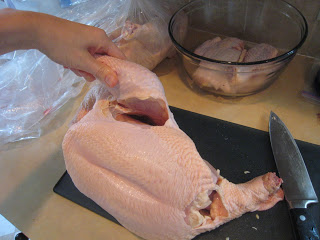
How to Cut Up a Chicken

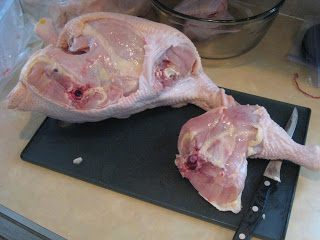
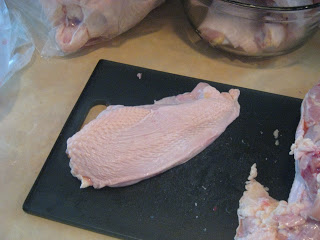
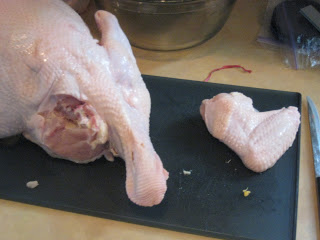
Yesterday we got four fresh organic chickens from one of Justin’s co-workers. I knew I’d have to cut them up myself, so before hand I did some research. A few months ago Kat posted a link on her blog to a video that gives good directions. So I watched that. It seemed pretty simple. And it was! Who knew. You can go to Kat’s blog to get the link if you want to see the video. I’ll give a very basic run down of how I did it. I only cut up 2 birds. The second one went a lot faster than the first. With a little practice you could probably do a whole chicken in 5-10 min. Be sure to use a good, sharp knife.

1. Cut off the wings, right at the joint. Then cut off the tip of the wing to use in stock. There really isn’t any meat on it.

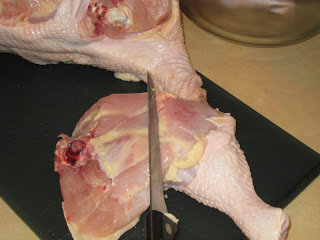
2. Cut off the legs. Start cutting around the drumstick. As you pull on it you’ll see where the thigh is and just follow that along.

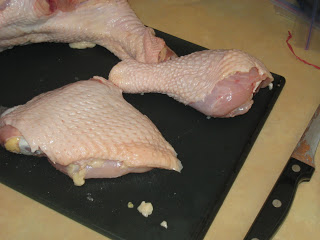
3. Separate the drumstick from the thigh. There is a natural line of fat at the top of the drumstick that you can use as a cutting guide.

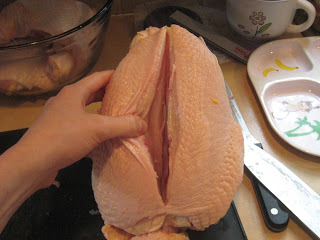
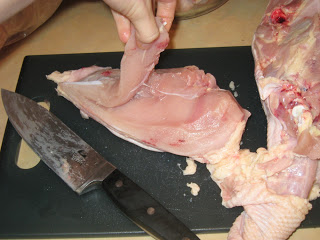
4. Cut off the breasts. Make a slit down the middle. And gradually cut as you pull the breast away from the bone (one on each side).

5. Remove the tender from the breast. You don’t have to do this. But it’s simple. The tender naturally pulls away.

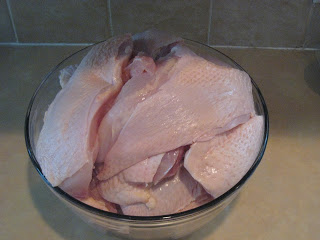
That’s it. You can leave the skin on or remove it from any of the pieces. I left it on. Pretty simple. Maybe next year I’ll be daring enough to order more chickens now that I know how easy it is. And if I can do it while nauseous anyone can do it 🙂  I vacuum sealed and froze all of the chicken after cutting it up. And I used all of the scraps for stock.

What is IVF?

What is In Vitro Fertilization? Seems like a silly question to me. But that’s because it’s been part of my life for 4 years now. And now that we’ve had to talk about it so often with people I start to wonder…how many people really know what it is? When I tell someone we went through IVF to conceive our children they kind of look at me like, I’ve heard of that, but I really have no idea what you’re talking about. And I think most people have a misconstrued idea of what it is…like a doctor magically makes babies and makes you pregnant. Four years ago when we started on this infertility journey I had no clue what it was. When I was told that was our only option to have children I still wasn’t really sure what it was. We had to do a fair amount of research and learn a lot from our doctor. Plus just learn as we went along. Now that we’ve been through 3 fresh IVF cycles and 6 IVF transfers I have a pretty good idea of what IVF is and what it is not 🙂  And I thought it would be good to share with others. What is IVF…through a patient’s eyes.

First off I want to say IVF is NOT a “sure thing” by any means. I’ve heard that term used (even on a real food blog!). Some people think that it is the “easy” way to conceive…to be able to have your children exactly when you want. I think celebrities/media/tv shows have caused this. In reality it is quite the opposite. IVF is never guaranteed to work. It can be a very long, tiring, difficult, emotional process. And so unpredictable. Some couples go through years of treatments and never conceive.

Also, doctors do NOTcreate babies/life via IVF. Only God can do that. A doctor helps a woman mature her eggs with drugs and monitoring and puts them with the sperm. Then if an embryo forms (naturally) it is placed in the woman’s uterus. The doctor can NOT implant an embryo (despite what you hear on tv shows/movies). That is a natural process that only God can do. An embryo is transferred into the uterus…and nature takes its course. If you ever hear someone say they had an embryo implanted they don’t know what they’re talking about. That is physically impossible.

That being said, I’ll get on with what IVF is. In Vitro simply refers to any biological procedure that is performed outside the organism it would normally be occurring in. The egg and sperm are joined outside the woman’s body. I’ll start with the basics of IVF. There are basically 3 steps in the process. First the woman’s uterus is kept quiet…meaning prevented from ovulating/producing eggs. This often means taking birth control pills. Or in my case means doing nothing since I don’t ovulate without drugs 😛  Then comes the stimulation/retrieval phase. The woman is given hormones to make her body mature some eggs. Once the eggs are the right size/mature enough the doctor removes the eggs from the follicles (via a needle guided by ultrasound). The eggs and sperm are then joined. This can be done just as it would in nature (egg and sperm put in same place and let nature take it’s course). Or a single sperm can be injected into each egg (called ICSI – intracytoplasmic sperm injection) if the sperm is improperly shaped (this does not make the sperm fertilize the egg…it still has the same odds of fertilization as if it were not injected). The final step is transfer. If any of the eggs have been fertilized some of them are transferred into the woman’s uterus when they are anywhere from 3-6 days old. Any remaining embryos are frozen. If one or more of the transferred embryos implants into the woman’s uterus she becomes pregnant.

Sounds pretty simple and straight forward. But of course it’s not really that simple. There are so many factors that go into each part of the process. There are so many reasons a couple goes through IVF in the first place…unexplained infertility, female factor (anovulation, PCOS, only one ovary, blocked tubes, cysts,…), male factor (low sperm count, poor movement, bad morphology (shape), vasectomy reversal,…) and a combination of these and many other factors. So each couple has a unique treatment and odds of success/failure (just because you “know someone that got pregnant naturally after their first round of IVF” it does not mean anything to someone else going through IVF. They have completely different situations and obstacles to overcome). And even every doctor has different methods/ideas. It would take way too long to go into that much detail. So I thought the easiest thing to do would be to share my story/path. Even that is quite long and complicated. So I’ll just go through our most recent IVF cycle. Show you what a few months in the life of an IVFer are like 🙂

June 11 – June 23: take prometrium pill one time/day each day; take estrace pill one time/day each day (continue to take estrace through whole process) (prometrium is to induce a period, estrace is to prepare my body for stimulation)
June 15: one time injection of dep-lupron (done by nurse) to start maturing eggs
July 8: 1st ultrasound to make sure uterus is quiet; start follistim shot and menopur shot in PM (I do these shots myself in my stomach)
July 9 – 12: follisitim shot 2x/day, menopur shot 2x/day
July 13: 2nd ultrasound to check on eggs/follicles – over 10 in each ovary; follistim shot 1x, menopur shot 2x
July 14 – 15: menopur shot 2x/day
July 16: 3rd ultrasound check – 10-15 follicles on right, 10-18 follicles on left; follistim shot 1x, menopur shot 1x
July 17: 4th ultrasound check – 8-14 follicles on right, 12-20 follicle on left; follisitim shot 1x, menopur shot 1x
July 18: menopur shot 2x
July 19: hcg trigger shot – 1x shot to make my body think it’s time to ovulate and finish maturing the eggs – Justin gives me this one (in the butt).
July 20 – 23: antibiotics (pills) 2x/day
July 21: Egg retrieval – sedated while Dr. uses an ultrasound guided needle to remove every egg from the follicles. My total count was around 50 this time. Just to give an idea of how many that is, a woman normally produces/releases 1 egg each month. I did over 50 at once. Very uncomfortable.
July 23 – 26: progesterone shot 2x/day (Justin does this one for me…in the butt)
July 26: ultrasound belly check – confirmed OHSS (ovarian hyperstimulation syndrome). I look about 6 months pregnant. Ovaries are swollen. I’m severely nauseous and can barely get off the couch. Go to hospital for albumin infusion to balance protein levels in my blood. All embryos frozen, no fresh transfer due to OHSS.
July 22 – August 2: recover from OHSS

August 5 – August 14: estrace pills 2x/day
August 15 – 20: estrace pills 3x/day
August 17: ultrasound to make sure uterus is quiet/fully recovered and to check lining
August 21 – 10 weeks of pregnancy: estrace pills 2x/day, progesterone shot 2x/day (Justin does this when he’s home, else I do it myself…in the butt)
August 24: frozen embryo transfer (FET) – transfered 3, day 3 embryos (3 embryos put into my uterus via a small catheter, takes about 5 min. Then I have to lay down for an hour and a half)
September 2: beta 1 (pregnancy test/check hcg level) – blood test – 120 (positive!)
September 8: beta 2 – 1223 (hcg level increasing as it should…typically doubles every 48-72 hours)
September 14: beta 3 – 8220 (hcg still rising as it should)
September 21: 1st pregnancy ultrasound – one sack and heartbeat seen. Pregnancy confirmed.
October 12: 2nd pregnancy ultrasound – still to come :), estrace pills and progesterone shot go down to 1x/day
October 19: stop estrace and progesterone – released to regular OB

That’s what happened this cycle. This one thankfully turned out well. Our last cycle was much more grueling…a fresh stimulation cycle, OHSS, then 3 failed FETs. And having to start all over.

As you can see it is by no means easy. Anyone who thinks that has no clue what it is. It is expensive, physically demanding and extremely emotional. I would not wish for anyone to ever have to go through it. It disturbs me how the media portrays IVF as such a simple thing that guarantees a woman gets pregnant. I didn’t even mention in here all of the side effects of the drugs, the weight gain, emotions, inability to make plans, etc. It disrupts your whole life.

And no, it is not that common for women to get pregnant with high order multiples. But that’s all you see on the reality shows. Most of those couples did not do IVF (they did IUI…a much simpler procedure). And in my opinion had very irresponsible doctors.

So that’s IVF in a nutshell. At least my version. It’s hard to explain all of the details, but hopefully you get a small idea of what it is. Although I hate going through the process it has given me such a deep appreciation for children and the miracle of life. I hope you enjoyed reading more about our journey. Always feel free to ask any questions. I’m an open book. I pray that God will use my journey through infertility and IVF for his glory. Hopefully in a few weeks we’ll be done with IVF for a while and can feel somewhat normal again. But this will always be a part of our lives, even after we’re done having children. It’s part of our unique story 🙂

How to Render Lard

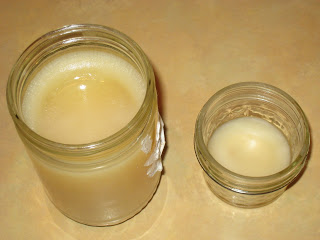
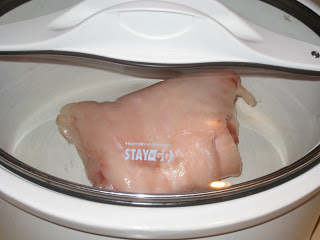
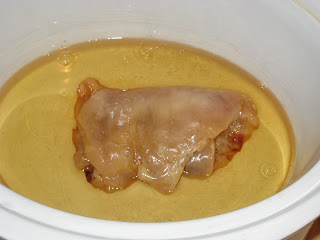
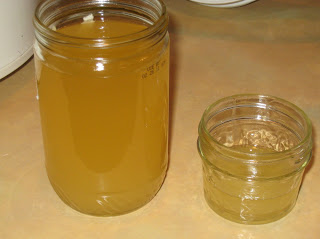
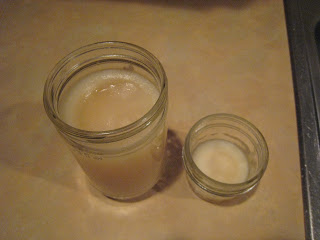
Yesterday I finally attempted to render the lard we got from our co-op a while back. I did a fair amount of research before trying. Some methods just sounded like way too much work (cutting it all up, cooking it for days, etc.). I found a link for a crockpot method that sounded much easier. So that’s what I did. Yesterday morning I stuck the lard in the crockpot (it was still mostly frozen…you don’t have to have it thawed completely), turned it on low and let it go. I did end up putting the crockpot in the garage because it has a very strong smell. And it’s definitely not one I enjoy right now (too bad it doesn’t smell like bacon cooking :P). I let it cook for 24 hours total. There was still some left, but I decided I was done with it. I was ready to totally air out the house 😛  Plus I might need my crockpot for chicken stock later today. I still got quite a bit of lard even without cooking the whole thing. I poured it through a cheesecloth into a jar just to be sure there weren’t any bits of junk. Then I let it cool and stuck it in the refrigerator. So far it seems to have worked. It looks right, I think. I’m anxious to try cooking with it! I guess that will be the real test. This lasts for a long time in the refrigerator.

Rendered Lard
1. Place lard in crockpot.

2. Turn crockpot to low.
(2a. Put crockpot in the garage.)
3. Let cook until lard is cooked down enough to your liking (it will turn to liquid).
4. Pour lard liquid into a clean jar (you may strain it at this point).
5. Let cool.
6. Refrigerate.
7. Use in place of butter or oil for cooking/frying/baking.

4, 3, 2, 1, 0…A Look Back

Four years ago today I was sick…quite sick. And I was at the hospital for major colon surgery. That was a turning point in my life. But I had a long road ahead of me. I never, ever want to go through something like that again, but I am so thankful for the changes it brought to my life. It’s hard for me now to remember what my life was like before surgery. I wasn’t actually living. It is also hard to believe it’s been four years!

Three years ago I was almost 9 weeks pregnant with my first miracle baby that I wasn’t sure I’d ever have. But God is good. And he blessed us beyond belief.

Two years ago I was enjoying life with a busy baby, cutting her first teeth and learning to roll over, while I was trying to figure out what motherhood is all about 🙂

One year ago I was just starting out on my journey to deal with my OCD and a few days away from starting medications for our first attempt at trying for baby #2. We were hopeful and excited since it had worked the first time. Little did we know the journey we’d be on for the next year. And although it was extremely tough, we are thankful for everything God taught us and how he helped us grow in our faith.

Today I am rejoicing that we saw one perfect little heartbeat on our ultrasound yesterday. Despite our worries and fears God has given us just what we need. And we are so excited to welcome this little one into our lives next spring. God is good!!

Sometimes we wish we could know what the future holds. We are always waiting for something, wondering how something will turn out, etc. And being a planner that is very true for me. But I am thankful I do not know God’s plans. If anyone had told me four years ago what was in store I’m not sure what I would have thought. But I’m glad God knows all the details and knows just what I need. Even if the journey is long and difficult he is still in control and loves me more than I can fathom. And his plans are perfect. He’s using every little trial to make me the woman he wants me to be.

I am rejoicing today and looking forward to what God has planned for the next four years. It may not be what I have planned. It might be tough. But I know it will be for God’s glory. My prayer is that God will use me, my story, my struggles for his glory. That I may be a blessing to others and share what God has taught me. That God will open doors, challenge me and use me.

FAT – What’s Good, What’s Bad And Why You NEED It

For my second healthy eating series post I thought I’d do another topic that I have lots of personal experience with. FAT. Have I ever been “fat”? No. Did I spend way too many years of my life obsessing over fat? Yes! And now that I know how important fat is in your diet I wish I hadn’t been so fat-phobic. It has had a serious impact on my health.

I’ll start with my story. Around 9th grade I started to become much more conscious of my body…and comparing myself to everyone else. I didn’t like how I looked. So I decided to stop eating fat. Almost completely. Seriously. I ate about as low fat as humanly possible. If something was available in a fat free version, I ate it. If I had to I’d tolerate some low fat stuff. I was literally scared of fat. I wouldn’t touch anything with oil or butter. I lost weight…too much weight. And was not healthy at all. I was getting zero nutrition, just empty, fat free calories. But I didn’t see that. I saw someone that was “skinny.” So I liked it. Once I got into that mode it was a long road for me to get out of it. That’s when my OCD really picked up. What I ate…how much, how little, how much fat became an obsession. I was very unhealthy for many years. My weight went up and down as I was more or less strict about things. But I was always very obsessed with weight and what I ate. It really wasn’t until about a year ago that I truly started to change my mindset. And seeing food as nourishing. I wish I had understood sooner how much damage I was doing to my body. I believe that my low fat eating and eating of bad fats (when I did eat fat) were some of the biggest contributors to my digestive and fertility problems. And I am working hard to heal both now by eating plenty (and I mean plenty) of real, healthy fat. The funny thing about it is that I was always so scared to eat fat. I was afraid I would get fat. But I eat a substantial amount of fat now every day. And I exercise less than ever. And I haven’t gained an ounce 🙂  In fact I’ve actually lost a couple pounds from adding real fat to my diet. Not that I need to. It’s just how it works…real fat doesn’t make you fat.

Now on to the details about fat. First and foremost…YOU NEED FAT. Yes, you need plenty of fat in your diet. Many of the vitamins in our food are fat soluble. Which means that in order to absorb and use them you need to eat fat. Like if you eat a vegetable plain you can’t absorb some of the nutrients. So all those years that I cringed at the idea of putting butter on my vegetables and thinking I was eating “healthy” I was really robbing my body of half of the nutrients in my food. I now put a very generous amount of butter (real butter) on all of my cooked vegetables. Aside from absorbing nutrients, your body needs fat to function. Your brain is made up mostly of fat. Even your immune systems suffers when you don’t eat enough fat.

So, what kind of fat should you eat? Probably not what you think. You should eat plenty of saturated fat. And eliminate as much polyunsaturated fat as possible from your diet. What does that mean?

Say YES to:

Extra Virgin Olive Oil
Coconut Oil
Real Butter
Lard
Tallow
Fatty Animal Products
Whole Milk/Dairy

Say NO to:

vegetable oil
canola oil
safflower oil
sunflower oil
soybean oil
margarine
imitation butter/butter sprays/butter spreads
low fat milk/dairy
extra lean animal products

I know it sounds contrary to what you hear these days. But it’s true. No, saturated fat does not give you heart disease/high cholesterol. It actually makes your body function the way it should.

What does cause major health problems is polyunsaturated fats. And the problem is they are in EVERYTHING. Which is a great reason to not buy any packaged food and to not eat out often. If something comes in a box or bag, chances are it’s filled with polyunsaturated fat. And most restaurants cook with it. I mean, why not? It’s cheap. People are told it’s healthy. Big food and drug companies profit from it. But sadly it’s what’s killing Americans and causing obesity, cancer and so many other health problems.

I know I’m just scratching the surface here. My goal is just to make people aware (I wish someone had explained to me sooner how critical healthy fat was). Please research and learn as much as you can. It could save your life. For some more detailed information about healthy fats Elizabeth at The Nourished Life has done some wonderful posts:

http://www.livingthenourishedlife.com/2009/12/weight-loss-wednesday-how-much-fat-is.html
http://www.livingthenourishedlife.com/2010/01/get-saturated-four-reasons-saturated.html
http://www.livingthenourishedlife.com/2010/08/polyunsaturated-oils-lead-to-higher.html
http://www.livingthenourishedlife.com/2010/08/can-grass-fed-beef-melt-your-fat-away-3.html
http://www.livingthenourishedlife.com/2009/12/nourishing-baby-steps-small-changes-for_16.html
http://www.livingthenourishedlife.com/2009/11/why-i-use-real-butter-on-my-toast.html

There are many other Real Food bloggers that have great info as well.

I’m so happy that I am now free to eat fat 🙂  It has truly changed my life…both my mental state and my physical. It was a big factor in the success of our latest IVF cycle. And the healing I have already experienced on my digestive system, my reproductive system and my OCD is amazing. Please say YES to fat. Just make sure it’s the good kind. And don’t make the same mistake I made by eating a low fat diet. That is not the way to lose weight, lower cholesterol, “be healthy.” You’ll just be filling your body with empty calories, preventing your body from absorbing the nutrients it needs and increasing your chances of serious illness.

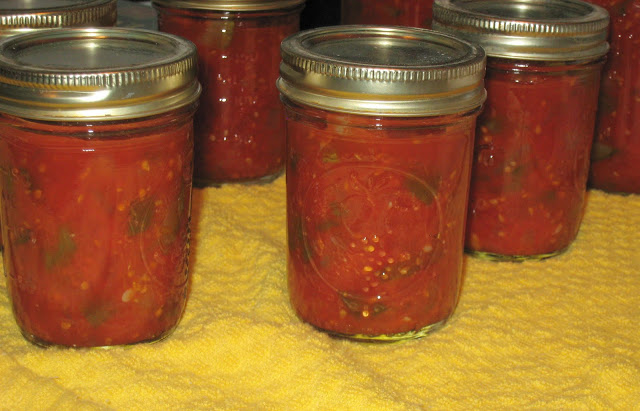
Canned Chili Sauce

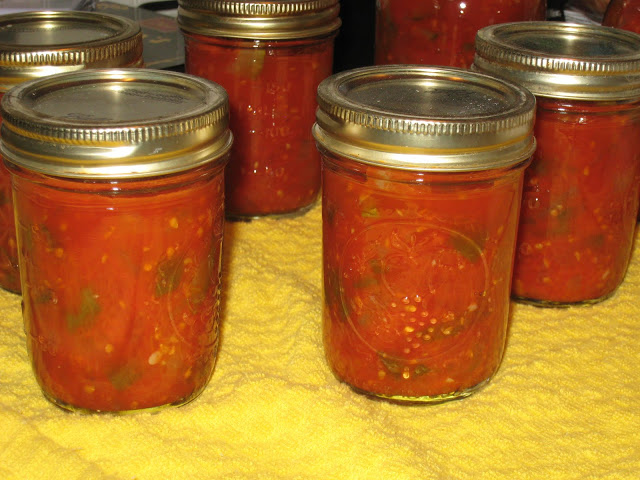
 This homemade canned chili sauce goes perfectly with roast beef and tastes so good you’ll want to eat it plain!

This is a recipe from my mother-in-law for canned chili sauce. It is a great way to use late August produce – tomatoes, peppers and onions.

The chili sauce can be served alongside roast beef or any cut of meat you like. My kids even like to eat it plain or use it as a salsa substitute.

The great thing about this chili sauce is that it is a bit sweet instead of spicy. So my daughter that can’t handle spicy foods loves it.

I like to always have some in the pantry.

How about you? Do you like chili sauce? What do you use it for?

Canned Chili Sauce

4 qts. tomatoes, peeled, chopped
5 medium or 2 large onions, diced
2 green peppers, diced
1/2 bunch celery, diced
(1 medium zucchini, diced…my add in, optional)
1 1/2 Tbsp. salt
3/4 cup sugar
1 cup vinegar

Simmer all together for 3 hours. Process in boiling water for 10 min. Makes 5 – 6 pints.

Mayonnaise

A few weeks ago I tried making mayonnaise. It did not turn out well. I couldn’t eat it. I had to toss it. I did a little searching and found a link for a different recipe on The Nourishing Gourmet. It had good reviews, so I tried it today. Turned out much better! I’ll probably still  play around with the recipe a bit (seasoning) to get it exactly to my liking. But it is good as-is. I didn’t add any whey this time since that has a pretty strong flavor, and I wanted to really taste this mayo. So it won’t last as long, but that’s ok. We’ll see what Justin thinks of it. Now I have to come up with some recipes that use mayo in the next couple weeks 🙂  This is so easy to make. Only takes a few minutes. And it works really well with the stick blender. It thickens up so quickly.

*Edited 7-6-10: We used this to make cashew, avocado chicken salad on Sunday. Tatsed great!!

Mayonnaise

2-4 egg yolks (I used 2)
½ tsp. mustard
1-2 Tbsp. lemon juice
1 tsp. balsamic vinegar
2 tsp. white wine vinegar (I used regular white vinegar)
1 tsp. celtic sea salt
¾ c. oil- hemp or grapeseed (I used grapeseed)

1. Combine everything EXCEPT the oil. I use a container just large enough for the stick blender to go into (I used a wide mouth mason jar).
2. Mix with a stick blender until creamy.
3. While blending, add the oil in small increments and mix until it’s homogenized. I lift the blender up and down as it’s blending- the quick up and down motion helps the mixture to homogenize, and it will thicken right up.

That’s it! This mayonnaise lasts about 2 weeks in the refrigerator.

Variations:
Add:
Onion or onion powder
Garlic or garlic powder
Soysauce
1 tsp maple syrup- smoothes the flavors
Extra balsamic vinegar
Pesto
Cayenne
Basil

Make salad dressings:
Crème fraiche (or sour cream) and dill
Mayonnaise with pesto
Mayonnaise with ketchup, onion, garlic, pickles, soy sauce- (thousand island)
Mayonnaise and/or crème fraiche with any combination of herbs and flavorings
Mayonnaise with crème fraiche and basil

Fermented Berry Syrup

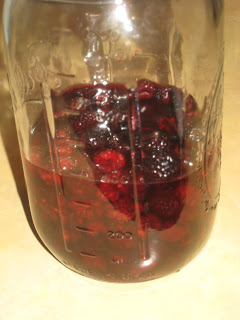
We are getting quite a few black raspberries from our garden this year. We enjoy them fresh, but we don’t eat them fast enough. I decided to try another Nourishing Traditions recipe for berry syrup to use some. It’s so simple to make. And one more way to get fermented food into our diet. I made it Tuesday evening, so it’s still fermenting. I’ll update with the verdict once we try it. I only made a half batch. I’m anxious to try it on pancakes or homemade vanilla ice cream.

*Edited 7/2/10 – I tried some last night. It’s pretty good. But it does have a little bite to it from the salt and whey. I wouldn’t want to eat a bunch plain. But when it’s with something else I think it’s good. I mixed some into yogurt. That was really good. We’ll have to try it on pancakes soon.

Berry Syrup

4 cups fresh berries, such as bosenberries, blackberries, raspberries or a mixture
2 tsp. sea salt
1/4 cup Rapadura (or organic evaporated cane sugar)
1/4 cup whey

Place berries in a quart-sized, wide-mouth jar and press down lightly. Mix remaining ingredients and pour into jar. Add enough filtered water to bring the level of the liquid to the top of the berries. Cover tightly and keep at room temperature for 2 days before transferring to the refrigerator. Use within 2 months.

Mayonnaise

We are almost out of mayonnaise. So I thought I’d try making some. I found a recipe in Nourishing Traditions. It’s very simple to make. But I’m not sure I like it. I think the flavor of the whey is way too strong. Or maybe it’s that combined with the EVOO. I don’t know. I’ll have to try it on/in something before deciding for sure. I’ll post the recipe and update later with a final verdict. This may be one that gets scrapped. It’s all about experimentation. Anyone else have a good mayo recipe?

Oops…as I’m typing up the recipe I realize I was in such a rush making this I didn’t read carefully and forgot to leave it on the counter. I just put it right in the fridge. I’ll set it out now and see what happens.

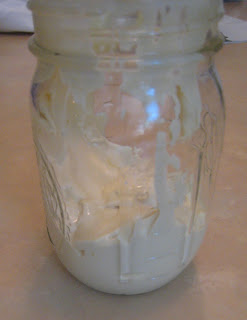
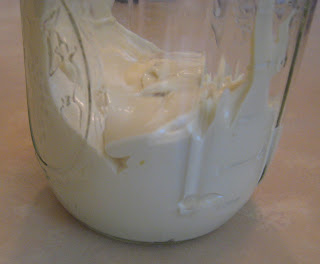
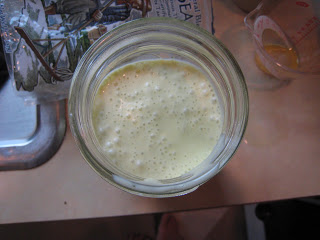
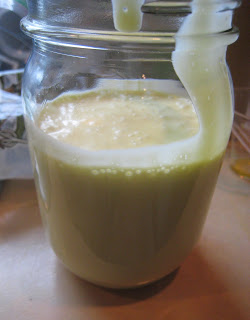
I took the pictures right after I made it…before it had time to firm up.

Mayonnaise

1 whole egg, at room temp
1 egg yolk, at room temp
1 tsp. Dijon-type mustard
1 1/2 Tbsp. lemon juice
1 Tbsp. whey (optional)
3/4 – 1 cup EVOO or sunflower oil (or a combo)
generous pinch of unrefined sea salt

In a food processor, place egg, egg yolk, mustard, salt and lemon juice and optional whey. Process until well blended, about 30 seconds. With the motor running add the oil. Taste and check seasoning. You may need to add more salt or lemon juice. If you added whey, let the mayo sit at room temp, well covered, for 7 hours before refrigerating. With whey added mayo will keep several months and will become firmer with time. Without whey, mayo will keep for about 2 weeks.