Home » Archives for Mary | Just Take A Bite » Page 89

Author: Mary | Just Take A Bite

ADD…Could It Be?

After reading Change Your Brain Change Your Life I am wondering if Rebecca has ADD (Attention Deficit Disorder). It has often crossed my mind since we are constantly telling her to pay attention (she always seems like she is thinking about/preoccupied with something else and not paying attention to what’s going on) but I never really knew all of the signs/symptoms. And I knew she could sit and read for hours, so I figured she couldn’t have it. But after reading more about ADD I now wonder if she in fact does have it.

*******************************
I want to start by saying I am just a mom trying to figure out how to best relate to and raise my daughter. I am not a doctor. I can not diagnose her with anything. But I can gather information and try techniques to see if they improve her behavior. I am not trying to label her with any disorder. I just want to figure out how to give her what she needs. And since her behavior sounds a lot like ADD I am going to look into some ways to work with it and see how it goes. I know a lot of this behavior can be common for a 3 year old and will change with maturity. I know many kids are labeled with ADD that do not really have it. I know a lot of her behavior is a result of how Justin and I respond to her. Rebecca is very sweet and very bright. I am actually amazed daily by how smart she is for her age. My goal is to use some of the techniques suggested for ADD behavior to see if she responds to them. It is not to try to diagnose her with ADD. I also want this post to be helpful and informational for others that want to learn about ADD. I have discussed all of this with my pediatrician. He confirmed that it is something to take note of and keep an eye on and evaluate as Rebecca gets older. Hopefully as she matures she will be able to slow her thinking to be able to focus better.
*******************************

I also want to say that this is going to be a pretty lengthy post. But I decided to put everything in one post so that anyone else looking for information on ADD/struggling with similar issues has all of the information in one spot instead of having to look around or wait for future posts. This is also why it took a while to get it posted 🙂

So, what is ADD? It stems from a problem with the prefrontal cortex. This part of the brain controls attention span, perseverance, judgement, impulse control, organization, self-monitoring and supervision, problem solving, critical thinking, forward thinking, learning from experience, ability to feel and express emotions, interaction with the limbic system (this controls emotions/memories/appetite) and empathy.

I’ll go one by one through the symptoms of ADD and how I see that in Rebecca.

1. The harder you try the worse it gets.
The more people with ADD try to concentrate, the worse things get for them. The activity of the pfc actually turns down, rather than turning up. When a parent…puts more pressure on a person with ADD to perform, he or she often becomes less effective…In parenting…someone with ADD, it is more effective to use praise and encouragement, rather than pressure. People with ADD do best in environments that are highly interesting or stimulating and relatively relaxed.”

I see this every day with Rebecca. One of the major areas this relates to is her eating issues. She can’t focus on eating (a mundane, non-stimulating task…instead she’s talking, singing, wanting to read, paying attention to everything else around her…anything but her plate/food), so we start to tell her to eat. This creates pressure and tension, which actually makes it harder for her to focus and do what she is supposed to. To us it appears that she is not listening/not obeying, so we get more frustrated and put more pressure on her. It just goes downhill from there. And she ends up stressed and not able to eat. This happens with any day-to-day task…going potty, getting dressed, eating, cleaning, etc. She can’t focus because it’s not stimulating. So we get frustrated and put more pressure on her/keep telling her to do whatever the task is. And in most cases it ends up with yelling or a meltdown/time out. I even see this when we do school work. The more times I tell her to try something or do something again the more she seems to struggle and lose focus and get frustrated/discouraged.

2. Short attention span
People with ADD have trouble sustaining attention and effort over prolonged periods of time. Their attention tends to wander and they are frequently off task, thinking about or doing things other than the task at hand. Yet one of the things that often fools inexperienced clinicians…is that people with ADD do not have a short attention span for everything. Often, people with ADD can pay attention just fine to things that are new, novel, highly stimulating, interesting or frightening. These things provide enough intrinsic stimulation that they activate the pfc so the person can focus. A child with ADD might do very well in a one-on-one situation and completely fall apart in a classroom…People with ADD have long-standing problems paying attention to regular, routine, everyday matters…The mundane is terrible for them, and it is NOT a choice. They need excitement and interest to kick in their pfc function.”

Again this relates to our daily struggles with Rebecca to go potty, get dressed, eat, pick up toys, etc. We can tell her to do something 20 times, try to be patient, say it in a positive happy voice, etc. But she just can’t do it. She will tell you a story, sing a song, ask questions, focus on her little brother, notice anything else in the room, etc. But she won’t complete the task at hand. Again, this creates frustration for us…which leads to impatience…which leads to frustration for her. If we are in a social setting it is like pulling teeth to get her to focus on what we are saying. When it is time to leave Kindermusik and she has to put her shoes on, I can be in her face telling her to do it and she seems like she is off in la-la land watching all of the other kids. It’s like I don’t even exist. I have to physically turn her face so she is looking straight at me and can hear what I’m saying. This was the section I found particularly interesting and made me really wonder if Rebecca has ADD. Now I know she can focus on the things she likes and that stimulate her. But (not by choice) she really struggles with the daily tasks. Which is the source of most of our daily battles and frustrations. This is also why Rebecca can read for hours. She loves stories, hearing what will happen next. It is stimulating to her. Her favorite thing to play is some type of character/pretending. Especially if one of us will play with her. It’s actually hard to “play.” She repeatedly tells you to make the character say or do something. Or asks you what they are saying.

3. Distractability
When the pfc is underactive it doesn’t adequately dampen the sensory parts of the brain, and too many stimuli bombard the brain as a result…while listening, in class…the person with ADD tends to notice other things going on and has trouble staying focused on the issue at hand. People with ADD tend to look around the room, drift off, appear bored, forget where the conversation is going, and interrupt with extraneous information.”

I see this daily with Rebecca. Sometimes it’s like I’m talking to a brick wall or that I don’t exist. I can talk to her, but it’s like she does not  hear me and is always thinking about something else. When I really want her to pay attention I tell her to look me in the eyes. But even that she has trouble with. She can look at me for a few seconds and then starts to look at something else. I have to keep refocusing her. One thing I have noticed is that her behavior got worse after Abram was born. I figured that’s common. No big deal. But now I wonder if Abram is enough of a distraction for her that it makes focusing that much harder. When it’s time to get dressed she’s more interested in what he’s doing. Since he is always with us, is unpredictable and always doing something new he provides her with stimulation…and something more fun to think about than daily tasks. It was definitely easier to get her to focus when it was always one-on-one (Mommy/Rebecca). Rebecca also always seems like she is thinking about something. There is always a story or idea in her head that she needs to get out. If you tell her to do something (like pick up toys) her immediate response is “but first…” There is always something on her mind, something that she needs to do that is distracting her before she can focus on what she should be doing.

4. Impulsivity
ADD people may say inappropriate things to parents, friends, teachers, etc. Poorly thought out decisions also relate to impulsivity. Rather than thinking a problem through, many ADD people want an immediate solution and act without necessary forethought. They say the first thing that comes to mind.

This characteristic is not quite as obvious in Rebecca since she is 3…and does not have good discernment yet about what she says. But she does often speak without thinking about the reality of the situation. If she wants something and I tell her no, her immediate response is to think that something is permanent or hopeless…”I’ll never get it” or “Now it’s gone forever.” She is also not self aware at all.

5. Conflict seeking
Many people with ADD unconsciously seek conflict as a way to stimulate their own pfc. They do not know they do it. They do not plan to do it. They deny they do it. And yet they do it just the same. Hyperactivity, restlessness, and humming are common forms of self-stimulation. [As is] causing turmoil. The parents of children with ADD commonly report that the kids are experts at upsetting them. When parents stop providing the negative stimulation (yelling, lecturing, etc.) these children decrease the negative behaviors. Another common self-stimulating behavior is worrying or focusing problems. A significant problem with using anger, emotional turmoil and negative emotion for self-stimulation is damage to the immune system. The high levels of adrenaline produced by conflict-driven behavior decrease the immune system’s effectiveness and increase vulnerability to illness. Many folks with ADD tend to be in constant turmoil with one or more people. They seem to unconsciously choose people who are vulnerable and pick battles with them. Many children and adults with ADD have a tendency to embarrass others for little or no good reason.”

Although it’s probably not a conscious choice, Rebecca definitely knows how to get a reaction out of us. Lately her favorite thing is to say “No!” when we ask her to do something. She knows what behavior will put her in timeout. When she’s in timeout she knows that it makes us made if she kicks the walls…so that’s usually the first thing she does (until she realizes we’re ignoring it). And she LOVES to get Abram riled. She goes crazy when he starts laughing, etc. at the things she does. Unfortunately when she gets stimulated and silly then she gets naughty and starts hurting people (hitting, pushing, pulling hair, etc.).

6. Disorganization.
ADD includes disorganization of space…as well as time. People with ADD tend to have many piles of ‘stuff.’  They are chronically late or put things off until the last minute. They also tend to lose track of time.”

Rebecca is not organized at all. Considering that she has two very Type A parents this is kind of surprising. She hates putting things away and leaves things on the floor/where she was playing with them when she got distracted and moved on to something else. She will pile things up anywhere. She also has no sense of being on time. She does not like to be rushed at all. Getting out the door on time with her is a big challenge.

7. Start many projects but finish few
The energy and enthusiasm of people with ADD often push them to start many projects. Unfortunately, their distractability and short attention span impair their ability to complete them.”

If you saw my house by the end of the day you’d know that Rebecca gets out a LOT of toys. Sometimes I feel like I can barely walk through the house by mid day. Every room has toys and books scattered all over the floor. Rebecca often gets something out to play with it. But 5 mintues later she is distracted by something and just leaves it there. Then she sees another toy she wants to play with and so on. I have been bothered for some time now by how many toys we have in the living room. I like to have things available for the kids and to let them have free play. But I’m wondering now if it is too stimulating for Rebecca (I know it’s anxiety inducing for me…too much chaos!). This may be my final motivation to really pare down how many toys we have out at one time. Maybe if there were only a few things out each day to choose from she could focus better. That being said, if I have time to sit down one-on-one with her and play she could play the same thing for an hour. I can keep her focus. But if she’s on her own she goes from one thing to the next. And she just leaves things where they are…she never cleans something up or moves it out of the way before moving on.

8. Moodiness and negative thinking
Many people with ADD tend to be moody, irritable and negative. An underactive pfc leads to mood control issues. Many people with ADD worry or become overfocused on negative thoughts as a form of self-stimulation. If they cannot seek turmoil from others, they seek it within themselves.”

Rebecca…moody? Never 😛  She definitely worries if anything goes wrong (I’m sure she inherited this from me…I’m working on helping her with it). Something as simple as her cup falling on the floor can cause her to start making noises/panicking. She also has a fatalistic attitude. If a toy gets taken away then she’ll “never get it back.”
Those are the symptoms of ADD. I’m sure all 3 year olds have some degree of them. But Rebecca seems to have all of them. And some of them pretty severe. Just yesterday we were at the dentist. I was continually calling Rebecca’s name to come take off her coat (she was playing with the toys in the waiting room…new stimulation.). It was like she didn’t hear me even though I was two steps away. Then 3 little girls came out and headed to the toys. It was like Rebecca was instantly in another world. I was right next to her telling her to pick up her hat and stuffed monkey. I could have been blowing a fog horn and she wouldn’t have batted an eye. She looked like she was in a trance just enthralled with them. I had to physically pull her away and get her attention. The other girls didn’t pay any attention to Rebecca. They were oblivious to her. But Rebecca could not turn away from them. She stood there like a zombie. As I said before I can’t say for sure she has ADD. But based on her behavior it really seems like it.

So, now that you know what ADD is what can you do about it?

The idea is to learn total focus. Here are some techniques to accomplish leading a focused life and healing the pfc.

1. Develop clear goals.
Set goals for every area of your life (relationships, work, money, self) and write them down. Then review them every day. This is somewhat tough with a small child. But it can still be done. A while back we came up with our “house rules.” We used to read them daily…then we got out of the habit. I am trying to do it again. This helps Rebecca stay focused on proper behavior and what is acceptable. In addition I would like to write out other goals with her about how she wants to relate to us, how she wants to learn, etc. Very basic goals, but still something to help her focus.

2. Focus on what you like instead of what you don’t like.
“Focusing on what you like about your life and on what you like about others is a powerful way to keep your pfc healthy.” This is something that parents really need to help with. A child with ADD needs lots of praise and encouragement. I need to focus on all of the little things Rebecca does daily that are good instead of just noticing the things she does wrong. I have already started doing this. I try really hard to tell her every time she is eating nicely. So far I think it’s helping quite a bit. We actually haven’t had many food battles over the last few days. It’s nice.

3. Have meaning, purpose, stimulation and excitement in your life.
All of these things will help stimulate the pfc in a positive way. This was what brought about my experiments last week with doing lots of new, fun things every day. I had a mixed response. There were some things that Rebecca really loved and helped her to focus. But other things seemed to make it worse. I think the trick is finding balance (I think maybe we had too much good stimulation some days…we do need some down/normal time as well) and finding what particular things Rebecca enjoys/that excite her. Just because I think something is fun doesn’t mean she will…in which case she won’t be able to focus on it. Rebecca can easily be overstimulated, like when people visit. She gets so excited that she can’t control herself. So we need to figure out a good balance for her.

4. Get organized.
This is another thing that parents really need to help with. I need to get Rebecca’s toys, school supplies, etc. much better organized. Since things are so scattered she can’t focus. Another thing is to break down large tasks into smaller ones. Rebecca is easily overwhelmed by cleaning up her whole bedroom when there is a mess. But if I can get her to focus on picking up one particular item at a time then she does a lot better.

5. Don’t be your child’s stimulant.
This is one for the parents. People with ADD seek conflict…which usually means conflict with parents. So we have to be in control and not be our child’s negative stimulant. The main way to do this…stop yelling. I am a soft spoken person. I don’t like to raise my voice. But inevitably after the 15th time of trying to get Rebecca to do something it goes up…and sometimes leads to yelling. It’s not healthy for either of us. But the frustration takes over. The solution is the exact opposite. If you maintain a low voice and calm demeanor the child can’t use you as a stimulant. If a child raises her voice, you should continually lower yours. It may take time, but she will learn that you are not a stimulant…and the behavior will stop. Sometimes it’s tough to stay calm. In some cases you have to step away from the situation. And other times humor can help. I am finding all of these to be very helpful. If I give Rebecca about 5 chances to do what I ask but there is still no progress I walk away for a few minutes. Often when I come back I find her doing what I asked.

6. Listen to Mozart.
This is kind of interesting theory. There have been studies done that show that children that listen to Mozart can have better focus and mood control, diminished impulsivity and improved social skill. I think any rhythmic, relaxing music will have similar results. I guess going to Kindermusik may be more helpful for Rebecca than we thought.

7. Nutrition.
This is a big one for me since I’m passionate about health. This particular book suggests a high protein, low carb diet that is relatively low in fat. This includes meat, eggs, cheese, nuts and legumes mixed with a healthy portion of vegetables. Also, eliminating simple sugars and simple carbs can have a positive impact on energy level and cognition. The idea behind this is to raise dopamine levels in the brain. I can’t subscribe to this 100%. I don’t believe a low fat diet is good for anyone, especially children. But I do think that getting a better balance of protein and carbs is critical. As is cutting out sugar and simple carbs. My goal for Rebecca is to continue to feed her plenty of healthy fat daily (butter, cod liver oil, EVOO, coconut oil, etc.) and make sure she gets plenty of protein. With children it’s so easy to give high carbohydrate snacks and make that a big portion of their meals. I’m really trying to make sure Rebecca eats plenty of protein and veggies with a moderate amount of complex carbohydrates. And of course cut out the sugar!

So this is where we are at right now. We are learning the symptoms and the tools to deal with them. We are learning how to feed her well. And we’re taking it one day at a time. But there is another factor that comes into play. Rebecca’s intellect. She is very smart. Sometimes I wonder if that is part of her stumbling block. She is always taking everything in (she has done this ever since she was born). She wants to learn, learn, learn. So is it ADD or is she just too smart for her own good? 😛  Only time will tell I guess. I am anxious to see how she does in preschool next year. I think that will give a better picture. If she can’t focus in school/in a social setting then we may have to look more into ADD. But if she really excels then maybe she just wants to learn a lot and needs time to mature. We are looking forward to watching her grow and develop. And we as parents will do our best to give her an environment in which she can thrive, focus and grow.

How about you? Do you struggle with similar issues with your child? Do you have experience with ADD? Do you have any tools that have worked. I’d love to hear about it!

This post is linked to Fat Tuesday at Real Food Forager.

The Letter Q…Question

What do you do with the letter Q? That was my question last week. So I decided…not much 😛  We did talk a bit about quails and queens and wrote our letters. But that’s about it. Instead I decided to change up the whole week. I wanted to do some behavioral experiments. And I wanted to keep us entertained during a long week inside while Justin was gone. So I did a theme for each day of the week. Sadly Thursday and Friday some plans fell through and we had to take it a bit slower since Abram was sick. But we still had a fun week. Here’s what we did.

Mystery Monday (everything was a suprise for Rebecca):
painting
math w/ candy (then eat the candy of course)
lunch – egg tortilla quesadilla
snack – triple ice cream cone
plaster foot mold of the kids
bake manna
watch a tv show (a special treat for her)

Tasty Tuesday:
baking – apple raisin date bars
breakfast – breakfast cake
lunch – tea party – tea (warm milk w/ honey), finger sandwiches, bars, cucumbers, wear a dress and hat
dinner – salmon cakes (one of her favorites)

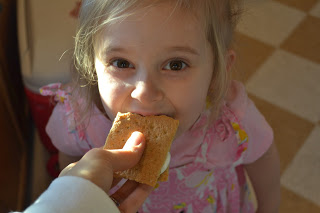
make s’mores (first time she’s ever had one)
watch part of her new Veggie Tales movie

Wacky Wednesday (based on the Dr. Seuss book):
move tables/chairs/toys to odd places…she got to find all of the wacky things
odd meals/utensils/dishes
shoes all over the house
dress in summer clothes
watch the rest of the Veggie Tales movie
ice cream w/ surprises inside (a few pieces of candy)
lunch – chicken salad Waffles, frozen Watermelon, White cocoa (like hot cocoa…warmed milk with a little white chocolate), White beans

Thankful Thursday:
We were thankful for family. I got to talk to my sister in the morning…sure was great to chat to an adult!
My parents visited – Rebecca LOVES when any of her grandparents visit.

Fun/Funny Friday:
dance/listen to music
make ice cream
PLAY!

We even tried Abram’s new Baby Legs. So cute!

Meal Plans Week of 1-15-12

Home sweet home…Justin is home 🙂  It sure feels good to have Justin back after a week away in Japan! Last week was…interesting. It definitely had its share of challenges…car mishap, sick baby, power outage (brrr!), lots of sleepless nights, canceled plans (2 playdates and a trip to the library), plane delays. But we made it. And we are thankful Justin is home. Hopefully he can stay put for a while 🙂

We did do quite a few fun things last week. I’ll post more on that in our letter of the week post. In the kitchen I made beets, mayo, pesto, manna, breakfast cake, yogurt, sour cream and ice cream (experimented and made it with a combo of milk, yogurt and sour cream…pretty good). We also had a visit from my parents and went to a preschool open house.

It was kind of nice not having to go anywhere last week. Especially with all the snow we got! Just when we were starting to wonder if it was really winter we got a ton of snow the last 2 days. Schools were even closed on Friday. Maybe we’ll have to spend some time outside today. This week will definitely be busier than last week. Today is church. Monday Justin has off of work for Martin Luther King Jr. Day. We have milk pick up, and I have a nursery cmt meeting. If time allows Rebecca and I might have some Mommy/daughter time. Possibly a trip to the library. Tuesday it’s back to normal routines and grocery shopping. Wednesday Rebecca and I both have dentist appts., and Justin has worship team. Friday is MOPS. My table is providing breakfast, so I’ll be doing some baking this week for that. Saturday I’d like to get to the fabric store. I think I’ve decided to skip our PERKS activity this month since it is painting pottery…we did that last month. We need to decide today if we’re doing swimming lessons and/or soccer lessons for Rebecca. I think the first session of swimming starts this Saturday! So we have to get that figured out.

The kitchen will be busier this week than last since I actually have to cook again 😛  Justin brought home some chop sticks from Japan, so maybe we’ll have a meal or two where we can use them. Since Justin wasn’t home last week we have quite a bit of milk yet to use up. So I’m trying to decide what to do with it. Maybe a batch of pudding? Or more farmer’s cheese? I might make another attempt at butter this week after getting more tips from Donielle. We’ll see how it goes. I also have to start thinking about cakes! I might be making a birthday cake for my dad next weekend. And I will be making my nephew’s cake again in a few weeks. Time to start brainstorming and planning!

I was a bit all over the place last week. I know it was mostly due to stress/anxiety and lack of sleep. The last couple days have been pretty good, though. I got my new order of magnesium drops (had a few days where I was out) and my magnesium oil spray. It’s hard to say if it’s helping after just a few days. I’ll have to report back on that. I do feel that overall the magnesium helps. I have continued to read and research about brain function, the nervous system, etc. And I’ve been reviewing my eating/health over the last decade. I have a lot of ideas in my head that I hope to put into a post very soon. But I did want to mention that over the last few days I have eaten a little bit of bread (fermented bread…I even ate a small sandwich!) and some potatoes. I have also been trying hard to increase my fruit and veggie intake while decreasing protein a little. I still make sure to eat plenty of healthy fat, but not go overboard. Only time will tell how the changes will impact me, but I can say that I tolerated the grains/starches a lot better than I had expected. So far no major issues. And on the positive side I feel like I’ve had a much better appetite the last few days. For the first time in a while I wake up to a growling stomach again 🙂  It feels like my tummy is digesting more effectively instead of feeling like there is a brick in my gut. It feels good to feel hungry! This week I will keep experimenting. I want to try sweet potato and rice. I also need to start baking some properly prepared grains so I have them on hand for myself…make sprouted flour, soak flour for breads, etc. Soon I’d like to make a new sourdough starter. I might also start more “juicing” this week. Not true juicing. But using my Vitamix to make smoothies that contain a larger variety of fruits and veggies than I normally use. And change the ratio of my smoothies. They are usually mostly protein (yolks, sour cream, etc.) and fat (coconut oil). I want to bump up the fruit/veggie portion in them. See if that helps. I know it will help in one way…making it easier to keep up with my little climber while I try to eat lunch 🙂

I did some experimenting with Rebecca last week. I still have more to do, though. Last week was not a normal week for us, so it’s hard to say what had the most impact on her. I hope to do a post on that soon as well.

Here’s what’s on the menu for the week.
—————————-
S (prep lunch, church, make vanilla pudding, make hot fudge)
  L – 7 layer dinner, peaches
  D – milkshakes/smoothies, pesto grilled cheese, chips, pudding

M (make yogurt, milk, MLK, grind flour, nursery cmt, soak rice, library)
  D – (early) – chx pesto pizzas, apple slices

T (skim cream, make sour cream, Meijer, make butter)
  D – sweet and sour chicken stir fry over soaked rice (w/ chop sticks)

W (dry apples, dentist, WT, marinate steak)
  D – (prep ahead) – pumpkin, squash, carrot soup, leftover pizza

Th (prep MOPS food, make almond butter, sprout wheat berries)
  D – marinated steak, baked sweet potatoes, roasted brussels sprouts

F (clean, bake casserole, MOPS?, soak lentils)
  D – soaked pancakes, homemade sausage links, veggies, pears

S (bake squash, cook lentils, laundry, swimming, fabric store?)
  D – stuffed squash w/ lentils, sausage, peas, onions, cheese; pears

The Letter P

Last week we were back on track with school work. We did the letter P.

The Letter P

projects – penguin (we were planning to paint…but Rebecca’s behavior did not allow it), lots of coloring
baking – pudding pops, pita bread, pizza
outings – MOPS, basketball game
character – patience
misc. – princess, tea party, play, water table, play in the snow

Meal Plans Week of 1-8-12

Good morning. We’re getting back into the swing of things around here, trying to get used to Justin being back at work, getting back into preschool, etc. It was fun to go to MOPS again last week and have some adult chat time. And yesterday we went to our first Calvin basketball game of the season. Rebecca went with Grandpa and Grandma. We came at half time…after Abram’s nap. Rebecca had a blast as usual, wearing out Grandma 😛  Abram wasn’t so fond of it. He seemed a bit scared the whole time and did his share of crying. At least we got out of the house for a bit 🙂

This week is actually quite uneventful. Maybe that’s a good thing since Abram has not been sleeping well at all (major teething), and I have a cold. Today is church if I think we’re all up for it. Wednesday my parents will be visiting (still TBD if they’ll be eating dinner with us) before they go to another basketball game. I’d like to go to the library some day this week. We haven’t been there in  a long time. Saturday morning is an openhouse for one of the preschools we’re considering. I’m not sure yet about any playdates this week. I’ll see how we’re feeling/if the kids catch my cold.

We had fun in the kitchen last week. Rebecca and I made homemad butterscotch pudding pops, pita bread and pizza (for the letter P). I also made another attempt at butter. This time I used our raw cream and just my hand mixer…another failure 🙁  I even let it chill and tried more. I put it in the food processor and tried again. Nothing. I think I’ll give it one more try in the Vitamix. If that doesn’t work then I guess our milk just does not have high enough fat content (which is a bummer). I tried my Vitamix. Nothing major. I used it to grind flour (so fast and easy!!) and make smoothies. I have yet to look through my new cookbook that came with it and try more recipes. Of course I made my other usual weekly dairy products.

This week we’re doing the letter Q. So…my meal strategy…QUICK! I’m planning quick, simple meals that will give us plenty of time for all the other stuff we want to do. I don’t have any big plans for kitchen work. I will probably make pesto and maybe some mayo (if we run out). I’ll likely do my last butter attempt (unless it works…then it won’t be my last :). And I’ll see if Rebecca wants to do any baking. We just finished our breakfast cookie stash, so maybe we’ll make more of those.

I gave my big update yesterday about where I’m headed with my diet. So this week I will be focusing on changing my meals to be more focused on carbs. See how it goes. I also want to continue trying to cut back on sweets. I need to find some non-sweet, carb rich, grain free, nut free snacks. Any good ideas?? I did start adding a little bit of yogurt to my diet yesterday and this morning. We’ll see how it impacts me this week. I’ve been able to read more of Change Your Brain Change Your Life. And so far I still feel like I’m on the right track diet-wise for my mental state. Everything that correlates to my issues is helped by a high carb, lower protein/fat diet. Hopefully by getting out of the fight or flight state my whole body will relax and function properly. I also ordered more magnesium. This time I ordered the drops and magnesium oil spray. The topical stuff is supposed to be more effective/more easily absorbed. I’m anxious to try it and see how it goes. Maybe I’ll even have Justin try it. I’ve heard it can help with restless leg syndrome.

That’s about it for this week. I spend most of my day just trying to keep Abram out of trouble. I’m kind of anxious for him to start walking (which may not be far away!). Right now he ONLY wants to climb…on anything and everything. He does not care about toys at all (although he does like cords, outlets, paper and small objects he shouldn’t have…and getting into things in the bathroom). He just climbs (pulls himself to standing)…on chairs, tables, the bookshelf, the couch, stools, toyboxes, the exersaucer, the refrigerator, the stove, walls, doors, the stairs, trash cans, the computer, the bouncy seat…everything! And if nothing is near him…he climbs on me! He literally pulls himself up on my leg. Yesterday he almost pulled my pj pants down 😛  He does not want to be strapped into anything (high chair, car seat, etc.). So dinner time for me is either holding on to him, eating one handed while he climbs on my chair or sitting on the floor by him and putting my dinner on my chair to take ocassional bites. He can crawl so quickly now. You literally have about 3 seconds from the time you set him on the floor until he’s reached something to climb. Makes it tough to do pretty much anything. He needs constant supervison (we’ve already had too many tumbles/bumps :P). Anyway, life is busy to say the least. This little boy is going to keep us on our toes!

Here’s what’s on the menu. Wednesday’s meal could change depending on whether or not my parents will be here for dinner.
————————–
S (prep lunch, roast beets, church, fold laundry)
  L – roasted chx and veggies
  D – beets, cucumbers, beans, squash, crackers w/ cheese

M (fold laundry, bake)
  D – salad w/ chicken, cucumbers, avocado, beets, bacon; honey mustard dressing

T (skim cream, make yogurt, make sour cream, soak beans, make mayo, bake)
  D – salmon cakes, peas, beets

W (cook beans, soak breakfast cake, put away laundry, library)
  D – salmon cakes, pumpkin, beets, avocado

Th (make pesto, make breakfast cake, visit friends, parents visiting/over for dinner)
  D – mini broccoli cheese pesto quiche, beans, applesauce, pesto bread or pumpernickel bread

F (boil eggs, clean)
  D – egg salad, sauteed zucchini and onions

S (laundry, preschool open house?)
  D – pork steak, roasted potatoes, beans

The Autonomic Nervous System and Diet…Where I’m Headed For Now

It seems I keep learning new stuff every day 🙂  I have read part of Change Your Brain Change Your Life (I still have a lot of reading and learning to do!). And there is a lot of great information. One thing that really stood out to me already was the discussion of the sympathetic vs. the parasympathetic nervous system.

“There are two branches of [the autonomic nervous] system. One of these branches, the sympathetic nervous system, is often referred to as the “fight or flight” branch. It helps you burn energy. The other branch is the parasympathetic nervous system. This branch helps you conserve energy. It also helps you digest food.” (1)

Both in GAPS and CYBCYL I have read about this. And I found that I have major sympathetic dominance. This correlates to OCD, worry, anxiety, etc. It also correlates to slow/poor digestion. When your sympathetic nervous systems is overactive you are often in a fight or flight state. This state shuts down unnecessary processes…as in digestion. I knew that my anxiety made my digestion worse. This just makes it really understandable now. And gives me direction. I need to calm my sympathetic nervous system and stimulate my parasympathetic nervous system (I mentioned this once in an update post after reading about it in the GAPS FAQ). This will let my digestive system function and get rid of the worry. It will help my brain and gut function normally.

So I was doing a little research on diet related to the PNS, and I came across metabolic typing. Bill Wolcott says that different people have different nutritional needs (makes sense). Some people need more protein and fats, while others need more carbohydrates, depending on whether you are sympathetic or parasympathetic dominant. And depending on how your body burns energy. Here is the basic idea behind this type of diet.  You can do an online test to see what type of diet you need. Turns out I’m a carbo type…which corresponds to your body functioning best with a high carb, low fat, lower protein diet.

“Generally speaking, if you’re a carbo type you need a higher percentage of carbohydrates in your diet in order to strengthen the parasympathetic branch of your nervous system, which is weaker than your sympathetic system, and thereby alkalinize your too-acid metabolism. Or you need more carbohydrates to speed up your naturally slow cellular oxidation rate, thereby bringing it into balance by acidifying your too-alkaline metabolism.
Carbo types typically do well on a low-fat, relatively low-protein diet — one that includes liberal amounts of carbohydrates in the form of vegetables, fruits and whole grains. However, carbo types need to remember that a “low-protein” diet does not mean a “no-protein” diet. In fact, most carbo types will find that they need to include protein at most meals, but they need to focus on leaner, lighter meats, seafood and poultry than protein types. They should restrict their consumption of red meat in favor of light meat chicken and turkey and lighter seafood such as haddock, cod, perch, sole, catfish and flounder.
If you’re a carbo type you should stick to low-fat dairy products, but you can eat a very wide selection of vegetables, fruits, and grains. However, many carbo types, like protein types, do best by focusing on vegetables that contain low or moderate levels of sugar and starch.”(2)

This is definitely not the way I’ve been eating. By following GAPS I tended to eat a high protein/fat, low carb diet. Not intentionally. That’s just what tends to happen since GAPS is so focused on nourishing animal foods and fats. I’m finding that GAPS tends to be better suited for people with parasympathetic dominance (protein types). And this might be why I struggle so much with too much meat (especially beef) or fat or nuts. I don’t balance it with the proper amount of carbs.

Does this mean I need to start eating tons of bread, pasta, etc.? Absolutely not! Does this mean you can’t do GAPS and follow metabolic typing? No. I have to be more deliberate about my food choices and ratios. Carbs come from vegetables. When I put food on my plate I need to add more vegetables and less meat (the opposite of how I’ve been eating). Grains still may not be the best option for me. I have to try and see. Here is some info from Dr. Mercola on this issue.

“While this is technically correct, if one doesn’t understand the practical distinction between grains and vegetables, one is likely headed for a health disaster. It is important to remember that over two-thirds of Americans are either obese or overweight, and nearly every one of these individuals needs to lower their insulin levels.

Additionally, most people with high blood pressure, high cholesterol and diabetes also struggle with elevated insulin levels that respond quite well to grain restriction.

So what nearly all of these people–likely over 85 percent of the U.S. population–will benefit from is not a low-carb diet (the Atkins Diet), but the grain-free diet outlined in detail in my new book.

So if you are a Carb Nutritional Type™ you will require about 60 percent of your food as carbs, 25 percent protein and 15 percent fat, but this type may need as little as 10 percent fat and as high as 80 percent carbs in exceptional times. If you followed an Atkins Diet you might improve initially but eventually your system would break down because it required far more carbohydrate.

Once a person attains a normal weight and does not struggle with other insulin related disorders, it is actually possible to consume some grains and remain perfectly healthy. Carb types actually can do quite well with grains, but remember this is likely to only be about 15 percent of the population at best.

Don’t stress out about the percentages; they are only rough guidelines. Even if they needed to be precise, you wouldn’t take the time or make the effort to eat exact percentages of foods every single time you ate, especially for the rest of your life.
Additionally, your activity and stress levels will affect and alter the quantity of food, as well as the ratio of proteins, fats and carbohydrates, you need to feel your best.
Last, there is also a circadian rhythm to account for. Your biochemistry moves through various phases throughout the day. These rhythms involve your hormonal output, your acid/alkaline shifts, your waking/sleeping times and many other time-based variables. While some people will have a need for the same ratios of protein, fat and carbs at each meal, others will discover that they need very different ratios at the different meals in order to derive optimum energy, well being and performance” (3)

Here is a guideline of foods that are good for carbo types.

I’ve been so focused on eating protein and fat and grain free that I think I got too low carb (again, not intentionally). While this may have helped seal my gut, it made my PNS even slower…resulting in slower digestion…and not improving my OCD.

What does this all mean? It means I have some experimenting to do. It means I need to be conscious of the ratios of food on my plate. It means I need to increase veggies. It means I’m gradually returning to where I started this journey…a whole/real food balanced diet that does not include processed foods and sugar. At the moment I am still eating a full GAPS diet. But I need to shift it a bit so that I eat plenty of carbohydrates and not quite as much protein and fat. And see if my body handles that better. I would like to add a small amount of properly prepared grains (soaked, fermented, sourdough) as well in the near future and see how I do. I don’t intend to eat “low fat.” I still think I need plenty of healthy fat. But maybe not quite as much as I have been eating and in better balance with my carb intake. I will still eat full fat dairy. I’m not a fan of low fat dairy, especially when nursing and trying to get my hormones in balance. And I don’t intend to eat tons of grains. I don’t think that’s good for anyone. I’m going to try to find the right balance of nourishing food for my body. For now that will focus on shifting from high protein/fat to high carbohydrate. In some ways this sounds like a big change, but in other ways it’s not. Really I just need to eat more vegetables 😛  And I need to be sure I’m not eating sweets. I need to combine all of information I’ve learned over the last couple years with this new information and with what I know about my own body. I still believe in eating lots of nourishing foods like eggs, butter, broth, coconut oil, fish, etc. But the quantities may have to be adjusted for each person’s body/metabolism type. Let the experimentation begin!

I know some people don’t believe in metabolic typing. I can’t say at this point if it does or does not work. But I’m going to try it. I figure I have nothing to lose. If it doesn’t give me improvement, then I find something else. But then again it might help! So this is where I’m at right now. I would also like to try to figure out Rebecca’s metabolic profile to see if I need to adjust her diet. I can’t assume hers is the same as mine. Everyone’s is different. And it can change throughout your life. Again, this is where I’m at for now. I’ll see how it goes and continue to listen to my body while focusing on healthy, real, nourishing food.

I will have to experiment with my ratios. I am a carbo type. But I think I lean a little towards a mixed type too…which would require an equal balance of protein, fat and carbs.

I am curious to see if this has any impact on Abram as well. He has had digestive issues lately, slow digestion. Is it possible that my carb/protein ratios can impact the makeup of my milk in the same way? I guess we’ll see.

There is still more that I’m learning and would like to share at some point. I will be looking into supplements. And I hope to do a series of posts on brain function and tools to overcome problems.

Do you have any experience with metabolic typing? Any thoughts or opinions? I will update as I experiment. But I’d love to hear stories from others as well.

(1) – Alternative Medicine
(2) – The Metabolic Typing Diet
(3) – Mercola

Change Your Brain…

Change your brain…is that possible? For someone with OCD most days that seems impossible. But maybe it’s not…

I’ve said it before and I’ll say it again (and again and again. I have to keep reminding myself.)…God’s timing is perfect. And He knows exactly what we need when we need it. I’ve been adjusting my diet over the last couple years to try to be healthier and heal both my mind and body. This journey led me to the GAPS diet. Which has been extremely helpful. After 9 months I have seen a lot of progress. But I’m still not where I want/need to be. Then a few weeks ago as I was digging through the clutter on my desk I spotted a book that has been on my shelf for well over a year now. And it’s not even mine! Sorry, Sara. I will give it back. I promise 🙂  My SIL loaned me Change Your Brain Change Your Life a long time ago (thanks so much!!). It’s been on my to-read list ever since. But life got busy with pregnancy, kids, etc. And I forgot about it. But for some reason a few weeks ago I spotted it, pulled it off the shelf and started to flip through it (not something I would normally take the time to do, but God knows better).

I don’t often have time to read. I have several books sitting on my desk that I started reading when I was pregnant…that I haven’t touched since then. But it just so happens that when we have overnight guests (like we did over Christmas) I bike in the mornings in the office instead of the basement, which means no tv. I can only read. Normally that would mean flip through a magazine. But instead I started reading this book. I skipped right to the chapter on worry and obsessiveness (in other words OCD). It was like reading a chapter about my life. The idea behind this book is that when you have a mental illness it is actually a physical issue in your brain…that can be fixed. If your brain was scanned you could see strange activity in certain areas, correlating to certain mental illnesses/brain functions. OCD stems from problems with the cingulate system. Problems with the cingulate system cause:

worrying
holding on to hurts from the past
getting stuck on thoughts (obsessions)
getting stuck on behaviors (compulsions)
oppositional behavior
argumentativeness
uncooperativeness (tendency to say no automatically)
addictive behaviors (alcohol, drugs, eating disorders)
chronic pain
cognitive inflexibility
OCD
eating disorders
road rage

Well…that pretty much sums it up 😛  That’s me…and I don’t like it one bit! My brain makes me negative, argumentative, obsessive, quick to say no. No wonder growing up my dad often said the common phrase “Mary, Mary quite contrary.” It was true. My behavior is made up of all kinds of stuff that I don’t like and that is not the kind of example I want to set for my kids. I want to be a Godly woman that is loving and kind and patient. I want to be a good wife and mother and not let my messed up brain control me. So I want to do something about it. I want to change my brain. This book gives quite a few techniques for overcoming these issues. And I intend to try some of them (I have already done some via my years of therapy). I hope to do more posts about some of the specific techniques later. Sadly this book jumps right to medications as a solution. I don’t intend to do that (although some days it is tempting to think that a pill could magically take away the obsessive thoughts that I can’t get out of my head). Thankfully it also talks about diet. I’m glad this author sees that as a critical part of healing. Wouldn’t you know it…he says that a high protein, low carb diet (like GAPS tends to be unless you are very careful and intentional) can actually make cingulate problems worse! It can lower levels of brain serotonin. He suggests foods high in carbohydrates (to increase serotonin levels via l-tryptophan…calming effect) or foods rich in tryptophan (to increase cerebral serotonin) such as chicken, turkey, salmon, beef, peanut butter, eggs, green peas, potatoes and milk. After reading about magnesium and grains and already debating about adding them back into my diet this was the information I needed to decide to change directions with my diet. I truly believe GAPS has helped heal my gut. But it may be having some of the opposite effects on my OCD it seems. So now that I have started healing my gut I want to heal my brain. This will require dedication on my part to balance the two. I still need gut healing foods, but also some properly prepared grains/carbs. Thankfully I already eat a lot of the food that is naturally high in tryptophan. And I will be adding more dairy to my diet (including raw milk). This book does not say if this is more a “quick fix” when you are anxious/a way to keep things in check or a way to truly heal. I guess I’ll have to experiment and see.

The author also talks about supplements. The main one is l-tryptophan (a naturally occurring amino acid found in milk, meat and eggs). He also mention B vitamins…which is something I’ve been debating about taking for a long time anyway. So I am planning to look into a good B vitamin complex.

Finally he mentions exercise as an effective treatment. I could have told you that 🙂  That’s why I exercise daily. It is my main way to relax and forget about anxieties and worries. It doesn’t have to be intense exercise. Just some simple biking or jogging.

So that is the main information I wanted to share and the direction I’m headed. But I also wanted to mention a few other things. First, this is actually not the first time I’ve read from this book. Way back when I started seeing my psychologist about 5 1/2 years ago she printed out a section of this book for me to read. It was the section on anxiety and the basil ganglia part of the brain (at that time I didn’t know I had OCD and had not shared any of that stuff with her). So I started following some of the advice from this book many years ago. And I know that it helps.

I also wanted to talk a little about Rebecca and her behavior. It’s no secret we’ve been struggling lately with her behavior. Lots of tantrums, refusal to obey, refusal to answer questions, struggles eating, all kinds of stuff. I’m sure some of it is just typical 3 year old behavior. Especially a 3 year old with a baby brother that gets lots of attention. But I often wonder if there is more to it than that. I know that mental disorders are genetic (my mom has struggled with anxiety and depression for years, and I believe my dad has some OCD though he’s never been diagnosed). So it would make sense that Rebecca could have some of the same tendencies. As I was reading about worry and obsessiveness I came across a section about ODD…oppositional defiant disorder. This is what is says:

“ODD is considered a behavioral disorder of children…who are negative, hostile, defiant and contrary. They tend to be argumentative, are easily annoyed, and lose their temper often, especially when they do not get their way. These children are chronically uncooperative. They tend to say no even when saying yes is clearly in their own best interest…Most children will comply [with a parent’s request] seven to eight times out of ten without a problem. For most ODD children [this usually only happens] three or fewer; for many of them it is zero.”

It certainly would explain a lot of Rebecca’s behavior. I found this part very interesting: “These children cannot shift their attention. They get stuck on No, No way, You can’t make me do it. They often have ‘cingulate parents,’ and many of them have a family history of OCD and other cingulate problems.” (meaning me :P)  “One of the most interesting findings among [ODD children] was that mothers or fathers who had obsessive thoughts, compulsive behaviors, or inflexible personality styles tended to have children with ODD.” “A child’s inability to shift attention causes his behavior to appear oppositional. It is also possible that the parent’s rigid style causes the child to react in an oppositional way as a way to gain independence and autonomy.” “[Some] oppositional children get worse (“more stuck”) under pressure or when they are pushed to comply with certain requests.” This would explain why once Rebecca starts to get defiant and you ask her over to do something (and you get more impatient/stressed) she just gets worse, the tantrums start, she cries harder and she can’t get “unstuck” from the cycle until you give her something calming (her milk cup) and let her be for a minute. She often even says “I can’t stop. I need something to settle down.” I guess I need to start listening to her.

So, what do we do about it? Well, I can start with diet for her just like for me. Stick to nourishing foods with a good balance of carbs and protein (I’m so glad she drinks so much raw milk!). It is also very helpful to give her options and distractions. This will help her get “unstuck”…change her thoughts. If she is having a meltdown about getting on her shoes, instead of getting impatient with her I should forget about the shoes for a moment and ask her what doll she wants to bring to the store. Then go back to the shoes after she has cleared her mind a bit. And that is also why I mentioned in my goals post about giving her options that require more than a yes or no answer. Since she is likely to automatically say no that doesn’t work. I need her to have choices that make her think and give a true response. This will change her thought process and get her away from any obsessive thoughts. This could also be why Rebecca can’t drop a topic. If she has a question she will ask you over and over and over until you answer. And sometimes you even have to answer multiple times. She can’t get it out of her head.

I’ll be honest, I have only read the part of the book that talks about OCD/worry. I want to read the whole book at some point since I know I have other mental issues that need to be addressed. But this is my starting point since the OCD is my biggest struggle. God knew exactly what I needed to know right now in order to continue on my healing journey and to help with Rebecca. I have a lot of changes to make in the way I interact with her.

So this is my starting point. It will be experimental. I’ll see how things go with the diet and supplements. If adding grains makes my gut way worse than I’ll switch back to GAPS and just be careful about my carb intake. For now this is where I’m at…right where God wants me to be. And I feel a peace about it. I hope that it helps both Rebecca and myself…and the whole family. I want to be a loving Christian wife and mother that brings joy to her family. I want to heal my brain and change my life.

Do you struggle with OCD or any other mental illnesses? I’d love to hear from anyone that has found things that work.

Broccoli Noodle Soup

For lunch on Saturday I made a batch of broccoli noodle soup (trying to use up some milk). This is a recipe from my MIL. A soup Justin grew up eating. It’s very simple to make and very filling. You could make it healthier by using homemade noodles. I used wide egg noodles. And you can use any kind of cheese you like. The original calls for Velveeta. I used sharp cheddar. You can add any veggies you like. I added a few carrots and peas in addition to the broccoli. I’ll post the recipe the way I make it.

Broccoli Noodle Soup

2 Tbsp. butter
1/4 cup chopped onion
1 1/2 cups chicken broth
1 cup noodles (homemade or egg)
2 tsp. salt
1 tsp. garlic powder
1 cup chopped broccoli (I use frozen)
1/2 cup chopped veggies (carrots, peas, beans, etc.)
1 1/2 cups whole milk
1/4 – 1/2 cup cheese (cheddar, mont. jack)

Saute onion and veggies in butter about 4 minutes. Add broth. Cook 3 minutes. Add noodles and seasoning. Cook 5 minutes. Add broccoli. Let simmer 5 minutes. Add milk and cheese. Cook until soup is hot and cheese is melted.

Farmer’s Cheese

We had a little extra milk this week, so I did a quick search for a recipe to use some of it. I came across a very simple recipe for Farmer’s Cheese on All Recipes. I decided to try it. But I followed some of the comments and used vinegar instead of lemon juice. Making this cheese was super easy. And it’s really good! A very mild cheese. You can add any flavors to it you like. I just added a little salt. Rebecca loves it. She really enjoyed spreading it on crackers. This does require a lot of milk for not a lot of cheese (I think 1 gallon of milk gives about 1 cup of cheese). So I won’t be making it often. But it is fun once in a while. I didn’t use a full gallon of milk. I didn’t want to waste that much if it didn’t work. I’ll post it with the ratios I used. After making the cheese you are left with quite a bit of whey. You can save it and drink it or use in baking and ferments.

Farmer’s Cheese

4 cups whole milk
pinch salt
1/3 cup white vinegar
seasoning to taste

Pour the milk into a large pot, and stir in a pinch of salt. Bring to a boil over medium heat, stirring occasionally to prevent the milk from scorching on the bottom of the pot.

When the milk begins to boil (small bubbles will first appear at the edges), turn off the heat. Stir the vinegar into the milk, and the milk will curdle. Let it set 5-10 minutes.

Line a sieve or colander with a cheesecloth, and pour the milk through the cloth to catch the curds. What is left in the cheesecloth is the Farmer’s Cheese. The liquid is the whey. Gather the cloth around the cheese, and squeeze out as much of the whey as you can. Place it in a container and add any seasonings you like. Store in the refrigerator.

Soaked Whole Wheat Muffins

I had some buttermilk to use up, so I looked in my Nourishing Traditions cookbook for a recipe. I came across the Basic Muffin Recipe. A super simple soaked muffin that you can make in just about any flavor you want. I baked a batch of blueberry muffins this morning. Very good! And very easy. Now that I’m hoping to try a small amount of grains soon, and since I’m trying to really get back on track with healthy eating for the whole family, I figured it was good to get back into the habit of soaking grains. This is a great basic recipe. I’ll use it again for sure.

Soaked Whole Wheat Muffins
makes 15-20

3 cups whole wheat flour
2 cups buttermilk, kefir or yogurt (I used half buttermilk and half yogurt)
2 eggs
1 tsp. salt
1/4 cup maple syrup
2 tsp. baking soda
1 tsp. vanilla extract
3 Tbsp. melted butter

Soak flour in buttermilk, kefir or yogurt in a warm place for 12-24 hours (muffins will rise better if soaked for 24 hours). Blend in remaining ingredients. Pour into well greased muffin tins (I used paper muffin cups) about 3/4 full. Bake at 325 for 1 hour.

Variations:

Raisin – add 1/2 cup raisins and 1/2 tsp .cinnamon
Blueberry – add 1 cup fresh or frozen blueberries (do not add them to the batter, place them on top of the muffins after filling the tin so they don’t sink to the bottom)
Dried cherry – add 4 oz. dried cherries and 1/2 cup chopped crispy pecans
Fruit spice – add 2 ripe peeled, chopped pears or peaches, 1/2 tsp. cinnamon, 1/8 tsp. cloves, 1/8 tsp. nutmeg.
Lemon – add grated rind of 2 lemons and 1/2 cup chopped crispy pecans
Ginger – add 1 Tbsp. freshly grated ginger and 1 tsp. ground ginger. Omit vanilla.