Home » Kid-friendly Recipes » snack » Page 29

Category: snack

Sourdough Crackers

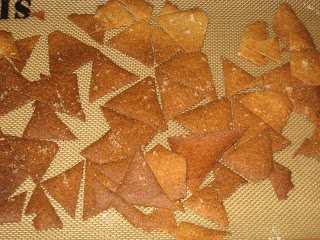
I’m always looking for new ways to use my sourdough starter. A while back I came across a recipe for sourdough crackers that I knew I had to try. We are out of homemade crackers right now. And I need some for our dinner tonight. So I finally gave these a try. I got the recipe from Kitchen Stewardship. They are super easy and taste great! One of the best parts is that the work is split up (so not much active time at one time) and you get a lot for a little work. The dough can make 4 batches of crackers. I made one batch this morning and froze 3 more balls of dough for whenever I need to make a new batch. It only took a few minutes to prep the dough yesterday evening. Then I made the crackers first thing this morning (before the house got hot :). I can’t wait to have them with dinner tonight!
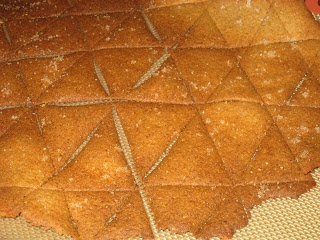
Whole Wheat Sourdough Crackers

1 cup “discarded” sourdough starter (I just used 1 cup of my starter…some people periodcially discard some (which this is referring to), but I don’t)
1/4 cup room temperature lard from pastured pork (or coconut oil or softened butter) (I used coconut oil)
1 cup whole wheat or spelt flour, or as much as you need to make a stiff dough (I used freshly ground bulgur flour)
1/2 tsp. sea salt
Olive oil for brushing
Coarse salt (such as kosher salt) for sprinkling on top (I used fine sea salt and some dried rosemary and garlic powder on some of it)
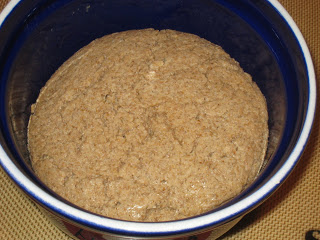
Step One:
In a large bowl, combine the sourdough and the lard and mix thoroughly. Mix the salt in with 1/4 cup flour and add to the sourdough mixture. Knead it all together in the bowl, adding as much flour as necessary to make a stiff dough. Cover the dough with plastic wrap or put a lid on the bowl to prevent it from drying out. Leave the dough at room temperature for at least seven hours.
Step Two:

Seven or more hours later, preheat the oven to 350 degrees Fahrenheit .
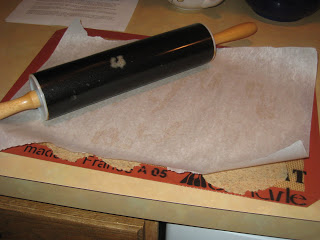
Take a small portion of the dough (about 1/4 cup) and roll it out on a Silpat or other nonstick baking mat using a rolling pin, until it is very thin. (I cut the dough into 4 parts…froze 3 and used one to make the crackers. I used the parchment paper on top method to roll the crackers so they wouldn’t stick to the rolling pin. Worked really well.)

Pour a little bit of olive oil on the rolled out dough and spread it to the edges of the dough with a pastry brush or your hand. Sprinkle liberally with coarse salt. (or any other seasoning you like)
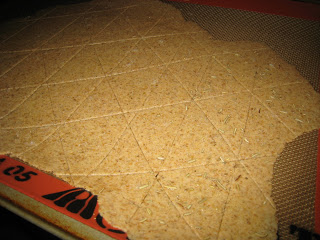
Cut the dough vertically and horizontally into quadrangles with a pizza cutter. Transfer the Silpat onto your baking sheet and bake for 15-20 minutes or until just golden brown. Repeat in batches. The crackers shrink a little bit in the oven, so when you pull out your baking sheet, they will already be separated and you don’t have to try and transfer the delicate dough from one surface to another. (I baked mine for about 14 min., turned off the oven and let them crisp for another 5 min. or so.)
Additional notes: This dough freezes well and you can easily defrost one or two batches at a time so that you can have fresh crackers every day! Divide the dough into four equal portions, shape into balls and then freeze. It takes 1-2 hours for the dough to defrost. Then place it on your Silpat or baking stone and continue with the recipe.
Carob Peanut Butter

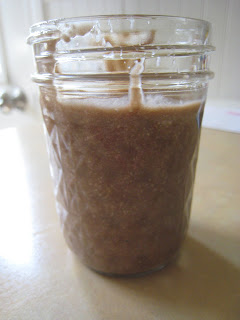
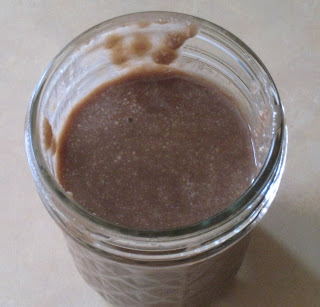
Ever since we went to Traverse City last summer and tasted a variety of nut butters I’ve wanted to experiment with making my own. Now that I’ve gotten good at all the basic nut butters I decided to try something new. Yesterday I made carob peanut butter. I just used the carob sauce I made the other day and added it to ground crispy peanuts. And a little extra carob powder. Simple! It’s pretty good. But the consistency is a little off. But I don’t think that has anything to do with the carob. I used my mini processor to make this instead of my big one…and it doesn’t work as well. So it’s kind of grainy instead of smooth. But it’s still good. Definitely not a strong carob flavor, just subtle. I’ll keep experimenting, but this was pretty good for my first try. I didn’t actually measure anything. But I’ll try to give rough quantities. I made a small batch since I was just using up what crispy peanuts I had left.

Carob Nut Butter
Makes ~ 1 pint

1 cup crispy nuts (peanuts, cashews, almonds)
1/2 tsp. sea salt
2 Tbsp. carob sauce
2 tsp. carob powder (optional)
1/3 cup coconut oil (may need more or less…enough to make it smooth)
honey (to taste…if there isn’t enough sweetness from the carob sauce…I didn’t add any)

Process nuts and salt in food processor until a fine powder forms. Add remaining ingredients and blend until smooth. Add coconut oil, carob powder and honey to taste/to desired consistency. Store in the refrigerator. It will harden due to the coconut oil and butter. Let it come to room temp before serving.

Carob Sauce

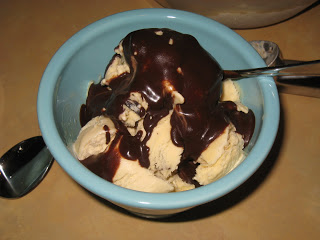
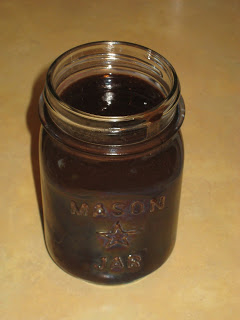
I made my 2nd carob recipe yesterday…carob sauce. With all of this good homemade ice cream and some good cream to use up it was the perfect fit. Plus it was something simple for Rebecca to help with. This was very easy to make. And tastes so good!!! We all had some on ice cream last night for a special 4th of July dessert. Yum! This is another Nourishing Traditions recipe. And a great way to swap carob for cocoa in your diet. A healthy, tastey treat.

Carob Sauce
Makes 2 1/2 cups

2/3 cup carob powder
1/2 cup butter
1/3 cup maple syrup
1 Tbsp. vanilla extract
1 Tbsp. chocolate extract (optional) (I didn’t add this…still tastes plenty chocolatey)
pinch of salt
1 cup cream, not ultrapasteurized

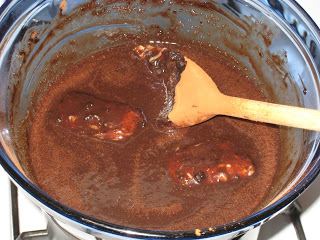
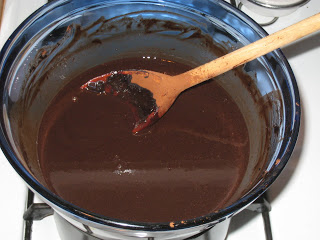
Place all ingredients in the top half of a double boiler.

Cook gently, stirring occasionally with a wooden spoon, until well amalgamated (all blended well :).

Fermented Pickled Cucumbers

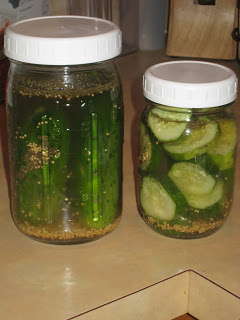
My latest experiment in fermentation is pickled cucumbers. These sound pretty safe 🙂  I assume they’ll just taste like dill pickles. They are very easy to make. I got 6 pickling cucumbers at the farmer’s market this week. 4 whole cucmbers fit in a quart jar. I sliced the other 2 and put them in a pint jar. I’ll update in a few days with the verdict. This is another Nourishing Traditions recipe.

*Edited 7-6-10: I tried one of the pickle slices on Sunday. Pretty good. Definitely tastes like a dill pickle! I still have to try the whole pickle…when I’m in the mood for a lot more pickle 😛
Pickled Cucumbers

4-5 pickling cucumbers or 15-20 gherkins
1 Tbsp. mustard seeds
2 Tbsp. fresh dill, snipped (I used dried dill since that what I have)
1 Tbsp. sea salt
4 Tbsp. whey (use an additional 1 Tbsp. salt if you don’t have any whey)
1 cup filtered water

Wash cucumbers well and place in a quart-sized, wide-mouth mason jar. Combine remaining ingredients and pour over cucumbers, adding more water if necessary to cover the cucumbers. The top of the liquid should be at least 1″ below the top of the jar. Cover tightly and keep at room temp for about 3 days before transferring to cold storage.

Variation: Pickled Cucmber Slices
Wash cucumbers well and slice at 1/4″ intervals. Proceed with recipe. Pickles will be ready for cold storage after about 2 days at room temp.

Vanilla Ice Cream

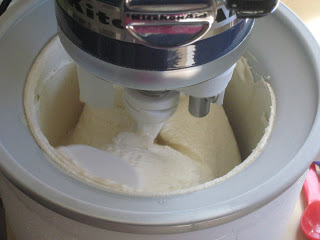
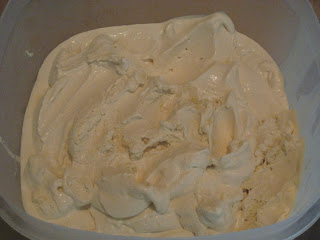
This morning Rebecca and I made a batch of vanilla ice cream. It is the Nourishing Traditions recipe. I never knew making good ice cream could be this easy. I mixed all the ingredients by hand in a large measuring cup and poured it into my ice cream maker. It took about 20 min. from start to finish (with Rebecca helping) to have yummy ice cream. I haven’t gotten a chance to shop for arrowroot yet, so I added about a tsp. of cornstarch. But it’s probably not necessary. And I also haven’t had a chance to pick up really good cream. But even without that I know this is still way better for us than just about any ice cream I can buy. It doesn’t even have sugar in it, just maple syrup. And it tastes unbelievable! I can’t wait to try some when it’s totally firm. I didn’t end up adding any carob chips to it, but I will when I make it again sometime. Now I just need to make some carob sauce to pour over top 🙂  The homemade chocolate sauce (using good ingredients) I have in the fridge will have to do for now 🙂  Hopefully once I get all the good/correct ingredients I’ll calculate the cost to see how this compares to buying ice cream. I didn’t end up taking any pictures after it had firmed up and then we scooped some out. It scooped very nicely. And is so so good!

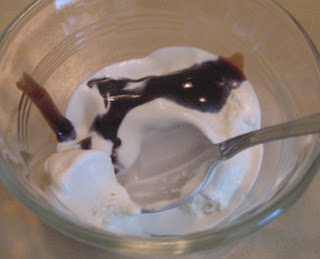
Right after making the ice cream…Rebecca had to try some “with chocolate” as always.

Vanilla Ice Cream
Makes 1 quart

3 egg yolks
1/2 cup maple syrup
1 Tbsp. vanilla extract
1 Tbsp. arrowroot
3 cups heavy cream, not ultrapasteurized

Beat egg yolks and blend in remaining ingrdients (I just did this all by hand with a whisk). Pour into an ice cream maker and process according to instructions (It took about 15 min. in my Kitchen Aid ice cream maker attachment). Transfer to a shallow plastic container, cover and store in freezer.

Kishk

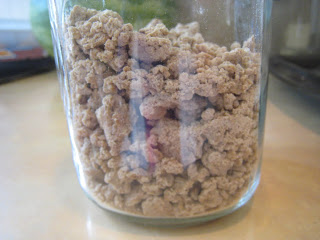
Nourishing Traditions uses kishk in multiple recipes. And it is the only cold cereal it recommends. Plus it’s an alternative to my soaked/dried oats that I use for granola. So I thought I’d give it a try. You are supposed to make it with bulgur or cracked wheat. I made bulgur…flour. I forgot to do a course grind after I sprouted and dried my wheat. I did a fine grind as always. But I used it anyway. This tastes pretty much the same as soaked/dried oats. It has a pretty strong sour taste from the yogurt. I don’t know that I could eat this plain with milk on it. But I am excited to try using it to make granola. And I hope to try it again using both bulgur and cracked wheat. See how it turns out. It will probably just change the texture a bit. This is quite hard. My food processor had a tough time breaking it up. But at least it does’t break your teeth 😛  And making granola with it (all the liquid) will help soften it a bit too I think.

Just a side note that you need to oil your pan VERY well. I used EVOO spread over the whole pan. But I didn’t use parchment paper…I should have. This really stuck to the pan.

I only made a half recipe to try it out.

Here is what NT has to say about kishk:
“This fermented dish comes from the Middle East. It is traditionally added to soups but can also be eaten with milk or cream as a cold breakfast cereal. In fact, it is the only cold breakfast cereal that we can recommend.”

Kishk
Makes 1 quart

4 cups cracked wheat or bulgur
4 cups yogurt

Mix ingredients together in a bowl. Cover and soak at room temp for 24 hours in a dark place. Spread as thinly as possible on oiled cookie sheet and bake at 150 degrees until dry. Place in batches in food processor and pulse until coursely crumbled. Do not overprocess. Store in airtight container in the refrigerator.

Whole Wheat Sourdough English Muffins

My husband is a big fan of english muffins, but I stopped buying them a while ago since they aren’t healthy. Since then I’ve been looking for good recipes for healthy english muffins. I’ve made a couple kinds in the past. One turned out very well…but it was made with white flour.

A couple weeks ago when I was searching for new sourdough recipes I found a lot of sourdough english muffin recipes. I’d never thought of that. So I did a search for whole wheat sourdough english muffins. And the first good one I came across was from GNOWFGLINS. I tried it yesterday. The verdict…awesome!!!

My daughter and I shared one with dinner last night, and we had them for breakfast this morning. Yum!! If you don’t like sourdough, you won’t like these. But if you do (like I do…can’t believe how much I love it now), you will definitely like these. And they are quite simple to make.

When I first read the directions it seemed like a long process. But really each step goes very quickly. The first day you just mix a few ingredients together. The second day you add a few more ingredients, shape the muffins, let them rest a bit and cook them. Not much hands on time at all. 

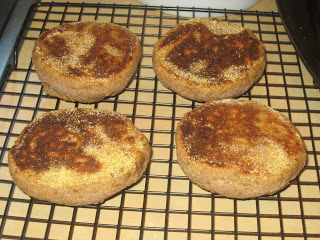
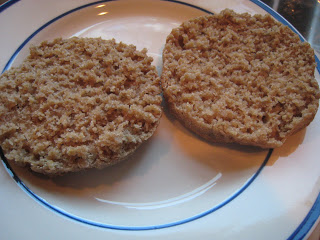
This is a keeper recipe for sure! They are light and moist. Perfect. I used bulgur flour for this batch. Any flour will do…and will produce a slightly different texture. I also added a little ground flax seed. And I used kefir for my liquid…made them even healthier! If you’re looking for a way to use your sourdough starter (or use up some kefir :), give these a try!

Whole Wheat Sourdough English Muffins

1/2 cup sourdough starter (thick or thin)
1 cup liquid (water*, milk, fermented dairy, coconut milk…)
2 cups flour (your choice – bulgur flour, splet, kamut, einkorn, whole wheat)
Add-ins like seeds, dried fruit, or chopped nuts
1 Tbsp. raw honey (or any other sweetener)
3/4 to 1 tsp. sea salt of choice
1 tsp. baking soda

*Note: The English muffins will turn out if you use water instead of full fat or fermented dairy and if you add more flour initially for easier kneading. However, the results will not be as soft on the outside or as tender on the inside once you’ve finished the cooking.

Day 1:

Place 1/2 cup sourdough starter (thick or thin) into a medium size bowl. Pour onto that the 1 cup of liquid. This is the first place where the recipe is very flexible. Your liquid could be water, milk, any fermented dairy, coconut milk… Stir to combine starter and liquid. If your sourdough starter is very stiff, you might need an extra 1/4 cup of liquid.

Once combined, add 2 cups of flour to the mixture. This is the second place where the recipe is very flexible. Use any combination of flours. Stir well to combine. Along with the flour, I often add in a couple Tbsp. of ground flax seed or poppy and caraway seeds (when I make delicious rye sourdough english muffins). The soaking affects the seeds as well as the flour. So, great! Cover and let your dough sit overnight, even up to 24 hours.
 
Day 2:
 
On top of your soaked dough, sprinkle 1 tsp. unrefined sea salt, 1 tsp. baking soda, and 1 Tbsp. honey. Use a wooden spoon to push/cut/stir in your newly added ingredients. Don’t worry about incorporating it perfectly; you will be kneading it in just a moment.

This next part of the directions might feel a little strange, because you are kneading something that could be quite wet. Pour about 1 tablespoon of olive oil onto the counter and spread it around with your hand and then rub hands together. Dump out the dough onto the oiled spot and knead the dough for 2 to 3 minutes. The purpose of this kneading is to incorporate the honey, baking soda, and salt. After this, take a pizza cutter and separate the dough into 8 equal portions. (Be sure you use plenty of oil…the dough is wet and sticky.)

The dough is quite wet. At this time, it is helpful to dust hands with flour before shaping each muffin. You might prefer to use all-purpose flour for this dusting, or sprouted flour where the sprouting has done the work of soaking.

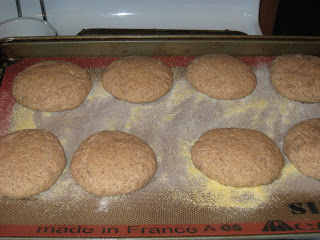
With dusted hands, pick up a portion and gently shape it into your muffin – about 1 finger thick and maybe 2-1/2 inches wide. Size and shape are not important here. Place your muffins on a lightly floured or cornmealed (greased might work if you want to stay away from newly added flour) sheet of wax paper or parchment paper. Cover with a dish towel and let rest for 45 minutes to 1 hour.

About 5 minutes before you want to griddle/skillet your muffins, set the heat to medium. You don’t want the muffins to brown too quickly because the insides need a chance to cook. You do not need to grease the skillet/griddle.

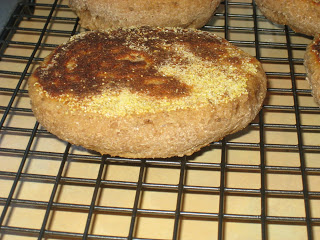
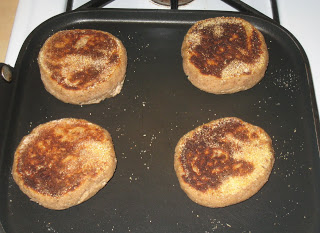
Carefully transfer the muffins onto your heat source. Cook the muffins for about five minutes on each side. You can take a little peek every now and again to make sure the bottoms are not getting too brown. When it is time to flip, do this carefully. Your muffins will plump up beautifully, and you do not want to deflate them by being too rough. Cook for the second five minutes. Now, if you find that the outside edge of your muffin is not as done as you like, feel free to pop these into a 350 degree oven for 5-10 minutes.

They last for at least a week in a sealed container on the counter. They also freeze beautifully. Might want to slice them first. And it most definitely works to double or triple the recipe.

Fruit Leather/Fruit Roll-ups

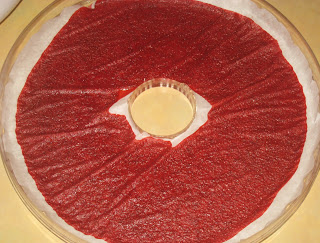
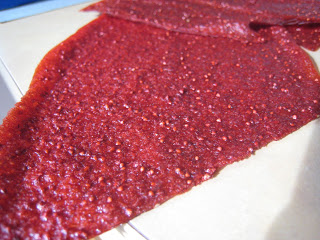
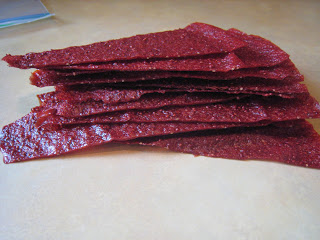
I’ve been brainstorming ways to use up strawberries. Yesterday I came across a “recipe” for fruit roll-ups  on Kat’s food blog (just found her site yesterday…an old friend from an IBS message board we both used for a while). This could not be any easier. And it turns out great!!! Honestly, I think it tastes exactly like the fruit roll-ups I ate growing up…and they were not healthy by any means. This is just strawberries and a drizzle of honey. That’s it! And it doesn’t taste like you’re missing out on anything. A wonderful way to use up my last few strawberries. The best part…Rebecca loves them! I’m planning to make more…when I get more strawberries 🙂  And I can’t wait to try it with other fruit too. I’ll post Kat’s directions. But you really just make it to taste. I didn’t measure anything. Just pureed what I had and added honey to my liking.

Fruit Leather/Fruit Roll-ups

1 1/2 cups strawberries, pureed (I’m assuming this would work just fine with frozen berries too…so we can make them year round…especially since I’m freezing some strawberry puree. Other berries would work too. For some (raspberries, blueberries) you might want to strain them after pureeing.)
1 Tbsp. raw honey

Mix fruit and honey. Poor onto a fruit leather lined tray and dry at 150 for about 10 hours.

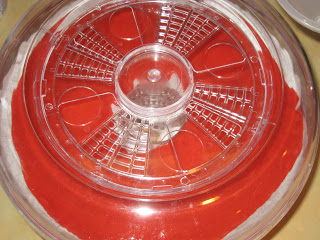
I have a very basic dehydrator…no temp settings, I don’t have any special screens or trays. I just cut a piece of parchment paper to fit a regular tray. Worked just fine. Mine took around 13 hours.

Strawberry Ice Cream

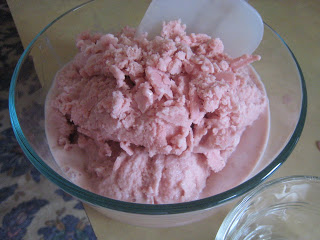
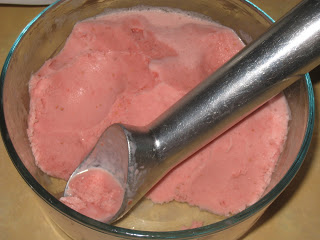
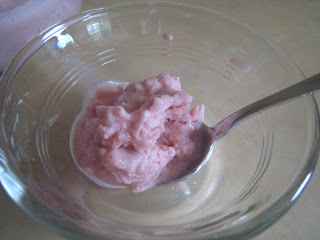
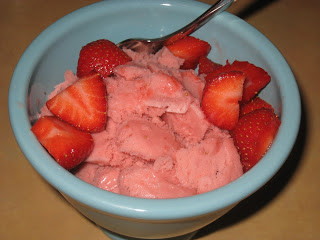
I have a bunch of fresh strawberries in my fridge. And I’ve been debating about what to do with them. For some reason on Wed. strawberry ice cream sounded good. I don’t normally like fruity ice creams. And if I did pick one strawberry would not be my first choice. I am a chocolate girl all the way. But I figured it was worth a try with all of these strawberries. I wanted to make something with what I have in the house. And to make something easy/qiuck. I checked my Nourishing Traditions cookbook. It has several ice cream recipes…that you don’t have to cook!! Love that. If you’re afraid of raw eggs, then the recipes are not for you. I trust the eggs we buy, so I don’t worry about it. Plus, if they are good eggs, raw eggs (the yolks at least…not sure about the whites) are actually good for you. I also wanted to make ice cream using just whole milk, no cream…since I don’t have any cream on hand. So I used the NT recipe as my base and modified it a bit. Turned out pretty good. Not quite as creamy as some ice cream…but I didn’t use cream, remember? 🙂  And I didn’t add any chemicals to make it taste creamy when it’s not 😛  But still good. It’s kind of like a sorbet. It’s a treat that I’ll feel good about eating. Only a few ingredients and all good ones. I did have to use a couple tsp. of corn starch since I don’t have any arrowroot. But it’s such a small amount I’m not worried about that. I’ll have to get arrowroot the next time I grocery shop. I only made a half recipe since I didn’t know if this would work or not. If I make it again maybe I’ll double the recipe to get a decent amount. And I’d like to try it with other berries. Blueberry ice cream sounds great! That’ll be on my list in July. And I want to try making this using the NT vanilla recipe and then adding chopped strawberries at the end too. Justin had some last night with fresh strawberries on top. He thought it was ok…but not really like ice cream. It is for sure a healthy, cool summer treat. But it’s not my final attempt at making a quicky, easy, healthy homemade ice cream. NT calls this berry ice cream and suggests raspberries, boysenberries or blackberries.

And just to give you a little nudge to make homemade ice cream or at least think twice about which kind you buy, here is what NT has to say about some of the ingredients many ice cream manufacturers use. They are not required by law to list the additives used in manufacturing. So most ice cream is synthetic from start to finish. And I personally don’t consider a mixture of antifreeze, oil paint, mitrate solvent and lice killer much of a treat 😛

DIETHYLGLYCOL: A cheap chemical used as an emulsifier instead of eggs is the same chemical used in antifreeze and paint removers.

PIPERONAL: Used in place of vanilla. This chemical is used to kill lice.

ALDEHYDE C-17: Used to flavor cherry ice cream. It is inflammable liquid also used in aniline dyes, plastic and rubber.

ETHYL ACETATE: Used to give ice cream a pineapple flavor – and as a cleaner for leather and textiles; its vapors have been known to cause chronic lung, liver and heart damage.

BUTYRALDEHYDE: Used in nut flavored ice cream. It is one of the ingredients of rubber cement.

AMYL ACETATE: Used for its banana flavor. It is also used as an oil paint solvent.

BENZYL ACETATE: Used for its strawberry flavor. It is a nitrate solvent.

Strawberry Ice Cream/Sorbet

2 cups fresh berries or 10 oz. frozen berries, partially thawed (I used fresh strawberries)
2 egg yolks
1 Tbsp. arrowroot (I substitued corn starch)
2 cups heavy cream, not ultrapasteurized (I used whole milk)
1/2 – 3/4 cup maple syrup

Process berries in food processor (I used a blender) for several minutes. Add egg yolks, cream and arrowroot. Process until well blended. Gradually add maple syrup until desired sweetness is obtained. Pour into an ice cream maker and process according to instructions. Transfer to storage container and store in freezer.

Crispy Cashews

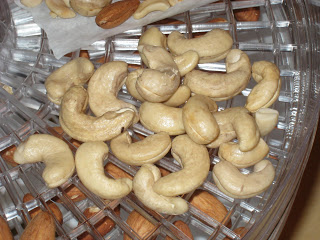
I also made a batch of crispy cashews this week. The method for soaking/drying cashews is slightly different than most nuts  They shouldn’t be soaked for more than 6 hours, and they can be dried at a higher temp. I still did mine in a dehydrator. But I think I’ll try to do them in the oven next time. It took a while for them to dry, and some of them ended up developing a gross taste since they stayed moist too long. I did both whole cashews and cashew pieces. The pieces are cheaper, so I got those to use for cashew butter (I’ll be grinding them anyway, might as well save some money :). The whole cashews will be great for snacks or in salads.

Crispy Cashews

4 cups raw cashews (cashews don’t come truly raw)
1 Tbsp. unrefined sea salt
filtered water

Soak cashews in salt and filtered water for 6 hours (no longer). Drain in a colander. Spread on a baking pan and place in a warm oven (200 – 250 degrees) for 12 – 24 hours, turning occasionally, until completely dry and crisp. Store in an airtight container.