Home » Feeding Children » digestion » Page 6

Category: digestion

Sourdough Bread


Sourdough Bread | Homemade Dutch Apple PieNow that I have a sourdough starter, I need to use it! My first experiment was the obvious…sourdough bread. I got the recipe from Nourishing Traditions.

The recipe makes a LOT of bread. I only did a half recipe to try it out. Especially since I had no idea if my starter was even good. I didn’t want to waste 13 cups of flour on something that might not work 😛  Plus I didn’t have 8 cups of starter.

After making quite a few loaves of sourdough bread now I have adjusted the recipe for making one loaf.
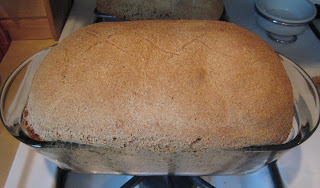
This is another plan ahead baking project. Sourdough bread has to rise for a long time. I mixed the dough in the morning (got the dough in the bread pans around 6:30 am). I didn’t end up baking it until about 6 pm! This works well if you want fresh bread for dinner.

Prepare the dough in the morning. Then pop it in the oven about 90 minutes before dinner.

For many people making traditional sourdough sounds intimidating. But it is actually so much easier than making a yeast bread.  You don’t have to worry about whether or not the yeast is working. You don’t have to get water temperatures just right. Sourdough is very forgiving. Plus it only takes three ingredients – flour, water and salt. Just mix, knead and bake.
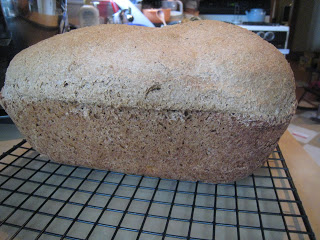
Sourdough bread has a wonderful, mildly sour taste. It goes well with scrambled eggs or a bowl of soup. In my opinion the best way to eat it is plain with lots and lots of butter!

Sourdough bread is also great if you are pregnant or nursing.  The fermentation breaks down most of the gluten, if that is a concern (you must still avoid it if you have celiac). And sourdough bread helps with milk production. It is a great source of carbohydrates for a nursing mom.

Traditional sourdough is healthy and easy on your tummy. My whole family enjoys it even with our allergies and sensitivities. We seem to tolerate sourdough fine.

You can use a variety of flours when making sourdough. I always use rye for my starter. Then I usually use spelt for my baking. You can also use kamut or einkorn. Whole wheat works as well, but it may be harder to digest.

If you’ve never tried traditional sourdough bread you’re missing out! Get your sourdough starter going and whip up a loaf of fresh bread. Your whole family will enjoy it.

Once you’ve mastered sourdough bread you can try other delicious recipes like english muffins, honey walnut bread, granola muffins, crackers, breakfast cookiespizza dough and even graham crackers!

Do you enjoy sourdough bread? What is your favorite way to use sourdough?
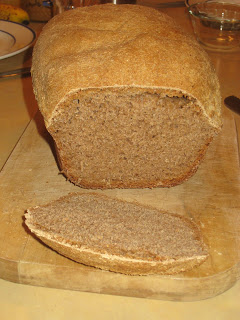
Sourdough Bread
makes 1 large loaf

2 cups sourdough starter (at room temp)
3 cups spelt, kamut, einkorn or hard winter wheat flour
1/2 Tbsp. course sea salt
3/8 cup cold filtered water

The day before making the bread feed your sourdough starter (be sure you have at least 3 cups total) and leave it at room temperature.

Place the starter, salt and water in a large bowl (a stand mixer bowl works well) and mix with a wooden spoon until the salt has dissolved. Slowly mix in the flour (with a dough hook in a stand mixer). Add extra flour if the dough is too wet. Let it knead for 15 minutes.
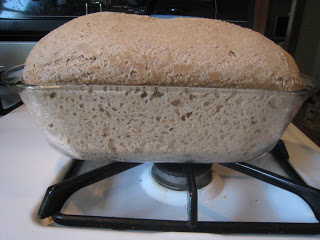
Without pressing down the dough, cut or shape loaf into the desired shape and place it in a greased loaf pan. Cut a few slits in the top of the dough, cover and let rise from 4 to 12 hours.

Bake at 350 for about an hour. Allow to cool before slicing.

The bread will keep for up to a week without refrigeration.
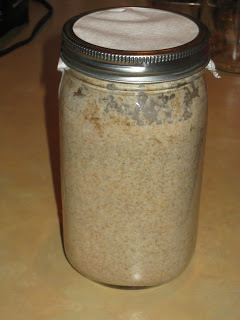
Sourdough Starter

 
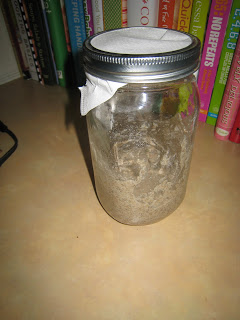
Don’t let the term sourdough starter scare you. Creating one is a simple process of mixing flour and water in a jar. Really, that’s all!
I’ve read a lot about the benefits of sourdough products recently. And I wanted to try it. But that requires a sourdough starter.
 
 
Sounds a bit daunting. Which is why I’ve never made sourdough anything before. But I decided to give it a go.
 
Turns out it’s not really that hard. All you do is mix flour and water and let it sit. 
 
It takes a week to make. I’m glad I tried this! Now I have a sourdough starter in my fridge…for use any time I want to make something with sourdough. Yeah! 
 
All I have to do is feed it once a week to keep it going. I need to start looking for sourdough recipes now.
Sourdough Starter
2 clean glass or plastic jars or bowls (not metal, mason jars work well)

A non metallic spoon

A light weight towel
 
rye, splet or whole wheat flour (rye generally gives the best results)
 
water
 
The ratio of water to flour is 1:1 when starting a new sourdough starter.

Day 1

Place a 1:1 ratio of flour and water into a clean and sterilized jar and stir well. About 1/2 cup of each is a good starting point. Cover with a towel and set in an open area so it can start collecting the natural yeast.

Day 2

Transfer the starter to a clean jar/bowl and feed your starter another 1:1 ratio of flour and water in the same amount you used for day one. So if you used 1/2 cup for each, you’ll use 1/2 cup again. Stir well, cover, and set back out.

Day 3-6

Repeat the process of day two, feeding your starter a 1:1 ratio of flour and water (in a clean jar/bowl). It will start to get bubbly and you’ll also notice it separate a bit and get a watery layer.

Day 7 

Your starter should now have gone through the bubbly stage and smell somewhat ’sour’. Transfer to a clean jar and feed it one more time.

At this point it is ready to use! You can now do one of 2 things.

1. Test out some new recipes! Just make sure you feed it again before you put it in the fridge to store.
2. Cover and store it in the fridge for use later.

How to Maintain Your Starter:

Feed your starter once a week (if not using for a recipe) or when you use it. Use the same 1:1 ratio of water and flour and store it in the refrigerator.

If you use it for a recipe, feed it the same 1:1 ratio and let it sit out again for just a couple hours before storing in the fridge.

If the starter is really watery add a little extra flour. If it is really thick add a little extra water.

Crispy Walnuts

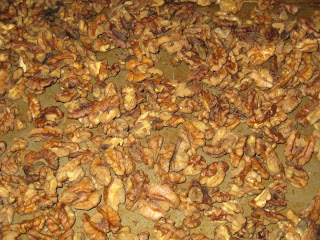
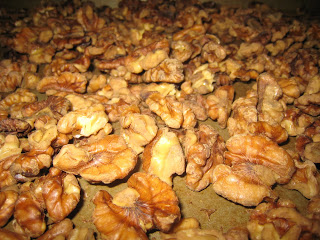
I made a batch of crispy walnuts this week. Yum!!! And so simple. It’s the exact same method I used for the crispy pecans. Just note that walnuts can go rancid faster than pecans. So they should be stored in the refrigerator or freezer.

Crispy Walnuts

4 cups (1 lb.) walnuts
2 tsp. sea salt
water

Mix walnuts with salt and water (I covered them loosely with plastic wrap.) and leave in a warm place for at least 7 hours or overnight (I soaked them for close to 24 hours.). Drain. Spread walnuts on baking pan. Place in oven on lowest setting (150 degrees) for 12 to 24 hours, stirring once in a while, until completely dry and crisp. Store in an airtight container in the refigerator or freezer.

Sprouted Beans (and grains) – Colander Method

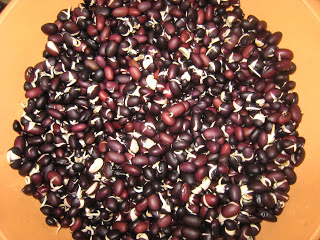
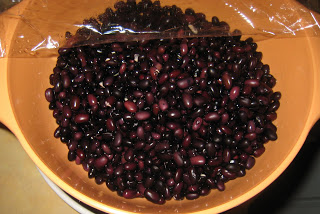
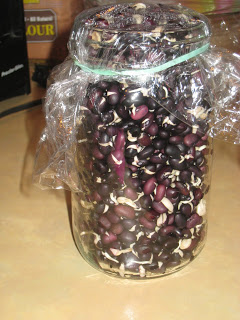
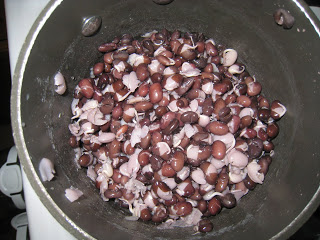
I am making a black bean soup for dinner tonight. Originally I had planned to make beans like I always do…soak and then toss them in the crockpot with the rest of the ingredients. But then I thought this might be a good opportunity to make my first attempt at sprouting. I found an easy colander method on The Nourishing Gourmet. It was so simple! And now we have a huge jar of sprouted black beans in the fridge. I was actually quite surprised how quickly they started sprouting. I cooked some of them this morning to add to our soup. They taste great (even at 4:30 am :)! And they only take about 20 min. to cook once they’re sprouted. I decided to cook them separately so that I could rinse them afterward to make sure I got any extra gas-producing stuff off 😛  I’m anxious to see if Rebecca and I tolerate them better this way. Rebecca had a few already with lunch. She gobbled them up like always. It’ll be fun to try sprouting other beans and get a stock in my fridge. And at some point to try sprouting other things, like grains. This method can be used with any legume or grain as long as it’s large enough to not go through the colaner. For smaller things I’ll need to get a sprouting jar/screen. You can use any amount of beans you like. I did a fairly big batch of black beans. Just beware that the larger the pile the longer it takes to dry.

Colander Sprouting (legumes or grains)

Equipment:
large bowl
colander
small kitchen towel (I just used a loose covering of plastic wrap)
plate

Place the legume or grain you wish to sprout in a large bowl and cover with water. Leave to soak 8-12 hours (overnight works well). Then drain in your colander, and rinse very well (the water should run clear). Drain, and then place on your plate-to catch any drips-and cover with a kitchen towel. Now all you have to do is rinse and drain every 8-12 hours (think morning and evening). When I rinse, I gently shake the colander a bit to make sure that all of the beans are getting wet.
And then it’s just a matter of waiting until you see little sprouts. For both legumes and grains, you generally aren’t wanting the sprouts to get really big, as they taste better when the sprouts are small. So when you see the sprouts starting to shoot out, rinse one more time, and leave for another 8-12 hours to drain thoroughly (they should be dry to the touch) (mine took about 2 1/2 days for the whole process…soak to dry). Then place in a mason jar or other container to keep in the fridge. And you are done!

You can cook them the same way you normally cook beans (simmering water). But they cook much faster. My black beans took about 20 min.

Soaked Granola

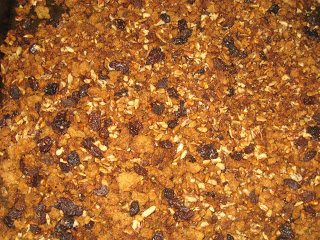
Last week I made a batch of soaked oats and crispy pecans. Then I used them to make homemade granola. I used my usual granola recipe. But I added coconut oil instead of another kind of fat. Maybe next time I’ll try butter too. This turned out really well. Although I did let it bake a bit longer than I would have liked since I was busy with other things. It is crunchier than the granola you make with unsoaked oats. But I like that. I’ll be making my granola like this from now on to make it easier on my tummy. I’ll repost my granola recipe here.

Mary’s Soaked Granola
*this can be gluten free if you don’t use wheat bran and if you tolerate/use GF oats

12 cups soaked and dried rolled oats
2 cups dried fruit (any mix or just raisins)
2 tsp. cinnamon

optional mix ins:
1 1/2 cups ground flax seed
1 1/2 cups wheat bran or wheat germ
1 cup chopped nuts (crispy pecans, walnuts or almondsl)
1 cup seeds (pumpkin, sesame, sunflower, etc.)
1 cup coconut (sweetened or unsweetened…whatever you prefer, I used organic unsweetened)
1/2 cup honey
1/2 cup maple syrup
1/2 cup coconut oil, melted butter or EVOO (or a combo)

Heat oven to 325. Mix all dry ingredients, except fruit and crispy nuts, in one or two large bowls (however it is easiest to stir). (Mix a small amount of safe (oats, coconut, wheat bran, coconut, rasisins), dry ingredients in a smaller bowl for a toddler to mix and eat:) Pour honey, syrup and oil over dry ingredients. Mix well. Spread granola onto baking sheets (you can do all of it on 2 sheets…they’ll be very full. Or you can do it on 4 sheets (2 batches) so that it bakes a little more evenly. You may have to cut the baking time down a bit if you do it on 4 pans). Bake 20 – 30 min., stirring 2 or 3 times throughout. Add fruit and nuts during the last 5 min. or after granola is done baking. Let cool. Store in sealed container or bag. Freezes well. I generally freeze it in gallon freezer bags then just take out a little at a time as we need it. It can even be eaten directly from the freezer. You can scale the recipe down if you don’t want to make a large batch. I make a ton and freeze it so that I don’t have to make it all the time.

So Confused

I am continuously on a mission to live a healthier life…to heal my body and to be able to live a more “normal” life. Over the last few months I have been doing more and more research. And the more I read the more confused I get. Just when I think I find some info that is helpful/something to try, I read something that totally contradicts it. And then I’m back at square 1. It’s like I’m going in circles. One thing says don’t eat meat/eat less protein. One thing says eat lots of protein. One thing says eat only raw protein. One thing says eat all raw food. One thing says eat lots of fruit. One thing says don’t eat any fruit. One says eat whole wheat/grains. One says don’t eat any wheat. One says eat carbs and protein at every meal. One thing says you can never combine carbs and protein or fruit with anything (and much more). It goes on and on. So how do I know what to believe/what to try? I’m really asking this. I don’t know. If anyone has any advice/good info please share.

I know that I am moving in the right direction in terms of eating more organic and GMO free food, eating much less processed food/HFCS/hydrogenated oils, eating homegrown/locally grown/homemade food. But other than that it seems like I’m not sure where to go.

This month I have been eating gluten free. I can’t say that I’ve noticed any major improvements. If things don’t change a lot in the next 2 weeks I don’t think I’ll be staying gluten free. I guess that’s not such a bad thing :p But it does leave me back where I started.

I talked with my friend Julie on Monday. She mentioned candida. I had read about it a long time ago (when I was doing the IBS stuff…and searching for answers), but forgot about it. I have a lot of reasons to suspect that could be one of my problems. But even if that is true, what do I do about it? Yesterday I was reading lots of stuff that says to cut out all sugar (even fruit :(…bacteria lives on sugar). There is more to it than that, but that is a major part of it. Then today I did a little more searching and found stuff that said don’t listent to that…candida is actually good…it’s insulin resistance that is really causing the problem…and that candida is what fights it. And that you don’t have to cut out sugar (like fruit)…that makes no difference on blood glucose levels. You have to cut out fat. So, now what? I have a huge portion of the symptoms of candida. I tried the saliva test this morning (do a search for it if you’ve never heard of it)…and found the evidence within seconds that it is very prevalent in my body (if that test is valid…some say yes, some say no). But I also could have a degree of isulin resistance. Diabetes is strong in my family. And even though I’m a very small person the hardest place to keep fat/weight off is in my belly…a sign that you are prone to diabetes. So do I have both? Neither? And what do I do about it? I do think that cutting back on sugar will have a positive impact either way. But I don’t want to give up fruit (which I’ve been eating more of lately!) if I don’t have to.

I mentioned fluctuating hormones the other day. I know that is true. But are they caused by something else? Are they the cause or the effect? And how do I get them in balance? Will treating another condition balance the hormones? And possibly help with the fertility issues? And acne?

Regardless of what I “have” I do feel like I need to do something to start fresh. I feel like my body is filled with toxins and no matter what I try I won’t make good progress. I am still researching various “cleanses.” I’ve never been big on those, but you never know. It might really help kickstart things to rid my body of whatever junk/buildup is inside.

In addition to a cleanse I want to take probiotics and a better multi-vitamin. So I will be looking for those as well. Any suggestions?

Another thing I have to consider is my mentality about food/eating in general. I was thinking about it this morning and realized I have a harmful view on food. In high school I had bad eating habits (didn’t eat a lot). This in turn caused my mom to worry about me…even more than she already did. She would almost force me to eat a bedtime snack many nights. I do realize I wasn’t eating well. And I know that as a mother you want to take care of your children. But it created a fear in me. A fear of being unhealthy. A fear of starving almost. And to this day I have a hard time with portion control. Especially when it comes to bedtime snacks…go figure 😛 I always eat a snack before bed…even if I’m not hungry. I subconsciously worry I’ll get too hungry in the night/that I didn’t eat enough during the day. And I give myself much larger portions than I need. Anyone who has seen me dish and eat ice cream over the last 10 years will understand. I can’t just give myself a couple scoops…I might still be hungry! It’s a fear that I don’t even realize/don’t process. But it’s there. So I give myself a ton. And end up eating too much. I should be able to give myself a normal portion. Then if I’m still hungry I can always get more or eat something else. Really, I can (telling myself this :). I do it with a good portion of my food. My bowl of cereal in the morning I pack as full as possible (b/c I wake up starving:)…but then part way through I think I could be done now. But I finish it (can’t waste anything). And then my stomach can’t handle it. I even have a hard time sharing my food. It’s like that one bite I give away will make such a big impact. I know it sounds crazy. And this is the first time I’ve really thought about it/admitted it. But it’s true. I need to change. I need to have a better mentality about food. I eat for my health. I am not going to starve 😛 I can always get seconds if I want. I should not binge on food…especially desserts/things that are tough to digest (hello, am I trying to cause problems?). To this day my mom comments on my weight/eating. And it has impacted me more than I realized. She makes me worry…when I know that I am healthy, I eat healthy food and I am very knowledgeable about proper nutrition. Crazy how much influence your mom can have on you :p This will take a lot of work, but I need to learn to eat normally. Sounds stupid/simple. But it’s not.

I could probably ramble on for a while yet. This is just some of the stuff going round and round in my head lately. And I’m not really sure where to start/what to try. Writing it down does help a little. I guess I need to figure out if I want to do some kind of cleanse…get the junk out. Then go from there and figure out what to put back in. If anyone (any med students? 😉 has any experience/knowledge about any of this please let me know. I know things need to change. But I’m just not sure what/how. And every time I eat I wonder if I’m eating the “right” thing or just making myself feel worse. I have a couple weeks to research. Then we’ll see what I end up trying in June. And I need to figure out how to balance it with making healthy meals for my family…separate meals, make everyone change habits,…? Ugh.