Home » Feeding Children » digestion » Page 5

Category: digestion

Cereal…Why It’s Not As Healthy As You Think…Actually Not Healthy At All

Time to kick off my healthy lifestyle series. I’ll start with something near and dear to me…my beloved cereal 😛  I used to be the cereal queen. I ate it EVERY day for breakfast for years. From college to just a few months ago I’d say there were only a few days I didn’t have cereal for breakfast. And that was either on vacation (and even then I usually had cereal) or if I was too sick. In addition to my daily breakfast I snacked on it pretty much every day. I thought, like most people, that cereal was healthy. Low fat. Lots of vitamins. High fiber (the kind I ate was). But sadly that is not the case.

Cereal is quite unhealthy for multiple reasons.

*The obvious is that some cereals are full of sugar. Especially white processed sugar…which is like an anti-nutrient for your body.

*Then there is the white flour. Again, very processed and hard on your body.

*Most cereals are full of artifical ingredients…colors, sweeteners, flavorings, etc. Anything artifical is foreign to your body and hard to digest…putting more strain on your system.

*All big brand cereals contain GMOs (genetically modified organisms). Another unnatural ingredient that we don’t know the full effects of. GM foods have not been proven safe to eat. They increase the use of pesticides. I personally choose to avoid them at all costs. I want to know exactly what I’m eating…not some mutated, altered food with hidden ingredients. Corn is one of the  most widely used GM food. And it’s in just about every cereal. For example, take a look at the ingredients in a box of Kix (supposedly a great cereal for kids)…whole grain corn, corn meal, sugar, corn bran, salt, brown sugar syrup, trisodium phosphate, vitamin E (and some other added vitamins). It’s all GM corn and processed sugar. How is that good for a growing child?

*Most cereals are fortified with vitamins and minerals. Sounds healthy. But in reality they are synthetic versions that your body can’t really absorb. So they don’t do you much good. Maybe some harm actually.

*Finally, cereal (even the organic “healthy” kind) is toxic. Here is some great information from The Healthy Home Economist:

“To make boxed breakfast cereal in the factory, the grains first have to be subjected to such intense pressure and heat that they actually liquify into a slurry. This slurry allows the grains to be quickly and easily shaped into the puffs, flakes, and other shapes that make each cereal distinct. The manufacturing process used to make boxed cereal is called “extrusion” and it is so violent and denaturing that the proteins in the grains are actually rendered toxic by the process. This is why organic boxed breakfast cereal is more toxic than nonorganic – because organic boxed cereal is whole grain and thereby has more protein in it! The more protein, the more toxic the boxed cereal.”

It saddens me that something so bad for you is marketed as being so healthy…and that so many people (myself included for a long time) buy into it. When in reality it can make you sick and is very hard on your body. It especially saddens me that I ate Fiber One (mixed with various other cereals) almost every single day of my pregnancy with Rebecca. Artifical sweeteners, fake fiber, syntheic vitamins, GMOs, toxic substances. I hope it did not harm her development. I don’t like that cereal is one of the first things most people feed their children…baby cereal, Cheerios, etc. I’ll definitely be taking a different route with any future children. I don’t know for sure, but I’m guessing all of that cereal had an impact on my digestive issues and my infertility. I wish I would have known sooner how bad it was.

I am happy to say I have not eaten cereal for breakfast for a couple months now. It feels good to be cereal free 🙂  My whole body is thanking me. And I’m glad to start my daughter off on a good path eating real food for breakfast from an early age.

It’s tough to make the switch if you’re a die-hard cereal fan like I was. It’s convenient. It tastes good. But it’s worth it to stop eating it. Honestly, now I think most cereal tastes like fake cardboard. It grosses me out. The skim milk I used to pour on my cereal does too 😛  There are so many other healthy things to eat for breakfast. Here are some of our favorite quick breakfasts. You can make them ahead of time or prep things ahead so breakfast only takes minutes to prepare in the morning.

chewy granola bars
crunchy granola bars
homemade granola
grain free granola
giant breakfast cookies
soaked coffee cake
oatmeal muffins
blueberry muffins
strawberry bread
fresh fruit w/ cream cheese dip
kefir smoothie

Scrambled, fried or hard boiled eggs are always good too.

Enjoy a healthy breakfast every day…that does not include boxed cereal 🙂
Sauerkraut

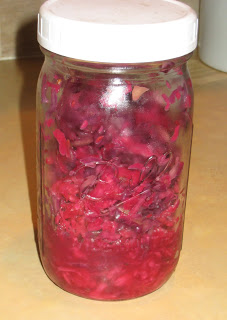
Last week I made my first batch of sauerkraut. I finally got around to tasting it today 🙂  Very good! It tastes like pickles to me. I just used the basic recipe in Nourishing Traditions. I used purple cabbage. Very simple (aside from a good arm workout pounding cabbage for 10 min.). Very good. And so great for your gut!! Plus it gets better with age. So it should taste really good in a few months 🙂

Sauerkraut
Makes 1 quart

1 medium cabbage, cored and shredded (I used my food processor for this)
1 Tbsp. caraway seeds
1 Tbsp. sea salt
4 Tbsp. whey, if not available use an additional 1 Tbsp. salt

In a bowl, mix cabbage with caraway seeds, sea salt and whey. Pound with a wooden pounder or a meat hammer for about 10 minutes to release juices. Place in a quart-sized, wide-mouth mason jar and press down firmly with a pounder or meat hammer until juices come to the top of the cabbage. The top of the cabbage should be at least 1 inch (2,5cm) below the top of the jar. Cover tightly and keep at room temperature for about 3 days before transferring to cold storage. The sauerkraut may be eaten immediately, but it improves with age.

Water Kefir

A little while back I started making my own dairy kefir. I’m doing whatever I can to get my gut healthy and repopulated with good bacteria. Kefir is a great way to do that. A wonderful probiotic. I eat dairy kefir every day. Then my SIL tried water kefir. I had heard of that, but hadn’t thought about trying it. Last weekend my SIL and I swapped grains 🙂  I gave her some dairy to try, she gave me some water to try. I made my first batch yesterday. I haven’t tried it yet. But will today. I’m very excited. I love having something to drink that is actually good for you that isn’t just plain water. That’s pretty much all I drink. But it’s nice to have something else sometimes. And I’m hoping this will be a great alternative for Justin. He stopped drinking pop (most of the time) a little while ago in order to get healthier (in general and for our IVF cycle). But sometimes he likes it with things like pizza or when he wants a treat. It’ll be nice to have something to offer. For my first attempt I used the method my SIL posted. I can tell it’s working…lots of bubbles/foaming 🙂  I can’t wait to try adding new flavors to it. I want to try blueberries while they are in season. It’ll be great to be able to have dairy kefir and water kefir every day. So good for your gut.

Water Kefir

Equipment:
*1 large broad opening glass container with lid – exact size depending on the amount of liquid per batch you want to make. If you make the basic recipe exactly as listed below, probably a 1.5 liter capacity container will suffice. If your glass container does not have a lid, you can simply cover it by placing a plate on top or with some plastic wrap or cloth tied with a rubber band around the opening. (I used a quart mason jar… just make sure whatever kind of container you are using, you only fill it 3/4 of the way full!)

*1 strainer and/or pouch – depending on method used (I used a strainer this time, but will be making a pouch eventually)

*1 spoon, non-metallic

*1 glass jar

There are 2 known methods of dealing with the grains: the “loose grains” method and the pouch method. In the first one, you just toss the grains in the glass container along with all the other ingredients, so you will need to use a strainer for pouring each batch and washing the grains afterwards. The pouch method seems easier and better to keep your grains separate from other stuff you may want to add to the recipes and to manage the grains for washing purposes. You can easily make your own pouch with some porous cloth, like gauze or cheesecloth, folding and sewing the sides together, and using a string to tie up the top. Just make sure there’s more than enough room in it for the new grains to grow in there, as they multiply.

Ingredients:

3 Tbsp. water kefir grains
1/4 cup brown sugar or 3 Tbsp. honey (I used honey this time)
1 or 2 dried figs – or any other dried fruit you prefer like dried prunes, apricots, dates, raisins, etc. (I used 2 prunes)
1/2 lemon
1 quart filtered water – only water without any chlorine should be used (it will kill your grains), so tap water is not suitable unless it’s filtered

Mix in the glass container and stir.

There are 3 different brews you can make: 24, 48, and 72 hour fermentations. 72 hours is the maximum a batch should be let to ferment. The longer it is allowed to ferment, the stronger it becomes. Note that the carbonic acid increases each day, so if your container is air-tight sealed, it could explode. (I only filled my jar up 3/4 of the way and did not tighten the lid all the way.) Covering prevent flies or bugs from getting into it. Keep out of direct sunlight and at room temperature.

It is said that 24-hour kefir acts as a laxative…and that 48-hour kefir regulates and re-establishes intestinal function. Once the fermenting time has passed, strain the liquid, squeeze the juice of the half lemon used in it, and it’s ready to drink(you can chill it first).

Wash the grains under running water. You can store them in a small jar of water in the fridge for about a week (add a small amount of sugar to feed them), or else you should dehydrate them. Or if you use them regularly you don’t have to worry about storing them 🙂
 
We’ll see if I can keep up with both kinds of kefir 😛  I’ll update later when I’ve tried this/tried some flavors.

Dairy Kefir – Take 2

Last week I got some kefir grains and made my first attempt at making some. I wasn’t really sure what I was doing or what it was supposed to look like/taste like. And it didn’t seem to work that well. So I did a little more research, watched a few videos and tried again this week. Well, I think it worked this time 🙂  And it really wasn’t hard at all. I think I just hadn’t given my grains enough time to adjust/grow before. My first batch of kefir is still probably on the thin side. But it’s way thicker than the stuff I made last week. I mixed kefir and yogurt together yesterday for lunch. That worked well. The kefir does have a pretty strong sour taste. I love the tangy taste of plain yogurt. But kefir is different. I haven’t accquired the taste for eating it plain yet. But maybe I will over time. I’m excited to have kefir and to try in various recipes. And mostly excited about its impact on my gut 🙂

In addition to dairy kefir there is also water kefir. Which also is great for your digestive system. I’ve read about it many places. Maybe I’ll try that next (thanks for the suggestions Sara and Donielle!).

Here’s the basic idea of how to make dairy kefir:

Kefir

1. Put kefir grains in a clean container (a mason jar works well)
2. Poor milk into the jar (how much milk you use depends on how many grains you have and how much kefir you want to make. To start out I’m only using about a cup of milk.) and stir with non-metallic spoon.

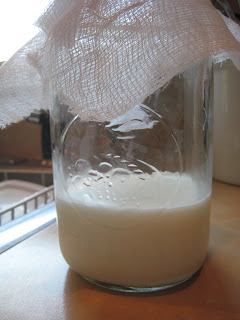
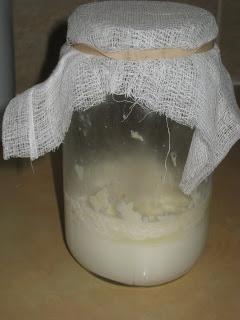
3. Cover jar loosely (I use cheesecloth secured with a ring)
4. Set in a warm spot, away from sunlight (I put mine in a kitchen cupboard…above my oven)
5. In 12 – 48 hours you should have kefir (The time depends on your grains and how strong you like the kefir)

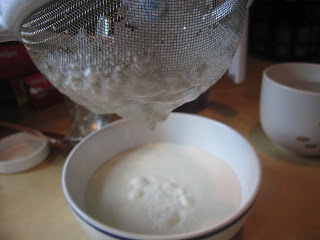
6. Strain the kefir into another jar. (I pour it through a strainer)

7. Put the grains back into the old jar and pour milk on top. Repeat steps 3 – 6 for more kefir. Or store in the refrigerator if you want a break from making kefir.

8. Cover the kefir you just  made. You can put it right in the refrigerator. Or you can let it set out a while to continue to thicken and separate. If it separates the top portion will be thicker, like yogurt. The bottom will be whey. You can use them together or separate, just like you do with yogurt.

Kefir

As I continue on my journey towards better health, I’m trying to find foods that will help heal my gut. One that I’ve read a lot about is kefir. It’s kind of like yogurt (not as thick), but has a lot more good bacteria. Although I’ve done a fair amount of research kefir is still somewhat of a mystery to me. What it’s supposed to taste like, how you use it, etc. But I’m working on experimenting and finding the answers.

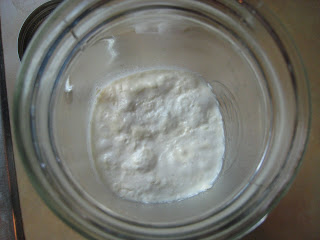
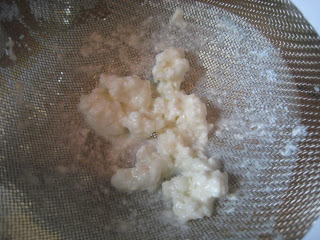
You can make kefir from grains or a powder. Based on what I read the powder is pretty easy. You just mix it with milk, let it set a bit, and it’s done. But then you have to buy more. And it’s not cheap!! On the other hand, if you use grains to make kefir you only have to buy them once. They can last forever! Guess which one I chose? Grains of course. But they are a bit trickier (I think). I got my grains last week and followed the instructions that came with them. The grains themselves are definitely growing. So I know I’m doing something right. But the kefir itself…I’m still working on that. It was really hot when I started the process, so I think the process was going faster than usaul. After a few days of adding milk, letting it sit, dumping the  milk and repeating I got what I thought was my first actual batch of kefir. It smelled and tasted like spoiled milk to me. Maybe it was bad. Or maybe it was just really strong kefir (some people compare it to buttermilk). Either way I couldn’t drink it. Just to be safe I dumped it and rinsed the grains. And started over. I know I have healthy, growing grains, so I started fresh. And I didn’t let it ferment nearly as long. So yesterday I made my first new batch. I only let it go about 12 hours. And it actually tasted good. Similar to milk, but you could tell there was more to it than that…a little tangy and a little sweet at the same time. I’ve got another batch going now (the tough part about kefir…you have to keep making it/keep feeding the grains). We’ll see how that one goes. The down side is that it uses up a lot of milk. But if I use the kefir in place of milk and buttermilk than I guess it evens out.

So I’m in the experimentation phase. But hoping that even my mild kefir will have some health benefits. And maybe over time I’ll develop a taste for stronger kefir and can let it ferment longer. I’m also figuring out how to use my kefir. Last night I mixed some in with my yogurt. That worked well (maybe a 1:3 ration, kefir to yogurt). I’m planning to make kefir smoothies. And I want to use it in some baking. Plus just drink it plain sometimes (if I can 🙂  And maybe even use it on my granola. Mmm. That sounds good.

For now I’m not going to post a “recipe”/method of how to make keifr. If you buy the grains you should get directions with them. And I’m still figuring it out. When I get more comfortable with it maybe I’ll update this post and give some directions/tips.

If you’re looking for grains, I ordered mine here (but from a different seller that isn’t listed right now). And if mine keep growing well, maybe I’ll have some to give away 🙂

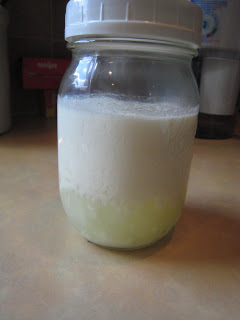
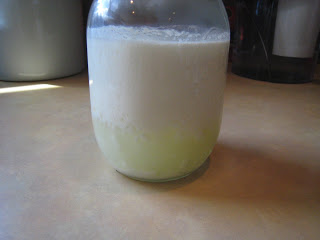
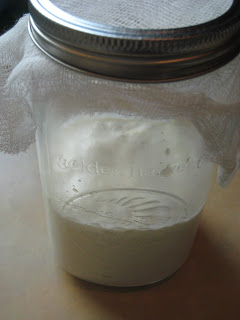
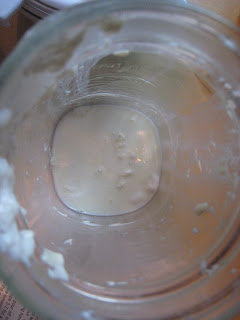
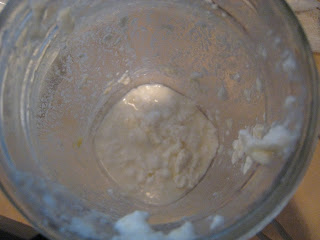
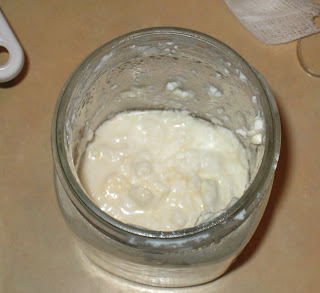
Note – the pictures are from various stages in the process. You can see the grains growing. I’ll have to take a picture some other time when I have the grains clean.

Chicken Broth (Bone Broth)

I’ve been reading so much about bone broth since I started reading Nourishing Traditions. It is packed with nutrients and is so good for digestion. I finally got around to making some on Sunday. I didn’t follow any one recipe/method exactly (based mine on both Nourishing Traditions and Naturally Knoced Up). But I did end up with awesome tasting, healthy broth! I got about 4 pints. It is quite concentrated. I could have easily added more water while cooking it. But I’ll just add the water as I use it…takes up less storage space that way 🙂  I froze 3 pints and kept one out for meals this week.

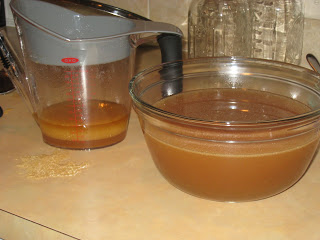
I started the process by roasting a whole chicken in the crockpot on Sunday morning. We had it for lunch. I kept all of the liquid in the crockpot after removing the chicken. After lunch I deboned the chicken and put all of the skin/bones/fat back into the crockpot (with the liquid and some other bones I had saved from last week). I added some onion and water and let it cook. Part way through cooking I added unrefined sea salt, pepper, garlic powder and some carrot chunks. Including the time the chicken was roasting I had my broth going for about 24 hours. After cooking I drained everything through a collander lined with cheesecloth. Then I ran the liquid through my gravy separator to remove some of the really fatty stuff. It was really quite simple. Messy, but simple. I will try to do it more often now so I always have some on hand. I would like to get to a point where I eat/drink at least a little broth every day to help in the process of healing my gut and just becoming healthier over all. And I’m anxious to try making bone broth from beef bones (when we get our Voogt beef). I’ll try to write out the process in a recipe fashion below. You can make this in a stock pot, but I though the crockpot was way easier than having something simmering on my stove all day. Plus I don’t feel comfortable leaving the stove on over night. You can do this in the opposite order…make the stock (simmering the whole chicken for the full time) and then eat the chicken. Some recipes say to add vinegar to help with the gelatinizing process. But I didn’t…I didn’t remember that part when I was making it 🙂  Mine is still plenty gelatinous. So, this is what I did. I’m no expert…this was my first attempt. But it seemd to work. And I had some for dinner last night. YUM!! Tastes like the best chicken soup you’ve ever had. I warmed it up with some of the leftover chicken (together) and had a pile of veggies on the side. Mmm.

Chicken Bone Broth

1 whole chicken (or whatever chicken parts you have)
Water
Seasoning (unrefined sea salt, pepper, garlic powder, herbs, bay leaf)
Veggies, very roughly choppped (whatever you like…onions, celery, carrots)
1-2 Tbsp. vinegar (optional)

Cook chicken or chicken parts. Place all of the bones, skin, fat in the crockpot (and any meat you want to add). At this point you can add 1-2 Tbsp. of vinegar and let it sit for an hour. This helps draw out the nutrietns from the bones. After the hour is up (or right away if you’re not adding the vinegar) you can add your veggies and seasoning. Or you can wait until half way through cooking. Add enough water to cover everything. Turn on the crockpot and bring to a boil. Skim off any nasty stuff that comes to the top (I didn’t do this…just waited until the end and strained everything well). Let simmer in crockpot 6-24 hours. The longer you cook it the more nutrients you draw out of the bones. When the cooking is finished drain everything through a colander lined with cheesecloth. As the broth cools the fat will rise to the top and you can skim off as much or as little as you want. Or if you have a gravy separator you can run the broth through it right away (before it cools). You can store it in the refrigerator or freezer. It works well to freeze it in ice cube trays so you can take out as much or as little as you want at a time.

Fermented Punch

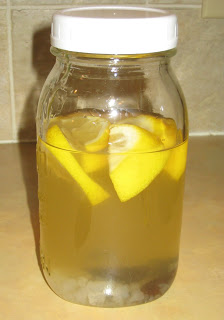
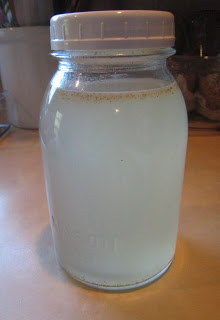
Keeping with my June goals I’m trying some fermented drinks. These can be more beneficial to your digestive system and overall health than only drinking water. And some of them are so easy to make. So I’m giving it a shot. I’m starting with punch. It’s a Nourishing Traditions recipe. It’s kind of like lemonade (basically lemon juice, water and sugar). Not sure how the fermenting will impact the taste. It’s still in the fermenting process. I’ll have to update once I’ve tried it (tonight or tomorrow). I hope it turns out well. It was simple to make. And a perfect way to use up some of the organic lemons I have. I only made a half recipe to try it. If it’s good it’ll be a very cheap, healthy and easy drink to have on hand in place of things like juice.

**Edited 6/2/10 – This is very good! Tastes like lemonade. Now I have a great replacement for my grape juice. I was wondering how I was going to be able to cut out juice. This is it! Cheap, easy and good for my tummy.

Fermented Punch
Makes 2 quarts

juice of 6-8 lemons
1/2 cup Rapadura (I used organic cane sugar)
1/2 cup whey
1/2 tsp. grated nutmeg
2 quarts filtered water

Place all ingredients in a 2 quart glass container (I used a 1 quart mason jar to make a half batch). Cover tightly and leave at room temperature for 2-3 days (I shook it up a bit when I first put it in the jar). Skim off any foam that may have risen to the top. Cover tightly and refrigerate. The punch will develop more flavor over time.

Fermented Fruit Chutney

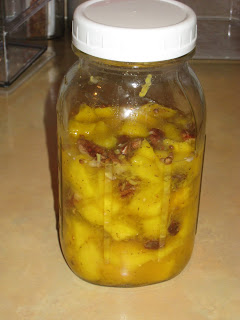
Last night I made another lacto-fermented recipe – fruit chutney. I used mangos, but you can use a variety of fruits. I don’t know if I’ve ever had chutney. But it sounded interesting. You generally eat it with meat. This smelled so good when I made it. Kind of like fresh lemonade 🙂  It looks a little odd because you see nuts and raisins floating around. But I bet it will taste very good. I only made a half recipe. This also comes from Nourishing Traditions

**Updated 5/30/10 – This turned out pretty well. We had it with beef brisket. They paired nicely. Justin said it tasted like something from a fancy restaurant 🙂  Neither Justin nor I are huge mango fans, so I think next time I try this I’ll use a different fruit. I bet apples or pears would be really good. And I think a little less salt would be good too.
Fruit chutney
Makes 1 quart

3 cups fresh peaches, pears, apples, mango or papaya
1/2 cup flitered water
grated rind of 2 lemons (preferably organic since you’re using the rind)
juice of 2 lemons
1/8 cup Rapadura (or cane sugar)
2 tsp. sea salt (unrefined)
1/4 cup whey
1/2 cup crispy pecans, chopped
1/2 cup dark raisins
1 tsp. ground cumin
1/2 tsp. red pepper flakes (I skipped this)
1/2 tsp. dried green peppercorns, crushed (I used some fresh ground black pepper)
1/2 tsp. dried thyme
1 tsp. fennel seeds (I skipped these)
1 tsp. coriander seeds

Mix water, lemon juice, lemond rind, Rapadura, salt and whey. Peel fruit and cut up into lemon juice mixture. Mix with nuts, raisins, herbs and spices and place in a quart-sized wide-mouth mason jar. Press down lightly with a wooden pounder or meat hammer (I used the end of a wooden spoon), adding more water if necessary to cover the fruit. The mixture should be at least 1 inch below the top of the jar. Cover tightly and keep at room temperature for 2 days before transferring to refrigerator. This should be eaten within 2 months.

Fermented Ketchup

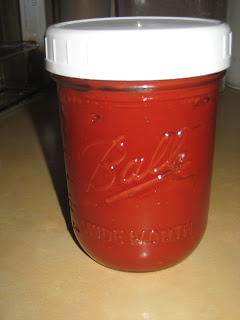
Another lacto-fermented food that sounded easy…and like something we would use regularly is ketchup! I’ve been wanting to make ketchup for a long time. And this sounded so easy and so good for my tummy. Perfect! It really was so simple to make. I can’t wait to try it later this week. I did have a little taste when I mixed it…yum! Ketchup that helps you dgiest your food…genius 🙂  I only made a half recipe. This is from Nourishing Traditions. I like the quote from the author:

“A return to ancient preservation methods would transform America’s favorite condiment from a health liability (produced in huge factories) to a beneficial digestive aid (produced as an artisinal product in farming communities).”

**Updated 5/30/10 – We tried this with beef brisket and french fries last night. Yum!!! It has a little different taste than the ketchup we normally use. But it’s still very good. It reminds me a little of pizza sauce. Rebecca didn’t even notice it wasn’t what we usually eat. Or if she did she liked this one better. She was easting it plain…scooping it with her fork and eating it 🙂  There wasn’t any left on her plate at the end of the meal. Definitely a keeper and a very easy way to eat fermented foods.

Feremented Ketchup
Makes 1 quart

3 cups canned tomato paste
1/4 cup whey
1 Tbsp. sea salt (be sure it’s unrefined)
1/2 cup maple syrup
1/4 tsp. cayenne pepper (I left this out)
3 cloves garlic, peeled and mashed
1/2 cup homemade fish sauce or commercial fish sauce (I used commercial…maybe someday I’ll make my own)

Mix all ingredients until well blended. Place in a quart-sized wide-mouth mason jar. The top of the ketchup should be at least 1 inch below the top of the jar. Leave at room temp for about 2 days before transferring to the refrigerator.

Fermented Bean Paste

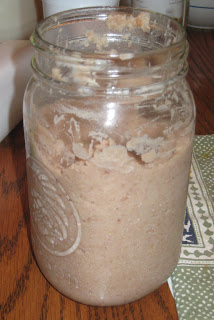
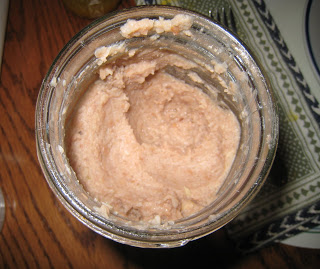
I’m trying out some recipes of lacto-fermented foods. Why? Because it’s good for digestion, of course 🙂  It enhances the food’s digestibility and increases the vitamin level. It also produces helpful enzymes and antibiotic and anticarcinogenic substances. And it promotes the growth of healthy flora in the intestines. To top it off…it’s easy! So I say, why not? And especially now that it’s hot it’s nice to be able to make food that you don’t have to cook. My first recipe is fermented bean paste. It sounded easy and delicious…kind of like hummus or refried beans. We haven’t used it yet, so I’ll have to update later with the verdict. I did taste just a little when I made it. It was quite strong, but good. I think part of the strong flavor comes from the onions I used…my FIL grows very strong onions. Maybe next time I’ll use a milder onion. I forgot to take a picture when I made it, so I’ll have to update later after we try it. You do need whey to make this (and most fermented fruits/veggies). You can make whey by straining yogurt. Very simple  I got this recipe from Nourishing Traditions.

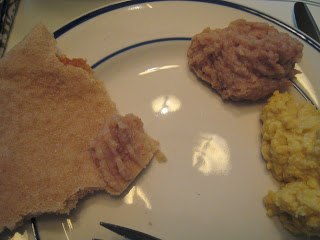
*Updated 5/29/10 – We tried this last night. It’s quite good. Justin and I both liked it. Like I said before, it’s very strong. The next time I make it I’ll use a milder onion. But it’s still good. I served it with homemade pita bread (along with some hummus). Great combo. And it’s good enough that I sometimes eat a spoonful before a meal (even if I’m not serving it with the meal) just to help my tummy. That’s what it’s for 🙂  It’s kind of a condiment…like having pickles with a meal. You just have a little with your meal.

Fermented Bean Paste
makes 1 quart

3 cups beans, cooked and drained (I used pinto beans…soaked for about 24 hours then cooked  for an hour or two)
1 onion, peeled and coursely chopped (I didn’t use this much onion and it was still very strong)
3 cloves garlic, peeled
1 Tbsp. sea salt (make sure it’s unrefined sea salt)
4 Tbsp. whey

Place the onion and garlic in food processor and process until well chopped. Add remaining ingredients and process until smooth. Place in quart-sized wide-mouth jar, leaving 1 inch of space between the top of the beans and the top of the jar. Cover tightly and leave at room temp for about 3 days before transferring to the refrigerator (it might take less time if your house is hot or longer if it’s cold). Serve as a dip with pita chips or tortilla chips.