Home » Feeding Children » Page 18

Category: Feeding Children

The world of feeding challenges is vast. Picky eating. Refusal to eat at all. Oral sensory issues. Food anxiety. The list goes on. But I’ve got you covered. I’m here to help you navigate all of it and keep your child well nourished. Feeding children doesn’t have to be so stressful!

I have over ten years of experience feeding children well. I’ve dealt with just about every struggle possible. And I’ve come out the other side with healthy kids.

Our days of constant tummy aches, food allergies, failure to gain weight, picky eating and gagging on food are over.

I want the same for you! Feeding children should not be stressful. It should be a joy. And it can be. I’ll show you how.

My book Why Won’t My Child Eat?! will walk you through the process of figuring out specific problem foods and how to gradually get your child to eat more.

The blog is full of advice and tips on feeding children as well. Don’t struggle alone. I’m here to help!

Gluten Free…Is It For Me? Or Maybe Even Grain Free?

I’m starting to realize it’s just not worth it. The momentary pleasure of eating something made with wheat is just not worth the pain and suffereing that comes after. Over the last couple months I’ve been making big steps towards becoming “mostly” grain free. But this month I started out a little more strict. And I think it was what I needed to shed some light on the next steps in my journey towards healing my gut. I had 2 days in a row of eating completely grain free. And I was feeling quite good. Then Wednesday I had sourdough muffins in the morning and burritos on whole wheat tortillas in the evening. This was a great experiment and told me a lot. I know my body well enough by now to know that foods usually impact me about 24 hours after I eat them (give or take). So if I’m not feeling well I can usually have a pretty good idea of at least what meal the offender came from. Yesterday was a great example. I felt great in the morning. Which means the sourdough muffins didn’t seem to cause much harm (they were made only with sourdough and sprouted wheat flour). But in the afternoon…it hit. The intestinal distress. And I knew right away it was the whole wheat tortillas (boughten) I had eaten the evening before. And it was like a light went on. I’ve gone back and forth for a long time about trying to eat completley gluten free or grain free. But I never go all in. But yesterday it just clicked. I saw how good I could feel. And how bad I could feel just from one meal with wheat. And I thought it’s just not worth it.

The crazy thing is that as usual I see God’s perfect timing. I am 9 weeks away from having baby #2. And it weighs heavy on my mind often about how I am going to handle 2 kids while not feeling well so often. But I had a glimpse of how I could feel earlier in the week. And it just seemed like God was clearning things up this week about what direction to take…just in time.

I don’t know for sure how far I’ll need to take this. But I am thankful to at least have a starting point and some direction. So I’m going to do a montly goal update now instead of waiting until April. My plan for this month is to start with only eating wheat that is soaked, sprouted or sourdough. And aside from that eat gluten free (and oat and potato free). I know it won’t be easy, but I’m anxious to see how much it helps. I’m sure I will have slip ups, but hopefully not many. I will make one exception to have a piece of my birthday cake 🙂  Depending on how I do I may go totally gluten free next month. And depending on how that goes I may try totally grain free at some point. And down the road I think I want to go even farther and do GAPS. But for now this is where I’m starting. I hope it will be a big help. I feel very good about this decision and am excited to see how I feel. God has given me a sense of peace about this path. All in his perfect time 🙂

I’ll have to make more of an effort this month to make sprouted flour. And I’ll have to start experimenting with recipes using sprouted flour. See how I handle it. One step at a time. Odd to say, but I was actually quite thankful for a bad day yesterday since it made things seem so clear. But hopefully the bad days will be fewer and fewer 🙂  I just wish the recovery period from eating wheat didn’t last so long. As I said before, it’s just not worth it. A few bites of food for a couple days of misery. No thanks.

Nuts – How To Eat Them

Nuts, what can I say about nuts? I love them! And they can be part of a very healthy diet. Or they can cause your body major stress. There are a couple different issues with nuts. I’ll start with how they should be prepared.

Nuts of all kinds (walnuts, pecans, almonds, peanuts, cashews, etc.) should be soaked and dehydrated before you eat them. Why? It’s the same idea as I discussed about grains…why they need to be soaked. Like grains, nuts contain phytates, which makes them very hard on your digestive system and your whole body. By soaking and dehydrating nuts you neutralize the phytates. Then your body can absorb the nutrients. According to Nourishing Traditions, “nuts contain numerous enzyme inhibitors that can put a real strain on the digestive mechanism if consumed in excess. Nuts are easier to digest, and their nutrients more readily available, if they are first soaked…then dried.” Nuts do contain a lot of vitamins and minerals (the list includes calcium, iron, magnesium, phosphorus, potassium, selenium, B complex, carotenoids, vitamin C, copper, and zinc) and are a great source of protein. Nuts also have a very high fat content, anywhere from 60% to 80% of calories from fat. Plus they make a great on-the-go snack. Or even a great addition to salads or mixed in yogurt. They give you the crunch you’re looking for…especially if you’re cutting out other foods like grains. They can be used to make milk substitutes, make flour, used in baking, to make nut butters, etc. Nuts are recommended as part of healthy, Real Food diet. They are recommended as part of a healthy diet for pregnancy. And many Real Food activists are in favor of eating properly prepared nuts.

So, how do you make crispy nuts? It’s quite simple. You soak the nuts in a combo of water and unrefined sea salt (time and quantities vary for each kind of nut). Then drain and dehydrate. I always do a large batch and freeze them. They are great right out of the freezer. No need to thaw. And they will stay good much longer that way. Here are a few versions of crispy nuts/seeds:

Crispy peanuts
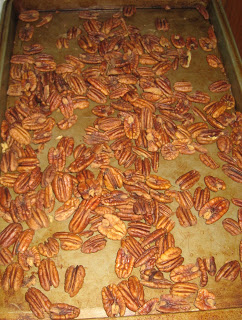
Crispy pecans
Crispy almonds
Crispy walnuts
Crispy cashews
Crispy pumpkin seeds

Are nuts, even properly prepared, a good option for everyone? Not necessarily. Nuts do contain a fair amount of omega-6 fatty acids. As long as you’re eating a whole food diet and no processed foods, this shouldn’t be a problem. But if you already get a lot of omega-6 in your diet you don’t want to add more. We need more omega-3 and way less omega-6. And for all of the omega-6 you intake you need to counteract it with more omega-3…which is harder to get. According to Nourishing Traditions, “a diet high in unsaturated fatty acids, especially polyunsaturated (omega-6…i.e. vegetable oils), can destroy the body’s supply of vitamin E and cause muscular lesions, brain lesions and degeneration of blood vessels. Care must be taken not to include a large amount of polyunsaturated oil in the diet without a corresponding increase in the intake of vitamin E.” Also, some people may not tolerate nuts well. Nuts are not recommended on diets like SCD. Check out Kat’s experience. And of course there is the obvious nut allergy. If you’re allergic to nuts, avoid them.

So, where do I stand? At this point I say all things in moderation. Don’t go overboard with nuts. But unless you notice a problem when you eat them, I say go for it. I can say without a doubt that nuts that are not properly prepared kill my gut. I now know why in high school and college I had some of the stomach problems I did…I ate peanuts every single day! Big handfuls. Yikes. I knew they  had an impact. But I ate them anyway. If I even eat a small amount now I notice. I do eat crispy nuts almost every day. And my daughter loves them too. Maybe some day I’ll experiment and go without for a while to see if I notice a difference. But for now I regularly enjoy crispy nuts as part of a healthy diet.

Nitrites, Nitrates and Processed Meat…You Won’t Find Them Here

I have tried to avoid nitrites and nitrates for a while now. Especially while pregnant. And since we’re serving ham for Christmas…something that often contains both…I figured now would be a good time to talk about them. They are found in most processed meats, like hot dogs, lunch  meat, bacon, etc.

So, what are they and what can they do to you?

I’ll start with sodium nitrate.

Sodium nitrate is in a lot of processed meats. But did you know it’s also used in the “manufacture of glass antifoamer, fertilizer, dyes and potassium nitrate, also in pharmaceuticals, oxidant and metal hot-treating”? Should that same thing really be in our food?

So what does it actually do to you? “Sodium nitrate may damage your blood vessels, making your arteries more likely to harden and narrow, leading to heart disease. Nitrates may also affect the way your body uses sugar, making you more likely to develop diabetes.”

Also, “nitrates in food are a danger in that they can be converted to nitrites, which can react in your stomach to form nitrosamines. Nitrosamines are potent cancer-causing chemicals.”

I find that these days sodium nitrate isn’t used quite as commonly as sodium nitrite. So, on to chemical number two.

Sodium nitrite is actually a poison. It is used to give processed meat a pinky color instead of looking gray (like regular cooked meat does). It has been shown to cause cancer, especially pancreatic and colorectal. “The USDA actually tried to ban sodium nitrite from the food supply back in the 1970’s, but it was overruled by the meat industry which knew that the chemical made meat look visually more appealing and therefore increased sales of processed meat products.”

Sodium nitrite is also “suspected of playing a role in the development of migraines and chronic obstructive lung disease.”

Pregnant women need to be especially careful about sodium nitrite “due to the greatly heightened risk of brain tumors in infants.” Sodium nitrite is especially dangerous to fetuses, infants and children.

These two nasty ingredients are in most processed meats today. But what else in that commonly served meat? Most list some kind of mechanically separated meat in the ingredients. Which means “a paste-like meat product produced by forcing beef, pork, turkey or chicken bones, with attached edible meat, under high pressure through a sieve or similar device to separate the bone from the edible meat tissue.” This can even include spinal cords. Gross!

Do you feed your child hot dogs regularly? “Leukemia skyrockets by 700% following the consumption of hot dogs. (Preston-Martin, S. et al. “N-nitroso compounds and childhood brain tumors: A case-control study.” Cancer Res. 1982; 42:5240-5.)”  No thanks.

If you do some research you will find a lot of meat companies say it’s totally safe. Of course they do. They want to sell their product! But if you look at the real evidence, you’ll see sodium nitrate and nitrite is not good for you at all. Especially children. So the next time you want to feed your child a hot dog, make sure it’s nitrate/nitrite free.

I served a fresh ham roast for Christmas dinner last night. And it was not pink. And it did not taste like it had been preserved in chemicals for months. It was nice 🙂  I spent way too many years consuming large amounts of lunch meat. Thankfully I have not had any in several  years. And I hope to prevent my children from eating it as much as possible as well. The more chemicals we can avoid the better.

Cereal…Why It’s Not As Healthy As You Think…Actually Not Healthy At All

Time to kick off my healthy lifestyle series. I’ll start with something near and dear to me…my beloved cereal 😛  I used to be the cereal queen. I ate it EVERY day for breakfast for years. From college to just a few months ago I’d say there were only a few days I didn’t have cereal for breakfast. And that was either on vacation (and even then I usually had cereal) or if I was too sick. In addition to my daily breakfast I snacked on it pretty much every day. I thought, like most people, that cereal was healthy. Low fat. Lots of vitamins. High fiber (the kind I ate was). But sadly that is not the case.

Cereal is quite unhealthy for multiple reasons.

*The obvious is that some cereals are full of sugar. Especially white processed sugar…which is like an anti-nutrient for your body.

*Then there is the white flour. Again, very processed and hard on your body.

*Most cereals are full of artifical ingredients…colors, sweeteners, flavorings, etc. Anything artifical is foreign to your body and hard to digest…putting more strain on your system.

*All big brand cereals contain GMOs (genetically modified organisms). Another unnatural ingredient that we don’t know the full effects of. GM foods have not been proven safe to eat. They increase the use of pesticides. I personally choose to avoid them at all costs. I want to know exactly what I’m eating…not some mutated, altered food with hidden ingredients. Corn is one of the  most widely used GM food. And it’s in just about every cereal. For example, take a look at the ingredients in a box of Kix (supposedly a great cereal for kids)…whole grain corn, corn meal, sugar, corn bran, salt, brown sugar syrup, trisodium phosphate, vitamin E (and some other added vitamins). It’s all GM corn and processed sugar. How is that good for a growing child?

*Most cereals are fortified with vitamins and minerals. Sounds healthy. But in reality they are synthetic versions that your body can’t really absorb. So they don’t do you much good. Maybe some harm actually.

*Finally, cereal (even the organic “healthy” kind) is toxic. Here is some great information from The Healthy Home Economist:

“To make boxed breakfast cereal in the factory, the grains first have to be subjected to such intense pressure and heat that they actually liquify into a slurry. This slurry allows the grains to be quickly and easily shaped into the puffs, flakes, and other shapes that make each cereal distinct. The manufacturing process used to make boxed cereal is called “extrusion” and it is so violent and denaturing that the proteins in the grains are actually rendered toxic by the process. This is why organic boxed breakfast cereal is more toxic than nonorganic – because organic boxed cereal is whole grain and thereby has more protein in it! The more protein, the more toxic the boxed cereal.”

It saddens me that something so bad for you is marketed as being so healthy…and that so many people (myself included for a long time) buy into it. When in reality it can make you sick and is very hard on your body. It especially saddens me that I ate Fiber One (mixed with various other cereals) almost every single day of my pregnancy with Rebecca. Artifical sweeteners, fake fiber, syntheic vitamins, GMOs, toxic substances. I hope it did not harm her development. I don’t like that cereal is one of the first things most people feed their children…baby cereal, Cheerios, etc. I’ll definitely be taking a different route with any future children. I don’t know for sure, but I’m guessing all of that cereal had an impact on my digestive issues and my infertility. I wish I would have known sooner how bad it was.

I am happy to say I have not eaten cereal for breakfast for a couple months now. It feels good to be cereal free 🙂  My whole body is thanking me. And I’m glad to start my daughter off on a good path eating real food for breakfast from an early age.

It’s tough to make the switch if you’re a die-hard cereal fan like I was. It’s convenient. It tastes good. But it’s worth it to stop eating it. Honestly, now I think most cereal tastes like fake cardboard. It grosses me out. The skim milk I used to pour on my cereal does too 😛  There are so many other healthy things to eat for breakfast. Here are some of our favorite quick breakfasts. You can make them ahead of time or prep things ahead so breakfast only takes minutes to prepare in the morning.

chewy granola bars
crunchy granola bars
homemade granola
grain free granola
giant breakfast cookies
soaked coffee cake
oatmeal muffins
blueberry muffins
strawberry bread
fresh fruit w/ cream cheese dip
kefir smoothie

Scrambled, fried or hard boiled eggs are always good too.

Enjoy a healthy breakfast every day…that does not include boxed cereal 🙂

Sauerkraut

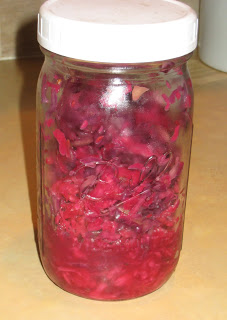
Last week I made my first batch of sauerkraut. I finally got around to tasting it today 🙂  Very good! It tastes like pickles to me. I just used the basic recipe in Nourishing Traditions. I used purple cabbage. Very simple (aside from a good arm workout pounding cabbage for 10 min.). Very good. And so great for your gut!! Plus it gets better with age. So it should taste really good in a few months 🙂

Sauerkraut
Makes 1 quart

1 medium cabbage, cored and shredded (I used my food processor for this)
1 Tbsp. caraway seeds
1 Tbsp. sea salt
4 Tbsp. whey, if not available use an additional 1 Tbsp. salt

In a bowl, mix cabbage with caraway seeds, sea salt and whey. Pound with a wooden pounder or a meat hammer for about 10 minutes to release juices. Place in a quart-sized, wide-mouth mason jar and press down firmly with a pounder or meat hammer until juices come to the top of the cabbage. The top of the cabbage should be at least 1 inch (2,5cm) below the top of the jar. Cover tightly and keep at room temperature for about 3 days before transferring to cold storage. The sauerkraut may be eaten immediately, but it improves with age.

Water Kefir

A little while back I started making my own dairy kefir. I’m doing whatever I can to get my gut healthy and repopulated with good bacteria. Kefir is a great way to do that. A wonderful probiotic. I eat dairy kefir every day. Then my SIL tried water kefir. I had heard of that, but hadn’t thought about trying it. Last weekend my SIL and I swapped grains 🙂  I gave her some dairy to try, she gave me some water to try. I made my first batch yesterday. I haven’t tried it yet. But will today. I’m very excited. I love having something to drink that is actually good for you that isn’t just plain water. That’s pretty much all I drink. But it’s nice to have something else sometimes. And I’m hoping this will be a great alternative for Justin. He stopped drinking pop (most of the time) a little while ago in order to get healthier (in general and for our IVF cycle). But sometimes he likes it with things like pizza or when he wants a treat. It’ll be nice to have something to offer. For my first attempt I used the method my SIL posted. I can tell it’s working…lots of bubbles/foaming 🙂  I can’t wait to try adding new flavors to it. I want to try blueberries while they are in season. It’ll be great to be able to have dairy kefir and water kefir every day. So good for your gut.

Water Kefir

Equipment:
*1 large broad opening glass container with lid – exact size depending on the amount of liquid per batch you want to make. If you make the basic recipe exactly as listed below, probably a 1.5 liter capacity container will suffice. If your glass container does not have a lid, you can simply cover it by placing a plate on top or with some plastic wrap or cloth tied with a rubber band around the opening. (I used a quart mason jar… just make sure whatever kind of container you are using, you only fill it 3/4 of the way full!)

*1 strainer and/or pouch – depending on method used (I used a strainer this time, but will be making a pouch eventually)

*1 spoon, non-metallic

*1 glass jar

There are 2 known methods of dealing with the grains: the “loose grains” method and the pouch method. In the first one, you just toss the grains in the glass container along with all the other ingredients, so you will need to use a strainer for pouring each batch and washing the grains afterwards. The pouch method seems easier and better to keep your grains separate from other stuff you may want to add to the recipes and to manage the grains for washing purposes. You can easily make your own pouch with some porous cloth, like gauze or cheesecloth, folding and sewing the sides together, and using a string to tie up the top. Just make sure there’s more than enough room in it for the new grains to grow in there, as they multiply.

Ingredients:

3 Tbsp. water kefir grains
1/4 cup brown sugar or 3 Tbsp. honey (I used honey this time)
1 or 2 dried figs – or any other dried fruit you prefer like dried prunes, apricots, dates, raisins, etc. (I used 2 prunes)
1/2 lemon
1 quart filtered water – only water without any chlorine should be used (it will kill your grains), so tap water is not suitable unless it’s filtered

Mix in the glass container and stir.

There are 3 different brews you can make: 24, 48, and 72 hour fermentations. 72 hours is the maximum a batch should be let to ferment. The longer it is allowed to ferment, the stronger it becomes. Note that the carbonic acid increases each day, so if your container is air-tight sealed, it could explode. (I only filled my jar up 3/4 of the way and did not tighten the lid all the way.) Covering prevent flies or bugs from getting into it. Keep out of direct sunlight and at room temperature.

It is said that 24-hour kefir acts as a laxative…and that 48-hour kefir regulates and re-establishes intestinal function. Once the fermenting time has passed, strain the liquid, squeeze the juice of the half lemon used in it, and it’s ready to drink(you can chill it first).

Wash the grains under running water. You can store them in a small jar of water in the fridge for about a week (add a small amount of sugar to feed them), or else you should dehydrate them. Or if you use them regularly you don’t have to worry about storing them 🙂
 
We’ll see if I can keep up with both kinds of kefir 😛  I’ll update later when I’ve tried this/tried some flavors.

Sloppy Lentils

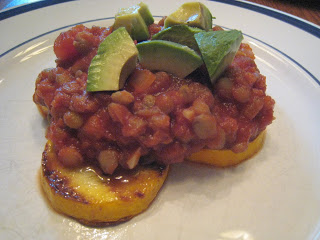
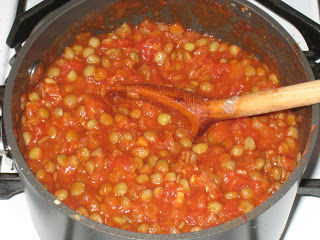
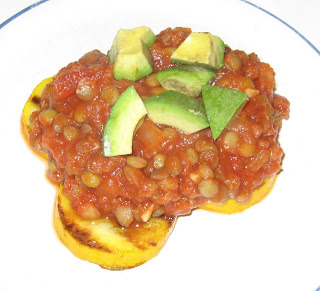
A couple weeks ago my SIL posted a recipe for sloppy lentils. It sounded so good. And it was a perfect meal for us since I’m trying to add more lentils into our diet (so healthy and great for fertility). I tried it last night. Yum!!! All 3 of us loved it. My original plan was to serve it over corn bread…but it’s just too hot to bake right now. I do want to try that sometime, but not this week. I debated about a few ways to serve this and ultimately decided to serve it over grilled yellow zucchini (since I had some fresh from the farmer’s market). Much healthier and much easier on my tummy. It was really good! I served it with shredded cheese and avocado. Justin and Rebecca also used some tortilla chips for scooping. This is a great recipe. Very easy. Very quick prep (as long as you plan ahead). It makes quite a bit, so there are lots of leftovers for lunches or another dinner. And it’s so versatile. You can serve it on buns, over cornbread, in tortillas, with chips, over veggies. So many options. I’m glad I tried this. Loved it.

Sloppy Lentils

3 cups water
1 cup lentils, rinsed (I used green)
salt to taste (optional)
1 cup chopped onion (I used about 1/3 cup)
3 tablespoons olive oil
15 oz can diced tomatoes
1/2-1 (6 ounce) can tomato paste (I used the full can)
2 cloves garlic, minced
1/2 cup ketchup
1 teaspoon mustard powder (I just used regular mustard)
1 tablespoon chili powder (I didn’t add quite this much…Rebecca doesn’t like spicy food)
3-5 tablespoons rapadura, molasses, or honey (I used about 4 Tbsp. brown cane sugar)
1 Tbsp white vinegar
salt and ground black pepper to taste
4 hamburger buns, split (or corn bread, tortillas, chips, veggies)

Soaking Step, optional (I did this): Allow lentils to soak overnight in warm filtered water with 2 Tablespoons acid medium (I used the liquid part of my kefir). Rinse and cook as described below.

Combine water and lentils in a saucepan. Season with salt and pepper, if desired. Bring to a boil over high heat, then reduce heat to medium-low, cover, and simmer until tender, about 30 minutes, stirring occasionally. The cook time may depend on the type of lentil you use, too… so keep that in mind so that you don’t overcook them. (I soaked my lentils the night before and then cooked them in the morning. I proceeded with the recipe at dinner time with a bowl full of already cooked lentils 🙂

Meanwhile, cook the onions in olive oil in a large skillet over medium heat until the onions have softened and are translucent. Add tomatoes, garlic, tomato paste, ketchup, mustard powder, chili powder, sweetener, vinegar, salt and pepper. Simmer 5 to 10 minutes until thickened.

Drain lentils and reserve cooking liquid. Stir lentils into sauce mixture, adding cooking liquid or water as needed to obtain the desired “sloppy joe” consistency. Serve on buns (or other bread or veggie).

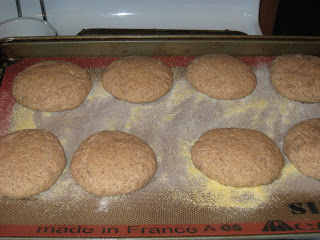
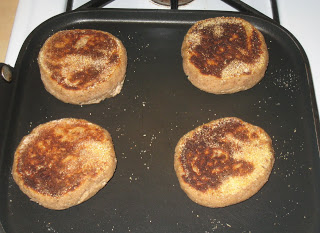
Whole Wheat Sourdough English Muffins

My husband is a big fan of english muffins, but I stopped buying them a while ago since they aren’t healthy. Since then I’ve been looking for good recipes for healthy english muffins. I’ve made a couple kinds in the past. One turned out very well…but it was made with white flour.

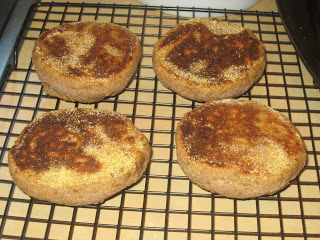
A couple weeks ago when I was searching for new sourdough recipes I found a lot of sourdough english muffin recipes. I’d never thought of that. So I did a search for whole wheat sourdough english muffins. And the first good one I came across was from GNOWFGLINS. I tried it yesterday. The verdict…awesome!!!

My daughter and I shared one with dinner last night, and we had them for breakfast this morning. Yum!! If you don’t like sourdough, you won’t like these. But if you do (like I do…can’t believe how much I love it now), you will definitely like these. And they are quite simple to make.

When I first read the directions it seemed like a long process. But really each step goes very quickly. The first day you just mix a few ingredients together. The second day you add a few more ingredients, shape the muffins, let them rest a bit and cook them. Not much hands on time at all. 

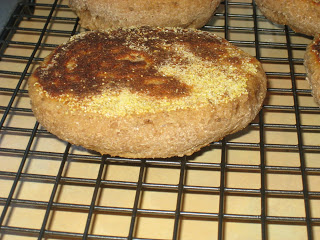
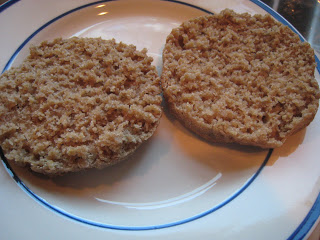
This is a keeper recipe for sure! They are light and moist. Perfect. I used bulgur flour for this batch. Any flour will do…and will produce a slightly different texture. I also added a little ground flax seed. And I used kefir for my liquid…made them even healthier! If you’re looking for a way to use your sourdough starter (or use up some kefir :), give these a try!

Whole Wheat Sourdough English Muffins

1/2 cup sourdough starter (thick or thin)
1 cup liquid (water*, milk, fermented dairy, coconut milk…)
2 cups flour (your choice – bulgur flour, splet, kamut, einkorn, whole wheat)
Add-ins like seeds, dried fruit, or chopped nuts
1 Tbsp. raw honey (or any other sweetener)
3/4 to 1 tsp. sea salt of choice
1 tsp. baking soda

*Note: The English muffins will turn out if you use water instead of full fat or fermented dairy and if you add more flour initially for easier kneading. However, the results will not be as soft on the outside or as tender on the inside once you’ve finished the cooking.

Day 1:

Place 1/2 cup sourdough starter (thick or thin) into a medium size bowl. Pour onto that the 1 cup of liquid. This is the first place where the recipe is very flexible. Your liquid could be water, milk, any fermented dairy, coconut milk… Stir to combine starter and liquid. If your sourdough starter is very stiff, you might need an extra 1/4 cup of liquid.

Once combined, add 2 cups of flour to the mixture. This is the second place where the recipe is very flexible. Use any combination of flours. Stir well to combine. Along with the flour, I often add in a couple Tbsp. of ground flax seed or poppy and caraway seeds (when I make delicious rye sourdough english muffins). The soaking affects the seeds as well as the flour. So, great! Cover and let your dough sit overnight, even up to 24 hours.
 
Day 2:
 
On top of your soaked dough, sprinkle 1 tsp. unrefined sea salt, 1 tsp. baking soda, and 1 Tbsp. honey. Use a wooden spoon to push/cut/stir in your newly added ingredients. Don’t worry about incorporating it perfectly; you will be kneading it in just a moment.

This next part of the directions might feel a little strange, because you are kneading something that could be quite wet. Pour about 1 tablespoon of olive oil onto the counter and spread it around with your hand and then rub hands together. Dump out the dough onto the oiled spot and knead the dough for 2 to 3 minutes. The purpose of this kneading is to incorporate the honey, baking soda, and salt. After this, take a pizza cutter and separate the dough into 8 equal portions. (Be sure you use plenty of oil…the dough is wet and sticky.)

The dough is quite wet. At this time, it is helpful to dust hands with flour before shaping each muffin. You might prefer to use all-purpose flour for this dusting, or sprouted flour where the sprouting has done the work of soaking.

With dusted hands, pick up a portion and gently shape it into your muffin – about 1 finger thick and maybe 2-1/2 inches wide. Size and shape are not important here. Place your muffins on a lightly floured or cornmealed (greased might work if you want to stay away from newly added flour) sheet of wax paper or parchment paper. Cover with a dish towel and let rest for 45 minutes to 1 hour.

About 5 minutes before you want to griddle/skillet your muffins, set the heat to medium. You don’t want the muffins to brown too quickly because the insides need a chance to cook. You do not need to grease the skillet/griddle.

Carefully transfer the muffins onto your heat source. Cook the muffins for about five minutes on each side. You can take a little peek every now and again to make sure the bottoms are not getting too brown. When it is time to flip, do this carefully. Your muffins will plump up beautifully, and you do not want to deflate them by being too rough. Cook for the second five minutes. Now, if you find that the outside edge of your muffin is not as done as you like, feel free to pop these into a 350 degree oven for 5-10 minutes.

They last for at least a week in a sealed container on the counter. They also freeze beautifully. Might want to slice them first. And it most definitely works to double or triple the recipe.

Dairy Kefir – Take 2

Last week I got some kefir grains and made my first attempt at making some. I wasn’t really sure what I was doing or what it was supposed to look like/taste like. And it didn’t seem to work that well. So I did a little more research, watched a few videos and tried again this week. Well, I think it worked this time 🙂  And it really wasn’t hard at all. I think I just hadn’t given my grains enough time to adjust/grow before. My first batch of kefir is still probably on the thin side. But it’s way thicker than the stuff I made last week. I mixed kefir and yogurt together yesterday for lunch. That worked well. The kefir does have a pretty strong sour taste. I love the tangy taste of plain yogurt. But kefir is different. I haven’t accquired the taste for eating it plain yet. But maybe I will over time. I’m excited to have kefir and to try in various recipes. And mostly excited about its impact on my gut 🙂

In addition to dairy kefir there is also water kefir. Which also is great for your digestive system. I’ve read about it many places. Maybe I’ll try that next (thanks for the suggestions Sara and Donielle!).

Here’s the basic idea of how to make dairy kefir:

Kefir

1. Put kefir grains in a clean container (a mason jar works well)
2. Poor milk into the jar (how much milk you use depends on how many grains you have and how much kefir you want to make. To start out I’m only using about a cup of milk.) and stir with non-metallic spoon.

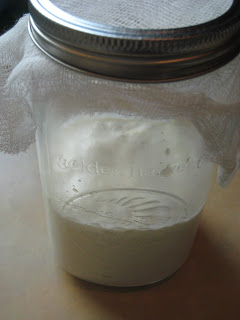
3. Cover jar loosely (I use cheesecloth secured with a ring)
4. Set in a warm spot, away from sunlight (I put mine in a kitchen cupboard…above my oven)
5. In 12 – 48 hours you should have kefir (The time depends on your grains and how strong you like the kefir)

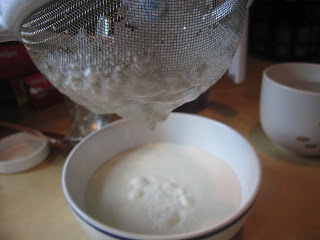
6. Strain the kefir into another jar. (I pour it through a strainer)

7. Put the grains back into the old jar and pour milk on top. Repeat steps 3 – 6 for more kefir. Or store in the refrigerator if you want a break from making kefir.

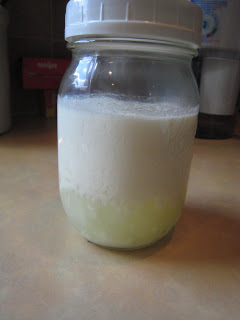
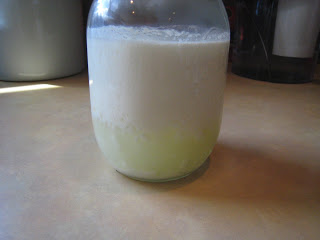
8. Cover the kefir you just  made. You can put it right in the refrigerator. Or you can let it set out a while to continue to thicken and separate. If it separates the top portion will be thicker, like yogurt. The bottom will be whey. You can use them together or separate, just like you do with yogurt.

Kefir

As I continue on my journey towards better health, I’m trying to find foods that will help heal my gut. One that I’ve read a lot about is kefir. It’s kind of like yogurt (not as thick), but has a lot more good bacteria. Although I’ve done a fair amount of research kefir is still somewhat of a mystery to me. What it’s supposed to taste like, how you use it, etc. But I’m working on experimenting and finding the answers.

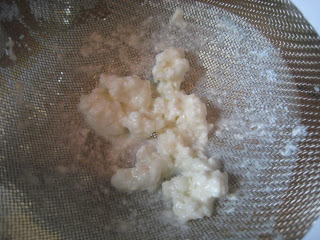
You can make kefir from grains or a powder. Based on what I read the powder is pretty easy. You just mix it with milk, let it set a bit, and it’s done. But then you have to buy more. And it’s not cheap!! On the other hand, if you use grains to make kefir you only have to buy them once. They can last forever! Guess which one I chose? Grains of course. But they are a bit trickier (I think). I got my grains last week and followed the instructions that came with them. The grains themselves are definitely growing. So I know I’m doing something right. But the kefir itself…I’m still working on that. It was really hot when I started the process, so I think the process was going faster than usaul. After a few days of adding milk, letting it sit, dumping the  milk and repeating I got what I thought was my first actual batch of kefir. It smelled and tasted like spoiled milk to me. Maybe it was bad. Or maybe it was just really strong kefir (some people compare it to buttermilk). Either way I couldn’t drink it. Just to be safe I dumped it and rinsed the grains. And started over. I know I have healthy, growing grains, so I started fresh. And I didn’t let it ferment nearly as long. So yesterday I made my first new batch. I only let it go about 12 hours. And it actually tasted good. Similar to milk, but you could tell there was more to it than that…a little tangy and a little sweet at the same time. I’ve got another batch going now (the tough part about kefir…you have to keep making it/keep feeding the grains). We’ll see how that one goes. The down side is that it uses up a lot of milk. But if I use the kefir in place of milk and buttermilk than I guess it evens out.

So I’m in the experimentation phase. But hoping that even my mild kefir will have some health benefits. And maybe over time I’ll develop a taste for stronger kefir and can let it ferment longer. I’m also figuring out how to use my kefir. Last night I mixed some in with my yogurt. That worked well (maybe a 1:3 ration, kefir to yogurt). I’m planning to make kefir smoothies. And I want to use it in some baking. Plus just drink it plain sometimes (if I can 🙂  And maybe even use it on my granola. Mmm. That sounds good.

For now I’m not going to post a “recipe”/method of how to make keifr. If you buy the grains you should get directions with them. And I’m still figuring it out. When I get more comfortable with it maybe I’ll update this post and give some directions/tips.

If you’re looking for grains, I ordered mine here (but from a different seller that isn’t listed right now). And if mine keep growing well, maybe I’ll have some to give away 🙂

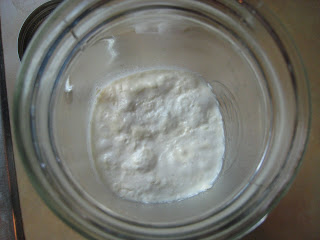
Note – the pictures are from various stages in the process. You can see the grains growing. I’ll have to take a picture some other time when I have the grains clean.