Home » Archives for Mary | Just Take A Bite » Page 7

Author: Mary | Just Take A Bite

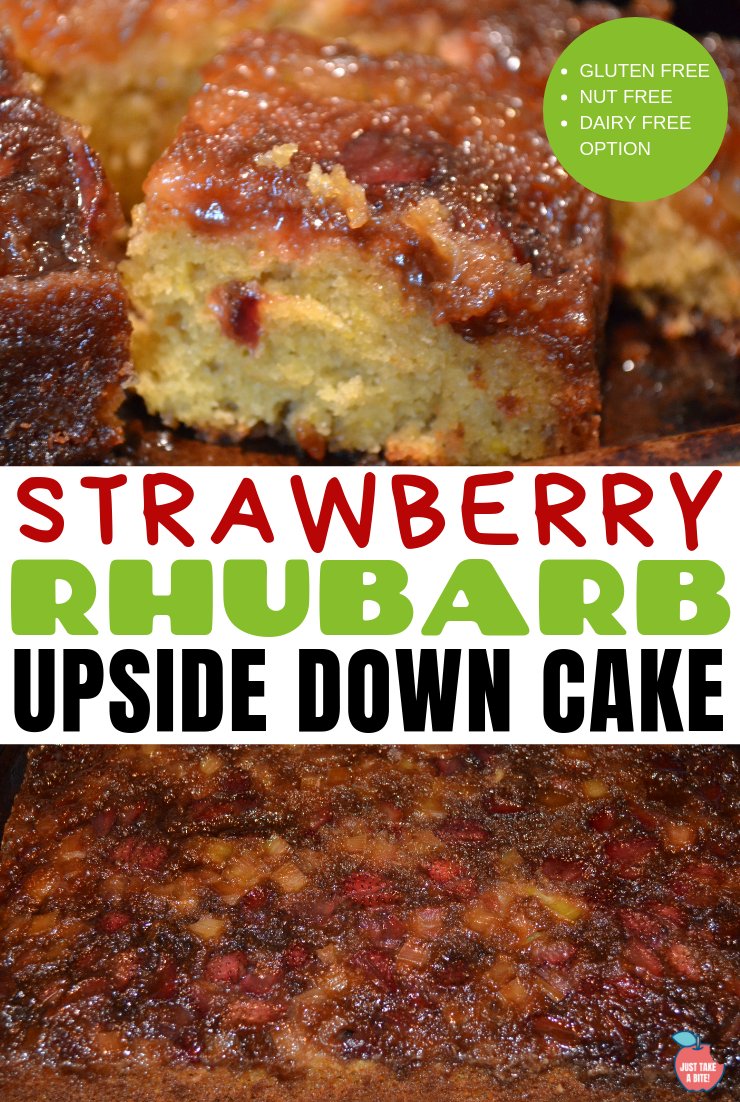
Gluten Free Strawberry Rhubarb Upside Down Cake

The perfect early summer treat – combine sweet strawberries and tart rhubarb in this easy gluten-free strawberry rhubarb upside down cake!

Do you enjoy rhubarb?

It seems to be one of those foods that you either love or hate. I had never tasted it until I was an adult (i.e. my family was in the “I hate rhubarb” camp).

I guess I’m the oddball of the family because I love it!

What to do with Rhubarb

I’ve made quite a few unique rhubarb dishes in the past. Some of my favorites are:

Of course rhubarb tastes best when there is plenty of sugar added since it is so tart. So it is typically used in dessert.

Is Rhubarb Hard to Grow?

Believe it or not rhubarb is quite easy to grow. And you really only need a couple plants to get enough for a few spring treats.

We have a few rhubarb plants in our flower garden. They might actually produce enough for us to use if our chickens would stop eating them!The perfect early summer treat - combine sweet strawberries and tart rhubarb in this easy gluten-free strawberry rhubarb upside down cake!

How to Eat Rhubarb

Since it is so tart I think rhubarb is best paired with another fruit. Our first choice is strawberries. And since they are in season at the same time it just makes sense!

Even if you don’t have a lot of rhubarb you can fill in with other fruits. You’ll still get the rhubarb flavor you’re looking for.

Gluten-Free Strawberry Rhubarb Upside Down Cake

This simple cake is super moist and has plenty of sweetness. It is a perfect early summery treat, especially paired with some homemade vanilla ice cream.

The cake recipe is a great base for desserts all summer long. You can replace the strawberries and rhubarb with a variety of fruits (blueberries, peaches, plums, etc.).

It also works well for those with food allergies. It is naturally gluten and nut free. You can make it dairy free too.

Strawberry rhubarb upside down cake is a delicious dessert that you can make all summer long with whatever fruit is in season.

What is your favorite dessert fruit combination? If you’re not sure what to do with your rhubarb give this cake a try. It’ll be a big hit.


Gluten-Free Strawberry Rhubarb Upside Down Cake

Prep Time 15 minutes
Cook Time 1 hour
Servings 12
Author Mary | Just Take A Bite

Ingredients

  • 1/4 cup butter or coconut oil
  • 1 cup organic brown cane sugar  packed
  • 2 cups fresh strawberries sliced
  • 2 cups fresh rhubarb chopped
  • 1 1/2 cups white rice flour
  • 1/4 cup brown rice flour
  • 1/4 cup tapioca flour
  • 1/4 cup amaranth flour
  • 1 1/2 cups organic cane sugar
  • 1/2 cup butter room temp (can be replaced with coconut oil
  • 1 1/4 cups milk or coconut milk, rice milk or almond milk
  • 2 tsp. baking powder
  • 1 tsp. baking soda
  • 1 tsp. salt
  • 1 tsp. vanilla
  • 3 eggs separated
  • 1/2 tsp. cream of tartar

Instructions

  1. Heat oven to 350°F.

  2. In a 9x13-inch pan melt the butter in the oven.

  3. Sprinkle the brown sugar evenly over the butter.

  4. Arrange the strawberries and rhubarb on the brown sugar. Press down gently.

  5. Beat the egg whites with the cream of tartar until stiff peaks form.

  6. Beat the egg yolks for two minutes.

  7. Add the remaining ingredients to the egg yolks. Beat for two minutes.

  8. Fold in the egg whites.

  9. Pour the batter over the strawberries and rhubarb.

  10. Bake for 50-60 minutes.

  11. Immediately run knife around sides of pan to loosen cake. Place heatproof serving plate upside down on pan (I used a small baking sheet); turn plate and pan over.

  12. Leave pan over cake 5 minutes so the brown sugar topping can drizzle over cake.

  13. Cool 30 minutes. Serve warm or cool with whipped cream or ice cream.

  14. Store covered in refrigerator.

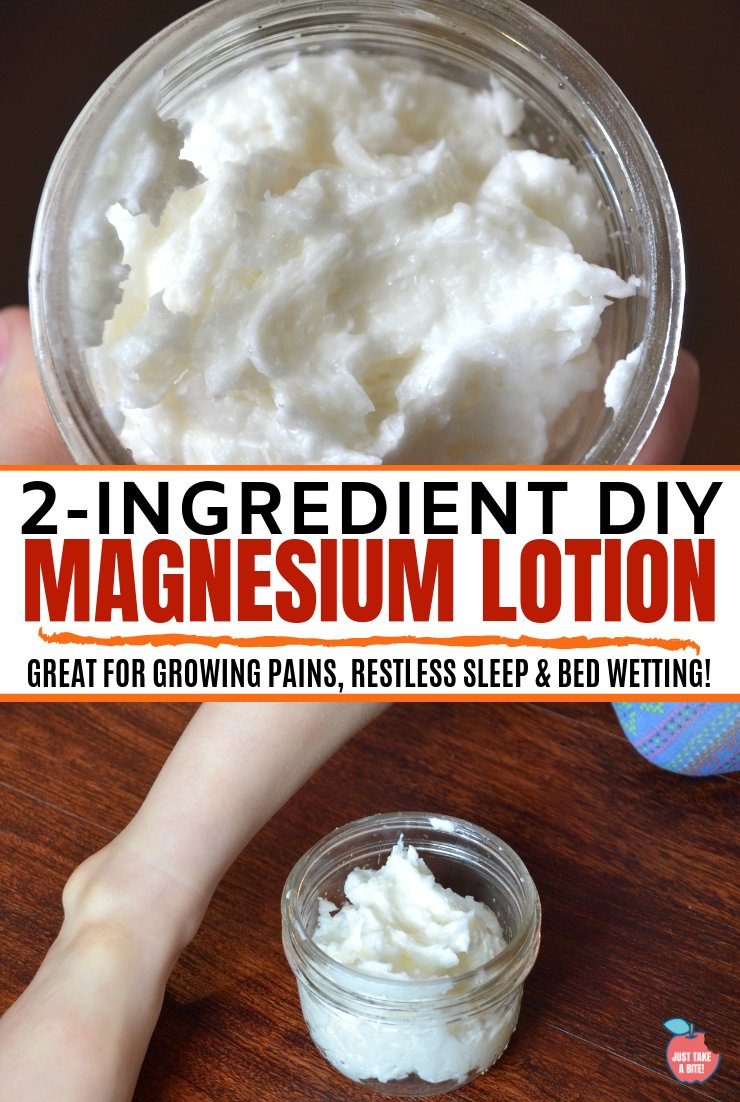
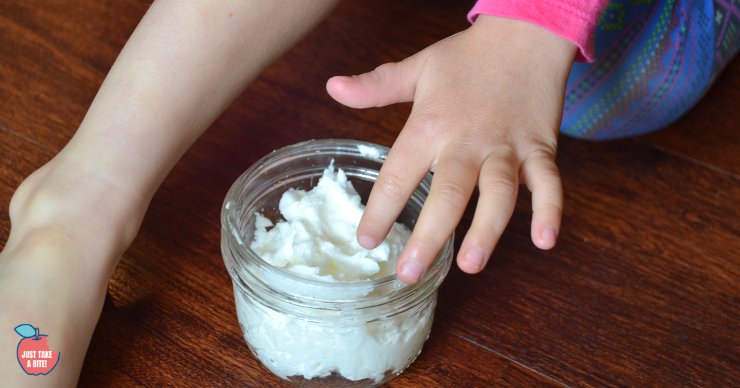
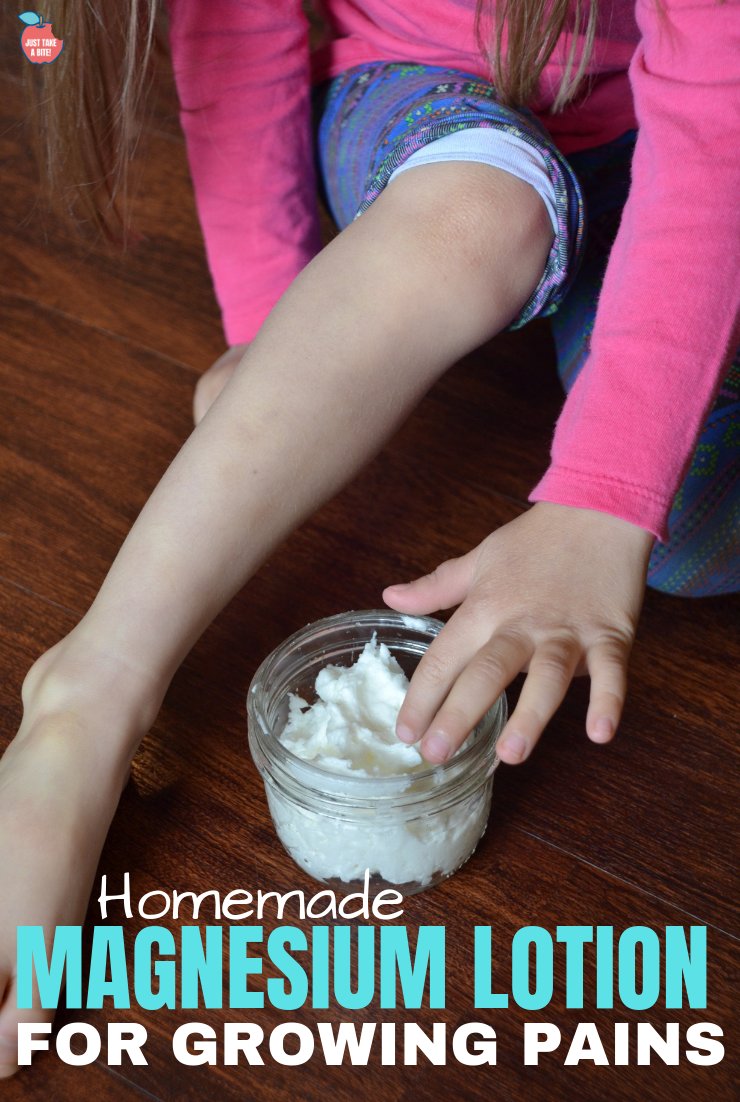
Growing pains, restless legs, trouble sleeping, muscle stiffness? Kiss your aches and pains goodbye with this super simple two-ingredient DIY magnesium lotion.

Two-Ingredient DIY Magnesium Lotion

Growing pains, restless legs, trouble sleeping, muscle stiffness? Kiss your aches and pains goodbye with this super simple two-ingredient DIY magnesium lotion.Growing pains, restless legs, trouble sleeping, muscle stiffness? Kiss your aches and pains goodbye with this super simple two-ingredient DIY magnesium lotion.

My four-year old has been struggling with leg pain for over two years now. She wakes in the night just crying and crying because her legs hurt so badly.

At first we assumed it was growing pains. But as time went on we started to wonder if there was more going on. The pain was so intense. And recently it became more and more frequent, hurting in the day instead of just at night, on a daily basis.

Of course “mom brain” starts to think of the worst scenarios. I expressed my concerns to her pediatrician. I was worried her bones were weak due to malnutrition as a baby (you can read more about her story here).

So we did an x-ray of her leg. All clear! (phew!) Her bones look normal. Maybe it is “growing pains” after all (though technically nobody really knows what growing pains are…so I still started searching for root cause).Growing pains, restless legs, trouble sleeping, muscle stiffness? Kiss your aches and pains goodbye with this super simple two-ingredient DIY magnesium lotion.

Natural Remedy for Growing Pains

With my mama mind at ease I started looking into natural ways to combat leg pain. One of the best remedies for leg pain is topical magnesium.

Perfect! I already had a bottle of magnesium oil made. I’ve been using it myself for about six months to help boost my own magnesium levels.

There is just one problem. Magnesium oil is not fun to use. It’s kind of sticky. It makes your skin itch and sting.

I knew I’d never get my daughter to use that every day. She tried it once and ended up washing it off because she couldn’t handle the itching.Growing pains, restless legs, trouble sleeping, muscle stiffness? Kiss your aches and pains goodbye with this super simple two-ingredient DIY magnesium lotion.

Simple DIY Magnesium Lotion

I started searching for magnesium lotion I could buy. There are some good ones out there (I love this one from The Magnesium Lotion Shop!).

In the end I decided to make my own.

My conclusion?

This is SO easy to make. It is SO much nicer to use than magnesium oil. WHY did I not do this six months ago and spare myself the torture of using magnesium oil every day?

Side note: I just made a fresh batch of magnesium oil yesterday (you need it to make magnesium lotion). So I sprayed a little on this morning to try it. Now I’m sitting here trying to write while my stomach itches like crazy. Only lotion from now on.

Benefits of Magnesium

Who could benefit from magnesium lotion?

Everyone.

For real. Just about everyone is deficient in magnesium. And that one deficiency messes up the balance of all of the other minerals.  Imbalanced minerals can cause a host of health problems.

Magnesium may help with:

  • energy creation
  • protein formation
  • muscle movement
  • nervous system regulation
  • brain function and mood
  • blood sugar control
  • blood pressure
  • headaches
  • joint and muscle pain
  • PMS
  • digestion
  • neutralizing stomach acid
  • strong bones
  • over 600 reactions in the body! [source] [source]

These are just a few of the ways magnesium helps your body. Magnesium is pretty important!!

Take note that there are a few people that don’t tolerate magnesium supplementation, either orally or topically. So use caution when trying magnesium lotion. Here are some reasons magnesium might make you feel worse.Growing pains, restless legs, trouble sleeping, muscle stiffness? Kiss your aches and pains goodbye with this super simple two-ingredient DIY magnesium lotion.

How to Make Magnesium Lotion

For such a prevalent problem, you’d think the solution would be complex. Thankfully that is not the case!

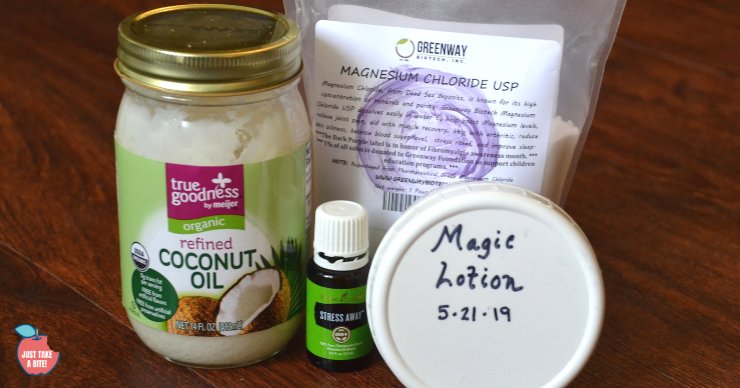
Homemade magnesium lotion is so easy to make. You’ll need two basic ingredients:

  • magnesium
  • coconut oil

You have to start by making magnesium oil. This simply requires you to mix magnesium chloride with hot water. The longest part of the process is heating a half cup of water.

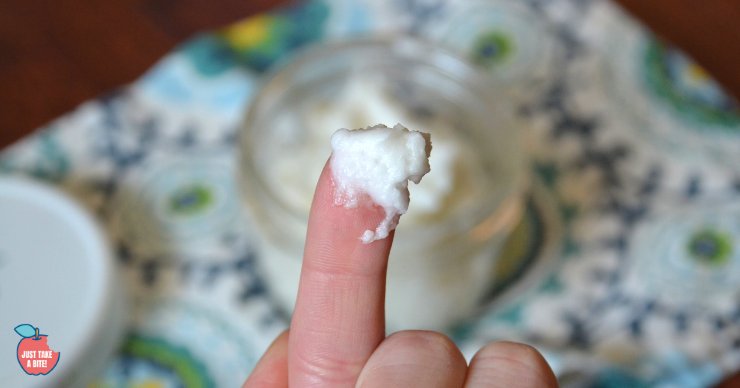
Once the magnesium oil is cool you can whip it with the coconut oil. Instant lotion!

Yes, it really is that easy.

I also like to add some essential oils to make it smell nice. But that is optional. My favorite is Young Living’s Stress Away. I like the vanilla scent. Lavender would also be good for kids. 

Some people use bees wax to help prevent separation. I’m a fan of simple. So I don’t bother with that. The magnesium oil and coconut oil may separate a little after the lotion sits for a month or more. Simply re-whip it to combine if that is an issue.

4.67 from 3 votes
Print

Two-Ingredient DIY Magnesium Lotion

A simple DIY magnesium lotion made with only two ingredients.

Ingredients

  • 1/2 cup hot water
  • 1/2 cup magnesium chloride
  • 1 cup organic coconut oil
  • 5-10 drop essential oil optional

Instructions

  1. Place the magnesium chloride in a small glass bowl.

  2. Pour hot water on the magnesium and stir to dissolve.

  3. Allow to cool, and store in a glass jar or spray bottle.

  4. In a large bowl beat together the coconut oil, 1/4 cup of the magnesium oil, and essential oils on medium high until well combined, about 2 minutes.

  5. Store in a glass jar at room temperature for up to 3 months.

Recipe Notes

The magnesium oil and coconut oil may separate after a while (after a month or so). You can simply re-whip it.

Want to see how it’s done? Check out my Facebook Live where I make a fresh batch of our “Magic Lotion.”Growing pains, restless legs, trouble sleeping, muscle stiffness? Kiss your aches and pains goodbye with this super simple two-ingredient DIY magnesium lotion.

What Kind of Magnesium Works Best?

There are three options when it comes to topical magnesium.

  1. Buy a pre-made oil (like this one).
  2. Magnesium chloride flakes (like these).
  3. Pharmaceutical grade magnesium chloride (like this).

All three will work, but the preferred option is the third one. It does not contain high levels of bromine like the flakes. It costs a few dollars more, but is still very affordable. One pound of the magnesium chloride will last at least a year – probably several years! Even if the whole family is using the lotion.Growing pains, restless legs, trouble sleeping, muscle stiffness? Kiss your aches and pains goodbye with this super simple two-ingredient DIY magnesium lotion.

How to Use Magnesium Lotion

We now know how easy it is to make magnesium lotion. Guess what? It’s even easier to use!

Simply apply as much or as little magnesium lotion as you like, wherever you like, as often as you like. You really can’t get too much. If you notice it causing loose bowels you can cut back. But generally topical magnesium does not have that effect since it is not ingested.

We prefer to apply it to our legs and/or abdomen. My oldest prefers to put it on her belly (I do too). My middle two prefer their legs. But it works no matter where you apply it.

I like to use magnesium lotion two or three times a day to make sure I’m keeping my levels steady. Your body uses it constantly throughout the day, and it gets depleted easily.

My kids always use it right before bed. It helps them settle down and sleep more soundly.Growing pains, restless legs, trouble sleeping, muscle stiffness? Kiss your aches and pains goodbye with this super simple two-ingredient DIY magnesium lotion.

How Magnesium Lotion Helped My Four-Year Old

Back to my daughter’s growing pain dilemma.

Armed with a full jar of DIY magnesium lotion I started applying it to my four-year old’s legs every night before bed. The first two nights I didn’t notice a change.

But after the third night we had an unexpected surprise!

First, her leg pain was gone. And she has not complained of it once since.

In addition she has been dry overnight ever since!! Up to that point she was wearing a pull-up to bed every night. Sometimes it was soaked in the morning.

But she has now been dry every night and is in underwear to bed.

The magnesium lotion was so effective at getting her minerals in balance that she stopped having to urinate so frequently!

If you have a child that struggles with bed wetting, growing pains, overactive bladder, or constipation give magnesium lotion a try.

My kids have actually named it Magic Lotion. It really has felt like magic with such a drastic change overnight. And you better believe we never skip a night now!Growing pains, restless legs, trouble sleeping, muscle stiffness? Kiss your aches and pains goodbye with this super simple two-ingredient DIY magnesium lotion.

Magnesium Lotion for Everyone

Considering the prevalence of magnesium deficiency, I think almost everyone would benefit from using magnesium lotion. It is safe for everyone, including infants and the elderly.

In fact, I just might make some for gifts this year. I wonder if it could help my dad who was recently diagnosed with Parkinson’s. I also need to convince my husband to try it. He struggles with restless legs – which is an obvious sign of magnesium deficiency.

Know anyone with osteoporosis? Magnesium lotion could help. There is such a strong relationship between magnesium and calcium.

If nothing else it can simply be used to help you relax. I think we all could use help in that department in our fast-paced, stressful world.

Do you use magnesium oil or lotion? What health benefits have you noticed? If not, are you ready to give it a try?Growing pains, restless legs, trouble sleeping, muscle stiffness? Kiss your aches and pains goodbye with this super simple two-ingredient DIY magnesium lotion.

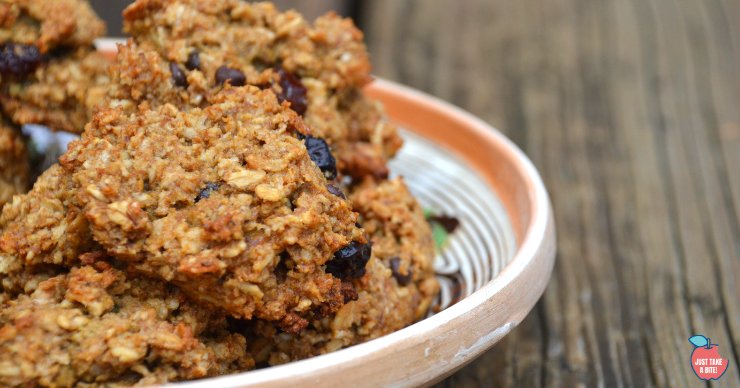
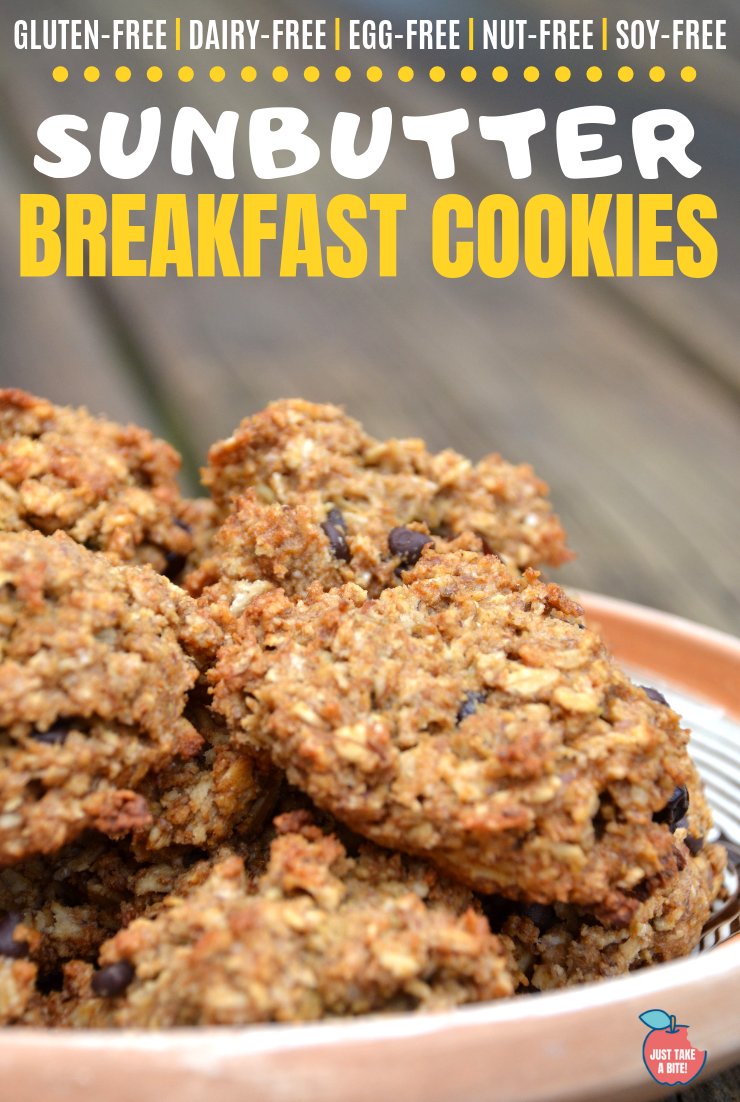
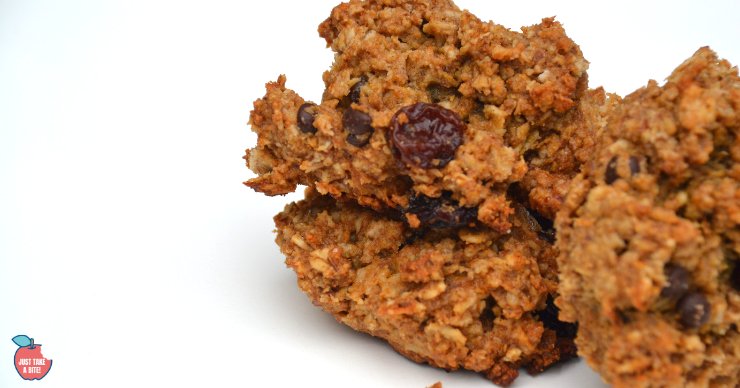
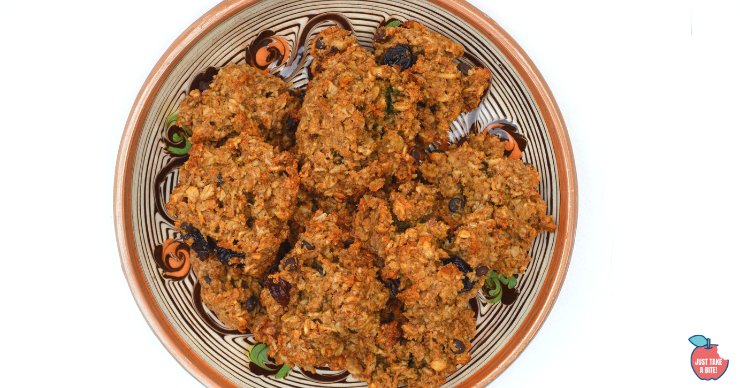
In need of an easy, allergen-free breakfast? These sunbutter breakfast cookies only take a few minutes of prep time and are free of gluten, dairy, eggs, nuts, rice, corn, soy and coconut.

Gluten-Free Sunbutter Breakfast Cookies

In need of an easy, allergen-free breakfast? These sunbutter breakfast cookies only take a few minutes of prep time and are free of gluten, dairy, eggs, nuts, rice, corn, soy and coconut.In need of an easy, allergen-free breakfast? These sunbutter breakfast cookies only take a few minutes of prep time and are free of gluten, dairy, eggs, nuts, rice, corn, soy and coconut.

When I ask my kids what they want for breakfast nine times out of ten they say breakfast cookies.

I don’t blame them. Who doesn’t want a cookie for breakfast?!

Easy Gluten-Free Breakfast Cookies

I’ve been making a variety of breakfast cookies for years. But recently we experimented with an egg free diet for my oldest. So I had to come up with yet another version.

Sunbutter makes a great allergy-friendly substitute for eggs. Not to mention it is delicious! It also replaces the fat. So there is no need to use dairy or coconut.

I also add some ground flax seeds to make sure the cookies hold together.In need of an easy, allergen-free breakfast? These sunbutter breakfast cookies only take a few minutes of prep time and are free of gluten, dairy, eggs, nuts, rice, corn, soy and coconut.

Soak Grains for Better Digestion

Sunbutter breakfast cookies start with a long soak to reduce the phytic acid content. This is especially important when using oats as they are very high in phytic acid.

If you’ve never soaked your grains before, rest assured it’s a very simple thing to do. Mix the grains with water and lemon juice. Done.

When you are ready to bake all you have to do is add the remaining ingredients, mix, scoop and bake.In need of an easy, allergen-free breakfast? These sunbutter breakfast cookies only take a few minutes of prep time and are free of gluten, dairy, eggs, nuts, rice, corn, soy and coconut.

Kids in the Kitchen

This is a great recipe to let little ones help with. No chopping. No egg cracking. No butter melting. Just measure, pour and mix.


You can teach even your youngest children all the necessary skills for making these delicious breakfast cookies with the Kids Cook Real Food eCourse! Check it out HERE.


Kids can even sample the ingredients as you go. Somebody has to make sure the honey tastes good, right?!

You can add whatever extras you like to sunbutter breakfast cookies. My kids always ask for mini chocolate chips. Dried fruit, nuts, seeds and coconut all work, depending on your dietary needs.In need of an easy, allergen-free breakfast? These sunbutter breakfast cookies only take a few minutes of prep time and are free of gluten, dairy, eggs, nuts, rice, corn, soy and coconut.

Seasonally-Inspired Breakfast Cookies

Change up the flavor of your sunbutter breakfast cookies by adding seasonal ingredients.

In the summer add diced strawberries, blueberries, or peaches.

For fall you could add some diced apples and cinnamon. Be sure to chop the apples finely enough to make them bite sized for kids.

Dried cranberries make a very festive cookie during the holidays.

Are you looking for an allergen friendly breakfast treat for your family? Sunbutter breakfast cookies will be a family favorite.

Easy Prep-Ahead Breakfast Cookies

Be sure to make a big batch so you can stock the freezer for effortless breakfasts on busy school mornings. Paired with a big glass of homemade rice milk you’ll have breakfast on the table in under a minute!

You can also add them to lunch boxes for a delicious and healthy treat.

I have to share a fun fact that I learned while making these.

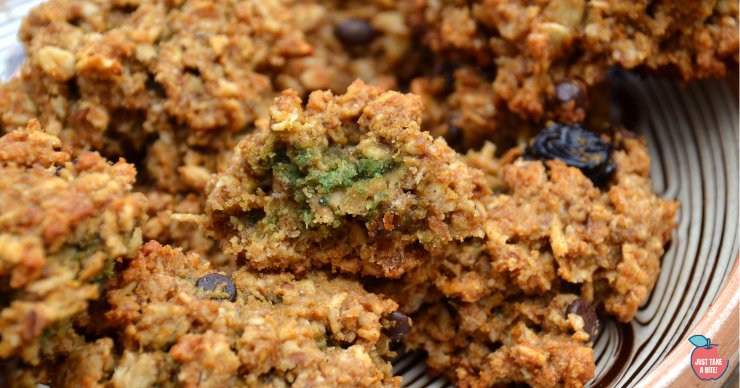
When you mix a lot of baking soda with sunbutter it turns green!

Don’t worry. I adjusted the recipe so you won’t have green cookies like we did. But it is perfectly safe to eat them even if they are green.

In need of an easy, allergen-free breakfast? These sunbutter breakfast cookies only take a few minutes of prep time and are free of gluten, dairy, eggs, nuts, rice, corn, soy and coconut.

In need of an easy, allergen-free breakfast? These sunbutter breakfast cookies only take a few minutes of prep time and are free of gluten, dairy, eggs, nuts, rice, corn, soy and coconut.
5 from 1 vote
Print

Allergen Free Sunbutter Breakfast Cookies

A simple breakfast cookies that is free of gluten, eggs, dairy, nuts, rice, corn and coconut.

Prep Time 10 minutes
Cook Time 20 minutes
Servings 20

Ingredients

  • 2 1/2 cups gluten-free oats
  • 1/2 cup sorghum flour or brown rice or amaranth
  • 3/4 cups warm water
  • 2 Tbsp. lemon juice
  • 1/2 cup sunbutter unsweetened
  • 2/3 cup honey
  • 1/2 tsp. salt
  • 1/2 tsp. baking soda
  • 1/4 cup ground flax seeds
  • 1/2 cup add-ins: chocolate chips dried fruit, coconut, seeds, nuts

Instructions

  1. Combine the oats, sorghum, water and lemon juice in a bowl. Cover and let sit 24 hours.

  2. Heat the oven to 350 degrees F. Line two baking sheets with parchment paper.

  3. Add the sunbutter, honey, salt, soda, and flax seeds to the oat mixture. Mix well.

  4. Stir in the add-ins.
  5. Scoop mounds of dough onto the prepared baking sheet (as large or as small as you like).

  6. Bake for 15 - 20 minutes (less time for smaller cookies, more time for larger cookies).
  7. Let cool.
  8. Store in sealed container in the refrigerator for up to a week or in the freezer for up to a year.

This post is linked to Savoring Saturdays.

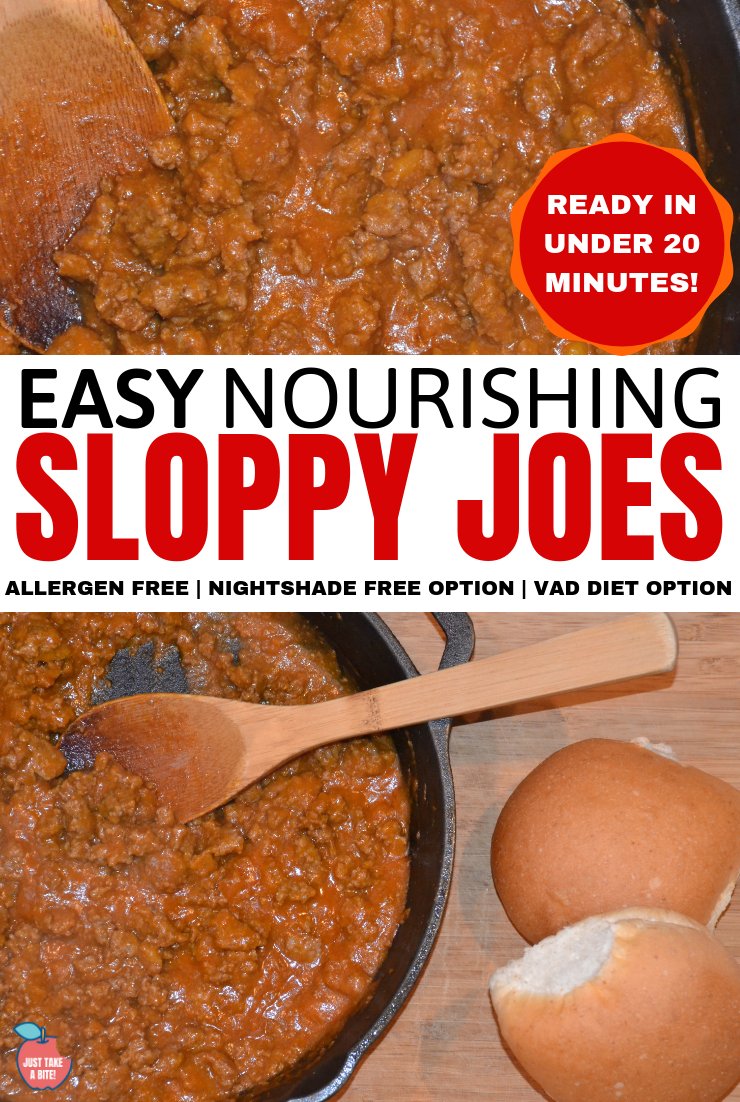
Looking for an easy weeknight dinner that the kids will love and can meet any dietary needs? My nourishing sloppy joes are very kid-friendly and can be on the table in less than 20 minutes!

Easy Nutrient Dense Sloppy Joes: Ready in Less Than 20 Minutes!

Looking for an easy weeknight dinner that the kids will love and can meet any dietary needs? My nourishing sloppy joes are very kid-friendly and can be on the table in less than 20 minutes! Serve it on homemade gluten-free bread or freshly milled wheat bread for a truly tasty meal.Looking for an easy weeknight dinner that the kids will love and can meet any dietary needs? My nourishing sloppy joes are very kid-friendly and can be on the table in less than 20 minutes! We all need a few go-to meals that take very little time to make, include nourishing ingredients, and the whole family enjoys. This is one of our family favorites that fits the bill perfectly!

We call it sloppy joes. Others call it barbecue. What do you call it?

Easy Gluten-Free Sloppy Joes Recipe

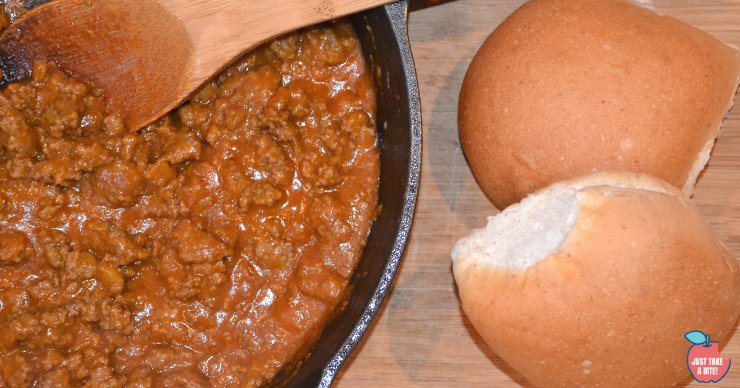
This sloppy joes recipe really could not be any easier. Brown the meat. Add a few  ingredients. Simmer 5 minutes and you’re done. That’s it.

I love that you can serve it in many ways to meet a lot of dietary needs.  For those that can have bread I serve it on homemade freshly milled wheat buns, gluten-free buns or open face on homemade gluten-free bread. For those that can’t I serve it with tortilla chips or potato chips. My kids also like to eat it plain. Sometimes I even eat it on top of butternut squash. Looking for an easy weeknight dinner that the kids will love and can meet any dietary needs? My nourishing sloppy joes are very kid-friendly and can be on the table in less than 20 minutes!

Sloppy Joes with Nutrition

Want to know the best part about my version of sloppy joes? It includes both broth and vegetables! Yes, my kids still love it! Dinner win!

I actually make this recipe three different ways depending on our current dietary needs. You can choose which one works best for your family.

  1. Original recipe – beef, ketchup, mustard, broth
  2. Added nutrition – beef, ketchup, mustard, broth, squash or pumpkin
  3. Nightshade free – beef, mustard, broth, squash or pumpkin, honey

Easy Prep Ahead Dinner and Lunch

Sloppy Joes work very well for a freezer meal. Make a big batch and freeze it in dinner size portions. Then all you have to do is heat and serve.

Not sure what to put in your kids’ lunch box? Sloppy joes to the rescue! You can heat the meat in the morning or leave it cold. Whether it’s on a bun or plain with something to dip kids love it, and it’s easy to eat. 

Growing up I did NOT like sloppy joes at all. I never tasted any I liked until I made my own. Honestly, now it is one of my favorite meals!! I could eat it every week.

Now I’m sharing this simple version with you. I hope you enjoy it too.

Easy Nourishing Sloppy Joes

My nourishing sloppy joes are very kid-friendly and can be on the table in less than 20 minutes!

Cook Time 20 minutes
Servings 6 people

Ingredients

  • 1 Tbsp. refined coconut oil or tallow or avocado oil
  • 2 lbs. grass-fed ground beef
  • 3/4 cup ketchup
  • 5 Tbsp. mustard
  • 1 tsp. salt
  • 1/2 tsp. garlic powder
  • 1/2 cup pureed squash or pumpkin optional
  • 1 cup chicken or beef broth

Instructions

  1. Heat a large skillet over medium high heat with the coconut oil.

  2. Add the ground beef and cook until browned.

  3. Add the ketchup, mustard, salt, garlic powder, squash, and broth. Stir.

  4. Simmer until thickened, about 5 minutes.

  5. Serve on a bun, over a bed of pureed vegetables or with tortilla chips

Recipe Notes

  • You can substitute ground turkey, pork or chicken for the beef.
  • You can make a double or triple batch and freeze some for a future meal. It reheats very well.
  • To make this nightshade free replace the ketchup with 1/2 cup squash/pumpkin and 2 Tbsp. honey.


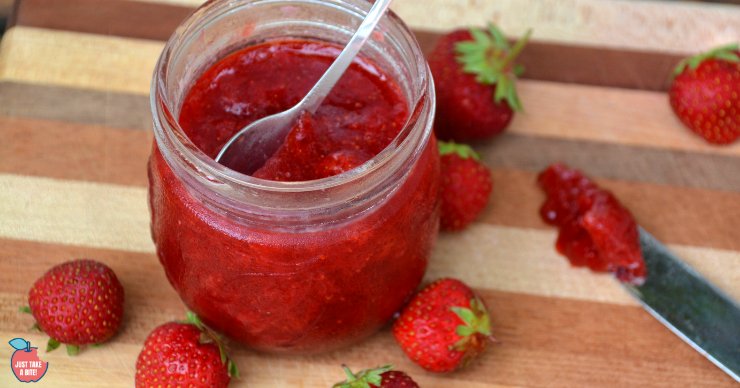
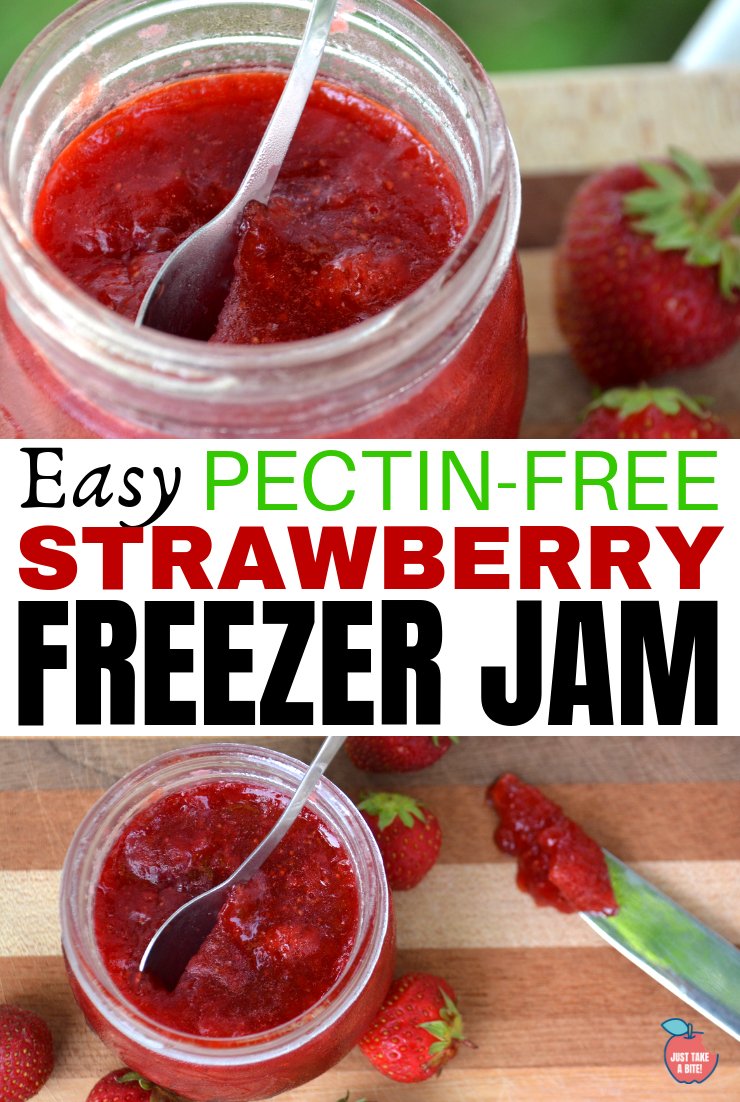
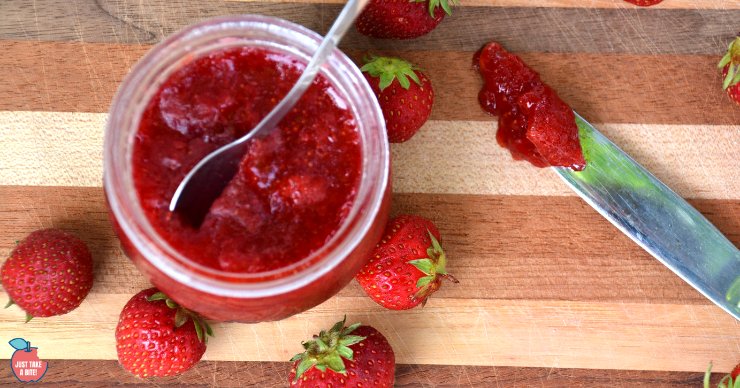
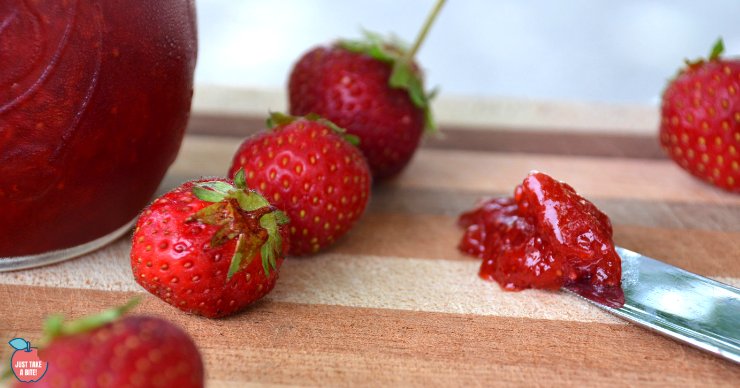
Summer preservation just got a little easier. This pectin-free easy strawberry freezer jam is the perfect way to use fresh strawberries. Just FOUR real food ingredients!

Pectin-Free Easy Strawberry Freezer Jam

Summer preservation just got a little easier. This pectin-free easy strawberry freezer jam is the perfect way to use fresh strawberries. Just FOUR real food ingredients!Summer preservation just got a little easier. This pectin-free easy strawberry freezer jam is the perfect way to use fresh strawberries. Just FOUR real food ingredients!

You know summer has arrived in Michigan when strawberries are in season. It’s an exciting time of year! But at the same time it means preservation season has also begun.

For me this lasts from June to November. Literally half of the year I am preserving food for the other half of the year! It’s a lot of work, but so worth all of the effort.

How to Preserve Strawberries

I’m always so thankful that we kick off preservation with fruit like strawberries. I can ease into it instead of jumping right into the labor intensive canning. Fresh strawberries are so easy to work with. Simply wash, hull and freeze. We usually freeze at least four gallons of strawberries to use all winter in yogurt, smoothies, and muffins.

While the strawberries are still fresh I like to make a lot of strawberry jam. It has recently become my preschooler’s favorite food. Our homemade gluten free bread toasted with butter and strawberry jam. No other flavor. Only strawberry.

Summer preservation just got a little easier. This pectin-free easy strawberry freezer jam is the perfect way to use fresh strawberries. Just FOUR real food ingredients!

How to Make Pectin-Free Strawberry Freezer Jam

There are so many ways to use strawberries when they are fresh. There are even plenty of ways to use them once they are frozen. But one of the best ways to use them, fresh or frozen, is by making strawberry jam!

I’ll confess. I’ve never been that great at making jam.

I followed recipes exactly. I bought various types of pectin. It just never seemed to turn out well. I think my husband was starting to wonder if I would ever make jam that wasn’t like liquid or totally solid.

So I created my own recipe for pectin-free easy strawberry freezer jam. And it is amazing!

I love this recipe because you don’t need pectin (the debate is still out on whether or not pectin is really that great for you). Instead it uses grass-fed gelatin (Use the code TAKE10 to get 10% off gelatin HERE).Summer preservation just got a little easier. This pectin-free easy strawberry freezer jam is the perfect way to use fresh strawberries. Just FOUR real food ingredients!

How to Stock Your Freezer with Jam

This pectin-free strawberry freezer jam recipe makes about five half-pints of jam.  Since it only takes about fifteen minutes to make you can easily cook several batches in one day while you have fresh strawberries.

Pectin-free easy strawberry freezer jam is great on toast. But  you can also spread it on pancakes, mix it into yogurt, or even use it as an ice cream topping! My kids like to eat it by the spoonful.  It’s that good.

Since creating this strawberry jam recipe I have upped my game in jam and jelly making! We now enjoy homemade pectin-free concord grape jelly, 5 minute peach jam, and red plum raspberry jelly! They are all pectin free!

Whether you still have fresh strawberries available or you already have your stash in the freezer, try making pectin-free easy strawberry freezer jam.

You’ll have a little taste of summer ready in your freezer all year long.Summer preservation just got a little easier. This pectin-free easy strawberry freezer jam is the perfect way to use fresh strawberries. Just FOUR real food ingredients!

Summer preservation just got a little easier. This pectin-free easy strawberry freezer jam is the perfect way to use fresh strawberries. Just FOUR real food ingredients!
5 from 2 votes
Print

Pectin-Free Easy Strawberry Freezer Jam

Simple strawberry freezer jam with only four ingredients and no pectin.

Prep Time 5 minutes
Cook Time 10 minutes
Total Time 15 minutes
Author Mary | Just Take A Bite

Ingredients

  • 1/4 cup organic lemon juice
  • 3 1/2 tsp. grass-fed gelatin
  • 3/4 cups organic cane sugar or coconut sugar or honey
  • 5 cups strawberries, washed, hulled and roughly chopped fresh or frozen

Instructions

  1. In a medium sauce pan combine the lemon juice and gelatin. Let sit 2 minutes

  2. Add the sweetener and strawberries.

  3. Cook over medium heat, stirring and mashing berries with a potato masher, for about 10 minutes.

  4. Pour the jam into half-pint jars.

  5. Chill jam in the refrigerator until set.

  6. Use the jam fresh or freeze until ready to use.

Recipe Notes

  • This makes about five half-pints.
  • If using frozen berries, thaw them at least partially before making the jam


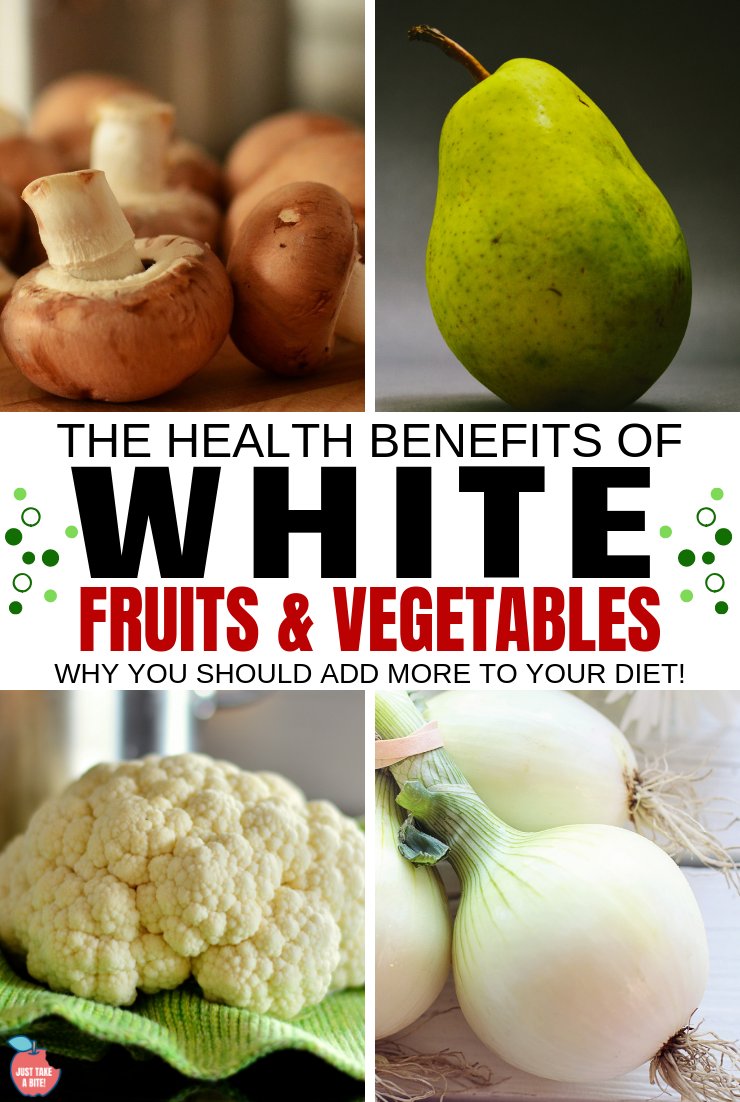
The current health mantra is "Eat the Rainbow." But what about the not-so-colorful produce? Turns out there are many health benefits of white fruits and vegetables.

The Health Benefits of White Fruits and Vegetables

The current health mantra is “Eat the Rainbow.” But what about the not-so-colorful produce? Turns out there are many health benefits of white fruits and vegetables.The current health mantra is "Eat the Rainbow." But what about the not-so-colorful produce? Turns out there are many health benefits of white fruits and vegetables.

When you try to increase your colorful fruit and veggie intake, it’s honestly not that hard. Red peppers, squash, golden zucchini, spinach, purple cabbage, red and golden beets, peas, broccoli, carrots…you get the idea. Especially now that we have access to just about any produce we want year round, eating the rainbow is easy.

Why White Fruits and Vegetables are Good for You

Unfortunately there is one “color” that often gets overlooked…white! Yes, there are many health benefits to white fruits and vegetables. Note that white refers to the flesh. So this includes foods like cucumbers, apples, zucchini, and pears.

White fruits and vegetables contain many vitamins and minerals as well as other compounds that aid in specific processes of the body. Here are just some of the delicious white fruits and vegetables and their benefits.The current health mantra is "Eat the Rainbow." But what about the not-so-colorful produce? Turns out there are many health benefits of white fruits and vegetables.

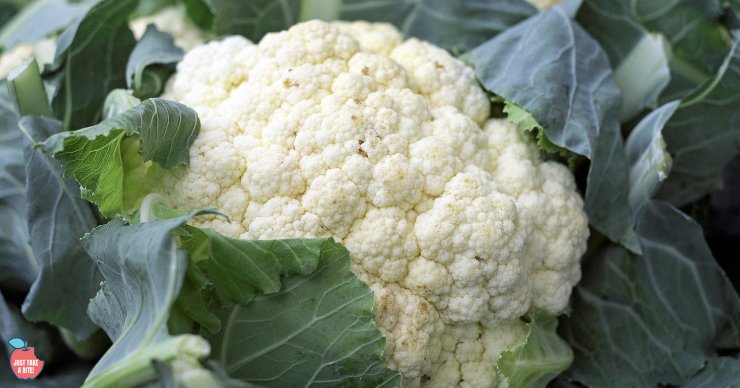
Cauliflower

This is definitely one of our favorite veggies. We love it roasted or served raw with dip (like this simple hummus). Cauliflower contains sulforaphane, insoles, and isothiocyanates that have been shown to inhibit the growth and spread of cancer cells, protect your heart, and strengthen bones. It contains fiber and is good for digestion. Cauliflower also helps reduce inflammation via antioxidants. The choline in cauliflower benefits your brain too. It really packs a punch!

The current health mantra is "Eat the Rainbow." But what about the not-so-colorful produce? Turns out there are many health benefits of white fruits and vegetables.

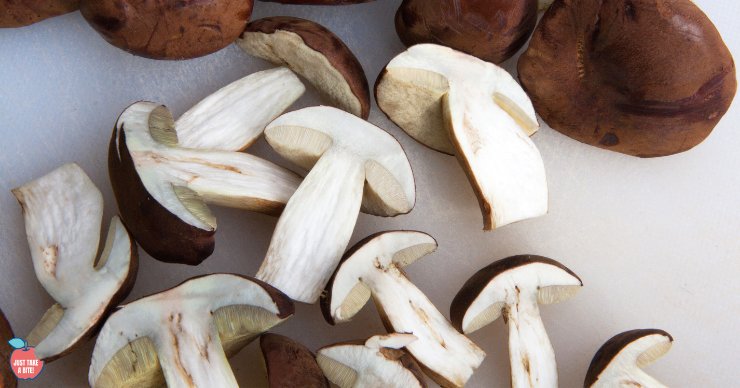
Mushrooms

Mushrooms are often overlooked even though they are one of the healthiest foods around! They contain beta-glucans[source], which support your immune system, help prevent cancer, regulate cholesterol and help control blood sugar. Another white food high in beta-glucans is oats. Mushrooms also contain selenium, an essential mineral.

Potatoes

White potatoes have gotten a bad rap lately. Seen as just a starchy filler, many people try to replace them with sweet potatoes and other veggies. But don’t toss your white potatoes! They are a staple of the American diet (for good reason!) and are very beneficial. White potatoes contain potassium, Vitamin B6, iron, Vitamin C, fiber, magnesium, phosphorus, manganese and copper. They may aid in digestion and relieving constipation. Potatoes have also been shown to reduce inflammation, lower blood pressure, prevent cancer, prevent kidney stones, prevent heart disease and improve brain function. Baked potato, anyone?!

Just be sure to peel your potatoes and avoid any green spots or sprouting potatoes.

Parsnips

Parsnips are pretty much my new favorite vegetable. If you’ve never had roasted parsnips, go get some and roast them NOW. My four year old would eat an entire pan of these herself. And I don’t mind if she does! Parsnips contain a wide range of vitamins and minerals, including calcium, potassium, manganese, magnesium, phosphorus, zinc, iron, folate, thiamin, pantothenic acid, Vitamins B6, C, E, and K, fiber and anti-oxidants. All of these vitamins and minerals help boost the immune system, strengthen the heart, reduce birth defects, and promote strong bones.[source]

Rutabaga

Rutabaga is another newer vegetable for our family. And another one that is quickly becoming a personal favorite! I love rutabaga fries! My girls both devour these too. Rutabaga is a cross between a cabbage and a turnip. It has a mild cabbage flavor, but also a sweetness. Their firm flesh holds up well in baking, making them a great substitute for potatoes. We love using them diced in soups and spiralized for noodles!

Rutabagas contain manganese, potassium, phosphorus, magnesium, calcium, iron, zinc, and vitamins C, E, K, and B.They also contain glucosinolates, which have been shown to reduce tumor growth. Rutabagas can help relieve constipation, improve bone health, and improve vision.[source] The current health mantra is "Eat the Rainbow." But what about the not-so-colorful produce? Turns out there are many health benefits of white fruits and vegetables.

Zucchini

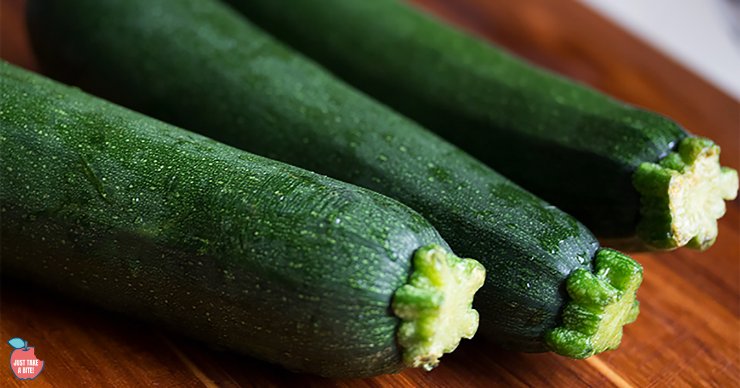
You many wonder why zucchini is on the list of white vegetables. The white refers to the flesh. We peel all of our zucchini to remove the colored portion. We grow both green and golden zucchini in our garden and enjoy it for many months roasted, raw, in stir fries, in soups, in breads, in crackers, and even in cupcakes.

Zucchini contains potassium, folate, fiber, and Vitamin C. Some claim it helps relieve both asthma and rheumatoid arthritis. Zucchini also aids in digestion, improves vision, and strengthens the heart.[source]

Onion

I don’t know about you, but when I’m planning meals and trying to figure out what vegetable to serve, onion most certainly doesn’t come to mind! And to be honest it’s a vegetable I don’t often use. I think it’s mostly because I hate chopping onions! But onions are super healthy, and I hope to start adding them to our diet more often.

Onions contain Vitamin C, manganese, calcium, phosphorus, iron, folate, potassium, quercitin, and sulfur. The quercitin in onions has been linked to cancer prevention. [source] Raw onions are also anti-bacterial and anti-inflammatory. They are often used for treating colds, fevers, and allergies.

Garlic

Are you a fan of garlic? I don’t mind the flavor. But (confession) it’s not something I ever buy. I use lots of garlic powder in our food. But I really hate dealing with fresh garlic. I guess I need to teach my kids how to use it! This is one more white vegetable (technically an herb) to add to my list of things to start incorporating in our diet more often because the health benefits are so great.

Garlic contains phosphorus, potassium, magnesium, zinc, calcium, iron, iodine, sulfur, chlorine, folate, thiamine, niacin, and vitamin C, A, K, and B6. [source] That’s a lot of good stuff in a tiny package! Raw garlic is known for treating colds and coughs. In addition, garlic may aid in digestion, treating acne, eliminating ear aches, and reducing the progression of some types of cancer. Can I get some garlic, please?!The current health mantra is "Eat the Rainbow." But what about the not-so-colorful produce? Turns out there are many health benefits of white fruits and vegetables.

Ginger

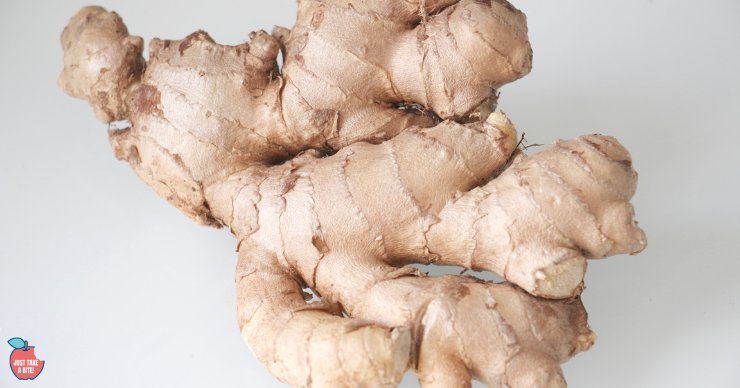
Ginger is another item on the white vegetable list that isn’t technically a vegetable. But it is still very good for you! And one more food that I don’t typically use in my kitchen. One more thing to add to the list! This spice contains gingerol, which has powerful medicinal properties. [source]

Ginger helps ease nausea, most notably morning sickness. It also can help relieve muscle pain, lower blood sugar, and help fight infections. Add some to your next stir fry or soup!

Fennel

Here I thought I was a pretty adventurous eater when it comes to vegetables. But here is yet another one that is not a staple in our diet. We have used fennel before, but not regularly. I think it’s time we try it again. Fennel bulb contains vitamin C, fiber, potassium, calcium, phosphorus, sodium, iron, magnesium, zinc, niacin, vitamin K, B-vitamins, and flavonols. [source]

Fennel may help with anemia, constipation, gas, indigestion, colic, and PMS. It is an overall digestive aid.

White Kohlrabi

Kohlrabi is similar to rutabaga. It is a cross between a cabbage and a turnip. Though it has a stronger flavor than rutabaga, almost a bit spicy. We use kohlrabi on occasion, though it is not a family favorite.

Kohlrabi contains potassium, fiber, glucosinates, antioxidants, Vitamin C, iron, folate, phosphorus, and calcium. This unique vegetable may help with anemia, digestion, blood pressure, healthy skin, and even cancer prevention via apoptosis. [source] If you are curious how to cook kohlrabi, this is a great post!The current health mantra is "Eat the Rainbow." But what about the not-so-colorful produce? Turns out there are many health benefits of white fruits and vegetables.

Green Cabbage

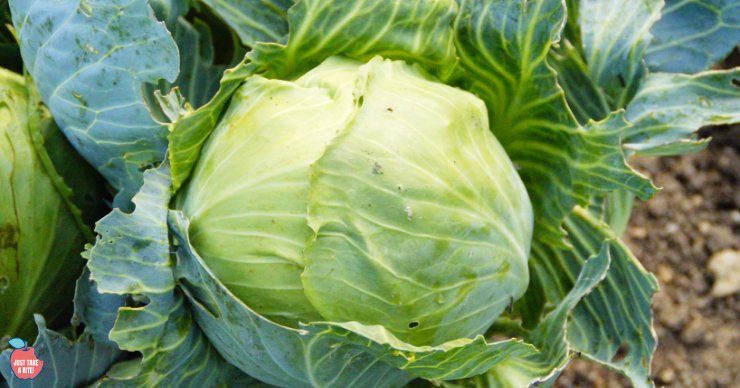
I know, “green” cabbage isn’t technically white. But really it is mostly white. After you get through the first few layers of leaves it’s basically a white vegetable. We eat a lot of cabbage. It tastes amazing roasted. But it also works well for sauerkraut! Or you can use it in casseroles and soups. I love it in homemade coleslaw. Cabbage is so versatile and can be eaten raw or cooked.

There are quite a few varieties of cabbage, including Napa and Bok Choy. We generally stick to the traditional green cabbage both for flavor and function.

Cabbage contains manganese, dietary fiber, calcium, magnesium, potassium, Vitamins C, B6, K, and E, sulfur, and choline. These nutrients make cabbage good for detoxification, reducing inflammation, cancer prevention, proper digestion, boosting the immune system, repairing skin, strengthening bones, and improving vision. [source]

Cucumber

Here we go again with the “green” vegetables. We always peel our cucumbers and just eat the white flesh. So it is on my white vegetable list. Every summer we get an overload of cucumbers from our garden. We enjoy them fresh with dip or turned into pickles.

For such a simple vegetable, cucumbers have a lot going on. They contain vitamin K, B vitamins, copper, potassium, vitamin C, manganese, fiber, an anti-inflammatory flavonol called fisetin, polyphenols called lignans (pinoresinol, lariciresinol, and secoisolariciresinol), and antioxidant flavinoids like quercetin, apigenin, luteolin, and kaempferol. Not to mention cucumbers are about 95% water. So they are great for hydration.

Cucumbers may help with brain health, reducing inflammation, cancer prevention, proper digestion and heart health. [source]The current health mantra is "Eat the Rainbow." But what about the not-so-colorful produce? Turns out there are many health benefits of white fruits and vegetables.

Apple

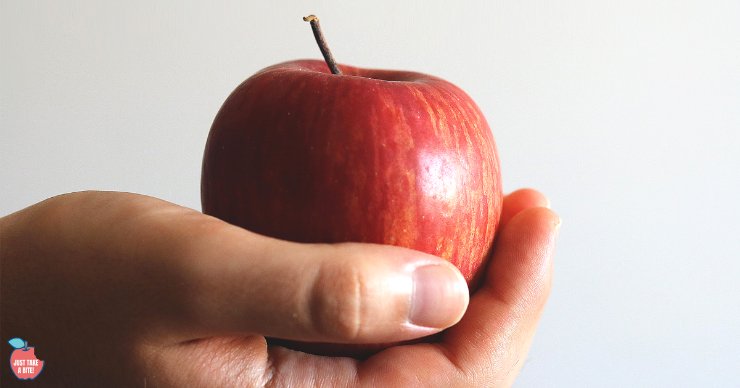
An apple a day really does keep the doctor away. And that’s good news for my family since we have an 80-tree apple orchard! Apples are one of the easiest white fruits to add to your diet since they are so readily available year round and stay fresh for so long. Just be sure to buy organic and wash them well to avoid glyphosate and other chemicals. Even organic apples are sprayed. Here are some tips on making your own produce wash.

Apples contain fiber, Vitamin C, potassium, Vitamin K, Vitamin E, manganese, copper, and polyphenols. They have been shown to aid weight loss, decrease risk of cancer, improve heart health, reduce the risk of type 2 diabetes, and protect your brain. [sourceHere are some more reasons to love apples.

Pear

Much like apples, pears are a delicious and nutritious fruit to add to your diet. They contain potassium, vitamin C, vitamin K, phenolic compounds, folate, dietary fiber, copper, manganese, magnesium, and B-complex vitamins.

Pears are great for hydration, reducing blood pressure, preventing birth defects, aiding digestion, promoting wound healing, improving circulation, and protecting against osteoporosis. [source]

White peach

You probably don’t think white when you hear the word peach. But white peaches are both delicious and healthy! Unlike its orange-flesh counterpart, the white peach is very low in Vitamin A. But it still contains loads of other nutrients like Vitamin C, potassium, fiber, Vitamin K, magnesium, and zinc.

Peaches can help relieve constipation, aid in hydration, promote healthy skin, improve heart health, and boost immunity.The current health mantra is "Eat the Rainbow." But what about the not-so-colorful produce? Turns out there are many health benefits of white fruits and vegetables.

Banana

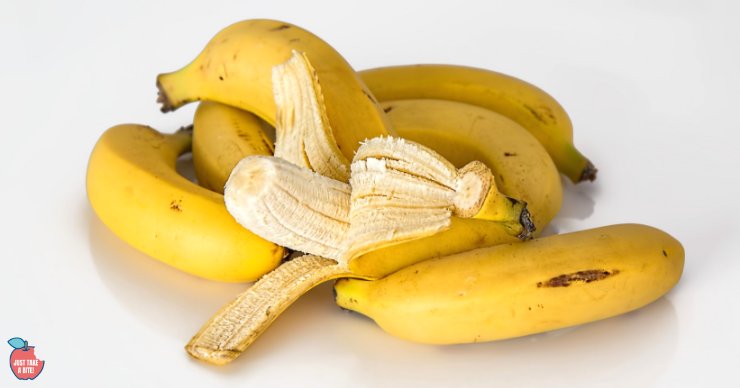
Some say eggs are the most perfect food. I think you could make that claim about bananas! This mild-flavored pale yellow fruit can be enjoyed by everyone, from infants to the elderly. Bananas boast quite a nutritional profile. They contain fiber, potassium, Vitamin B6, magnesium, copper, and manganese.

Bananas are widely known for their potassium content. Although not the food highest in potassium, this nutrient makes bananas great for balancing electrolytes and supporting heart health. They also support kidney health.

Should We “Eat the Rainbow?”

It’s obvious that there are many health benefits to white fruits and vegetables. And that wasn’t even all of them! But what about the colorful ones? Should we still eat them? Should we adhere to the “Eat the Rainbow” advice?

That depends on your health and the source of the color.

If you do a little research you’ll find that the “Eat the Rainbow” slogan has not been around for very long. It is definitely not the way our ancestors ate. It is a very modern way of living to have access to every kind of fruit and vegetable you could want year round. Not to mention having access to produce that is not native to your environment. I don’t think the British were dining on avocados in the 1600’s! So if you are a fan of traditional diets, you may want to rethink eating the rainbow.

In fact, we probably don’t need as many fruits and vegetables in our diet as we are led to believe these days at all. I absolutely include them in our diet. But I don’t go overboard either. Too many fruits and vegetables can be hard to digest. I know plant-based diets are all the rage these days. But we must remember that animal products are a necessary part of nutrition as well, containing critical nutrients we can’t get from plants. We are omnivores after all. It’s all about finding balance.The current health mantra is "Eat the Rainbow." But what about the not-so-colorful produce? Turns out there are many health benefits of white fruits and vegetables.

Why Are Vegetables Brightly Colored?

This may all sound a little far-fetched to you. Don’t eat lots of colors? Load up on white? Let’s look at history and some hidden details of colorful produce.

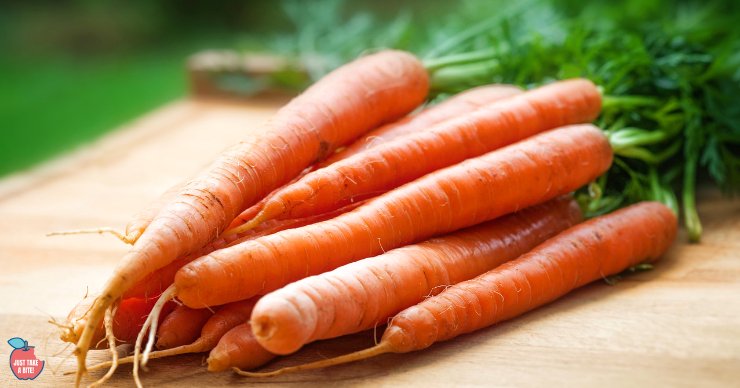
Let’s start with the humble carrot – a staple in many diets today. But if you do a little research you’ll find that carrots were not originally orange. They were white! The orange color and the carrot’s current shape and flavor were due to domestication from humans. We made them orange! Actually it seems the Dutch made them yellow and orange after years of selective breeding. Should we have done that? [source] [source]

Winter squash is another common orange vegetable that has gained popularity over time. Interestingly, what we now eat is also a domesticated plant. “Wild forms of squashes are harshly bitter to humans and other extant mammals…Wild squashes carry cucurbitacins, which can be toxic when eaten by smaller bodied mammals, including humans.”[source] “Early on, squash was only grown for seed because early squash had little flesh and a bitter taste.” [source] Again, we have taken a plant not meant for human consumption and turned it into something edible. But was it a good idea?

Take note that pretty much every healing diet eliminates the nightshade family. This includes tomatoes, peppers, eggplants, and potatoes. Notice that the first three on the list are very brightly colored vegetables. They are a relatively new addition to the Western diet. Tomatoes were originally ornamental vegetables because people believed they were poisonous! Nightshades are known to cause inflammation.

Finally, we need to consider color as a warning, called aposematism. This is very common with insects and animals. “If the poisonous thing is aposematic, [the animal] won’t make the same mistake again. Monarchs happen to display their toxicity with bright colors, as do most toxic animals and any animal that tries to look toxic. If you see something really colorful and striking in nature, it’s probably chemically defended. Otherwise, its coloration would make it instant prey.” [source] So it is very likely that the same goes for plants. You can read more about aposematism and fluorescence of plants HERE.

Make White Fruits and Vegetables Count

All this to say we may need to rethink our fruit and veggie mantra these days. More (in terms of quantity) isn’t always better (my tummy could tell you that!). More (in terms of color) isn’t always in your best interest either.

Make sure you know where your fruits and vegetables get their color and whether or not it is truly what your body needs.

Our meals these days contain a lot of white fruits and vegetables. They are just as healthy as their colored counterparts. Not to mention they are good for your digestive system, heart, brain, kidneys, skin, eyes, hair, and more!

Have you considered the health benefits of white fruits and vegetables? Or have you been led to believe the more color the better?

Interested in reading more about the potential harm of loading up on brightly colored veggies? Here are some resources:

Is Gluten Really the Problem? How Glyphosate Impacts Vitamin A Toxicity

White Fruits and Vegetables Intake Associated with Lower Disease Risks

“Eat the Rainbow” is a Farce and a Fraud

Problems with Nightshades

Nightshades are Toxic

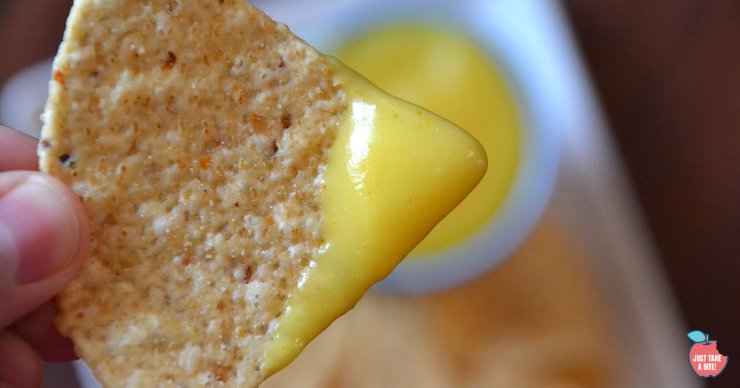
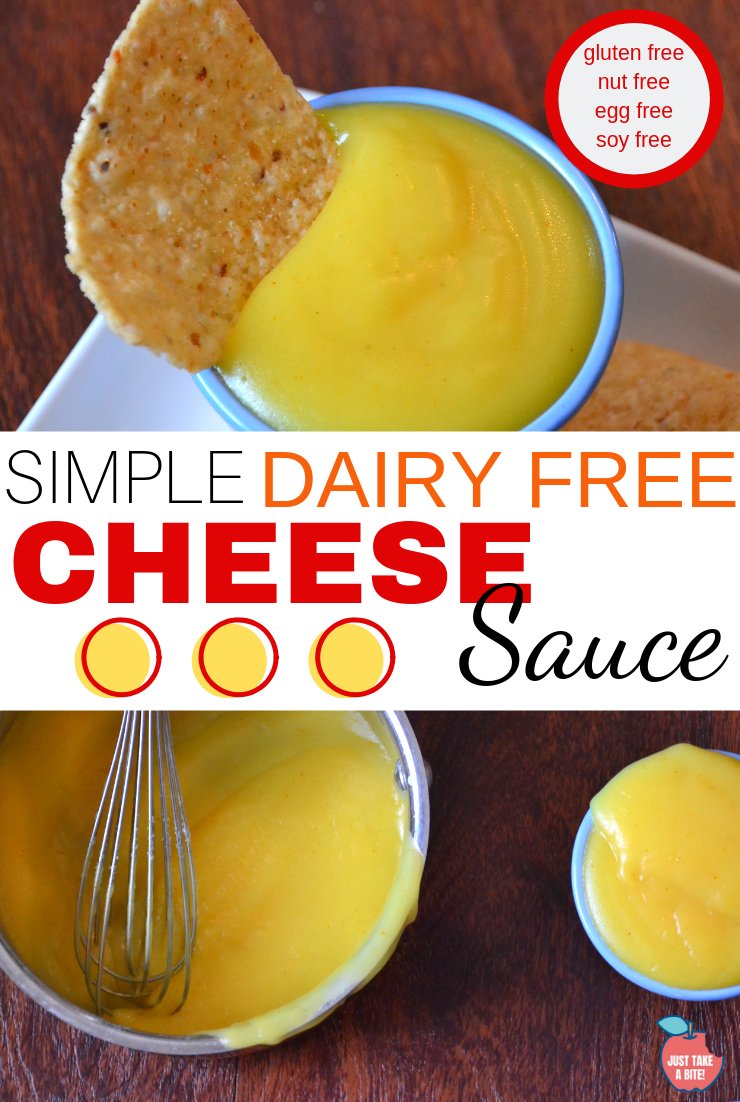
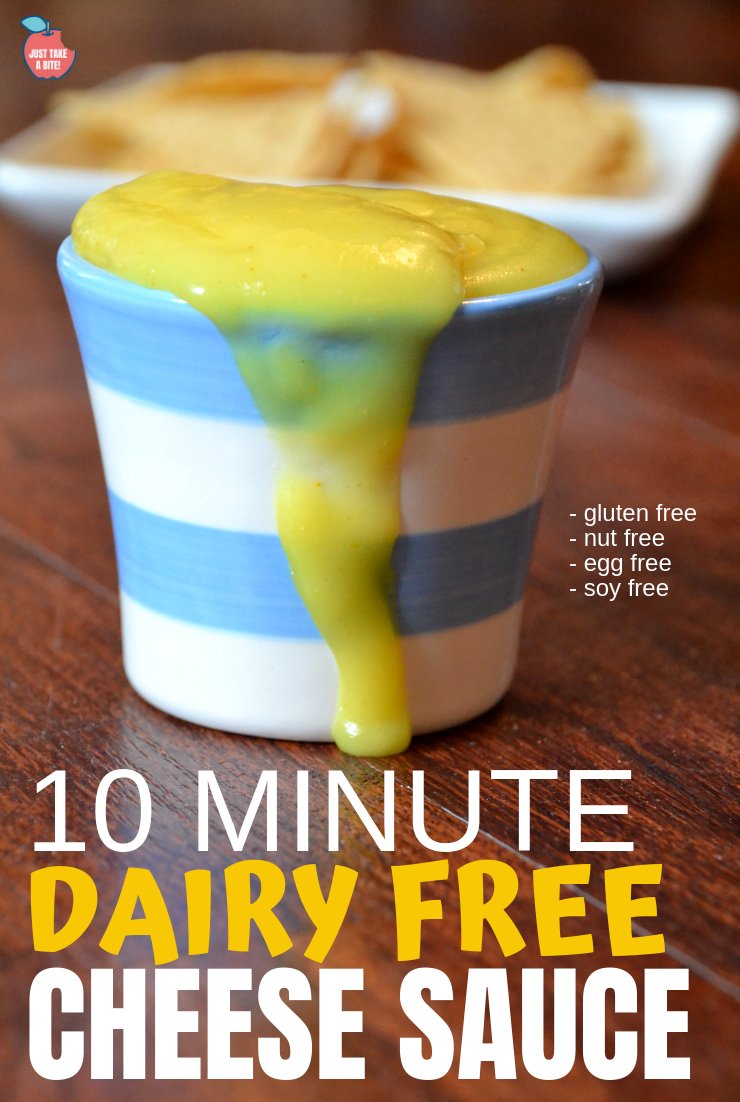
Living dairy free isn't always easy. But it can certainly be delicious! This simple dairy free cheese sauce is perfect on nachos, pizza or mac 'n' cheese!

Simple Dairy-Free Cheese Sauce Recipe

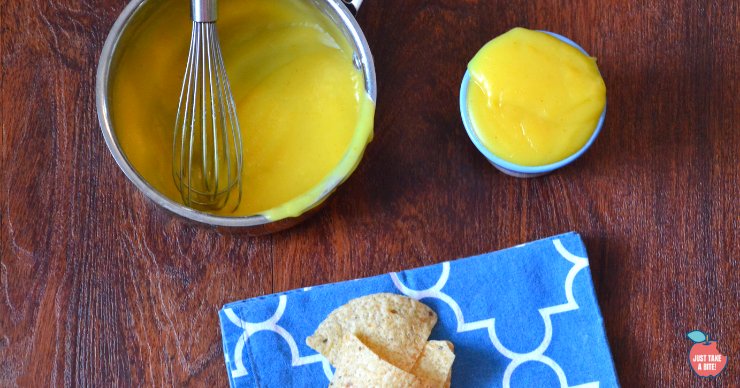
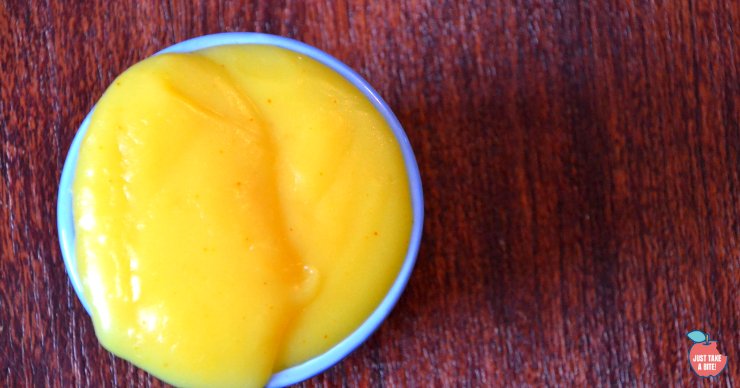
Living dairy free isn’t always easy. But it can certainly be delicious! This simple dairy free cheese sauce is perfect on nachos, pizza or mac ‘n’ cheese!Living dairy free isn't always easy. But it can certainly be delicious! This simple dairy free cheese sauce is perfect on nachos, pizza or mac 'n' cheese!

Although we’ve been on a trial and error food journey for many years I think we have come to a first. For the first time all four kids and myself are dairy-free at the same time.

In some ways it’s a pain. I mean, how easy is it to grab some yogurt for breakfast or a slice of cheese for a snack?

But at the same time it’s been nice to have us all eating the same food! No making multiple versions of everything.

Dairy-Free Alternatives

With five out of six family members dairy-free I knew I’d have to get creative in the kitchen again. Eliminating all dairy impacts a lot of your meal options. And I’m not a fan of most store-bought dairy alternatives. They are loaded with synthetic vitamins (especially A and D!). Not to mention they often contain unhealthy oils, gums and stabilizers. No thanks.Living dairy free isn't always easy. But it can certainly be delicious! This simple dairy free cheese sauce is perfect on nachos, pizza or mac 'n' cheese! #dairyfree #glutenfree #allergenfree

Being someone that never shies away from a kitchen challenge I set to work recreating the basics. I started with rice milk since my oldest son has been drinking it for years. But until this point I had been buying it.

That led to experimenting with rice milk yogurt. And before I knew it I was making dairy-free cheese sauce!

Dairy-Free Substitute for Cheese

This recipe was sort of accidental. But that seems to be how the best ones are created! We were having a baked potato bar for dinner. I wanted to have broccoli and cheese sauce with it.

The sauce turned out so well that we tried it again with nachos. And again on pizza. And again in mac ‘n’ cheese. And again in omelettes.

In other words, my kids have gone crazy for it! I love it too. I think we’ve made it multiple times a week ever since I created the recipe!

The best part is that it’s so easy to make. My ten-year-old made it by herself the other day when the kids made me nachos for my birthday. You can see how hard they worked HERE.


My kid have been learning to cook for a few years now through the Kids Cook Real Food online cooking class. It’s one of the best investments I’ve made, both of my time and my money. Check it out here.


Living dairy free isn't always easy. But it can certainly be delicious! This simple dairy free cheese sauce is perfect on nachos, pizza or mac 'n' cheese! #dairyfree #glutenfree #allergenfreeEasy Protein on a Dairy-Free Diet

This dairy-free cheese sauce only has a few simple ingredients. Which always makes me happy. They include:

  • Organic rice flour
  • Water
  • Avocado oil or MCT oil
  • Salt
  • Organic cane sugar
  • Turmeric
  • Grassfed collagen

One of the star ingredients is grassfed collagen.

Collagen adds a bit of healthy protein to the cheese sauce. Not to mention collagen may improve your skin, hair and bone health (learn more here).

I always buy my collagen from Perfect Supplements. It is non-GMO and glyphosate free! Not to mention Perfect Supplements has the best deals.


Use the code TAKE10 to get 10% off your entire Perfect Supplements order.

Here’s a little secret. I always stock up when I buy collagen because I use it in SO MANY things every day.

If you buy three Perfect Supplements products you can get 25% off PLUS the extra 10%. That’s 35% off. And if you really want to stock up, you can get 30% off when you buy six…PLUS the 10% off. That’s 40% off!!

Perfect Supplements Sale


Living dairy free isn't always easy. But it can certainly be delicious! This simple dairy free cheese sauce is perfect on nachos, pizza or mac 'n' cheese! #dairyfree #glutenfree #allergenfreeSimple Dairy Substitutes

I’ve had readers asking me for weeks about the dairy-free cheese sauce recipe. And I’ve got it for you today! But I went a step farther and actually have TEN dairy-free recipes for you! An entire dairy substitute recipe book. For free.

The book includes recipes for a variety of dairy-free milks, yogurt, cheese (both sauce and sliced), ice cream and pudding. All of the recipes are kid approved.Living dairy free isn't always easy. But it can certainly be delicious! This simple dairy free cheese sauce is perfect on nachos, pizza or mac 'n' cheese! #dairyfree #glutenfree #allergenfree

The recipes are easy to make, gluten, egg and dairy-free, and don’t contain strange ingredients. Quite a few of the recipes include either collagen or gelatin, so make sure you grab yours HERE (use the code TAKE10).

Are you ready for some dairy-free goodness? Download your copy of 10 Simple Dairy Substitutes below.

Have you been missing some of your favorite foods on a dairy-free diet? You don’t have to suffer any longer! Grab my 10 Simple Dairy Substitutes ebook today and get cooking! Then come back and let me know how you like the cheese sauce!!

What form of dairy do you miss the most on a dairy-free diet?Living dairy free isn't always easy. But it can certainly be delicious! This simple dairy free cheese sauce is perfect on nachos, pizza or mac 'n' cheese! #dairyfree #glutenfree #allergenfree

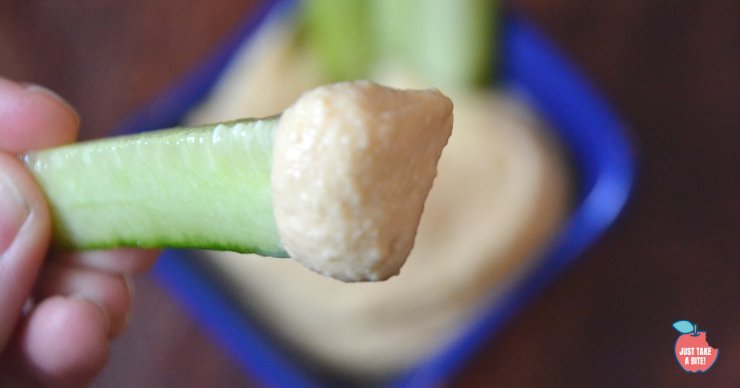
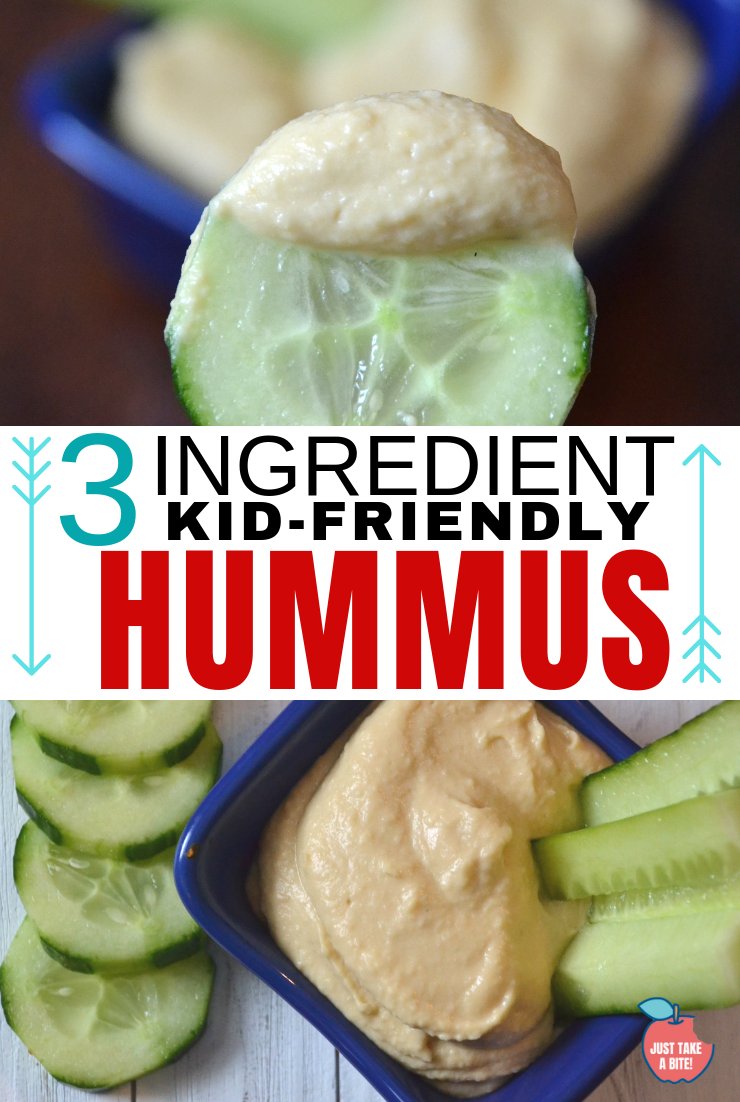
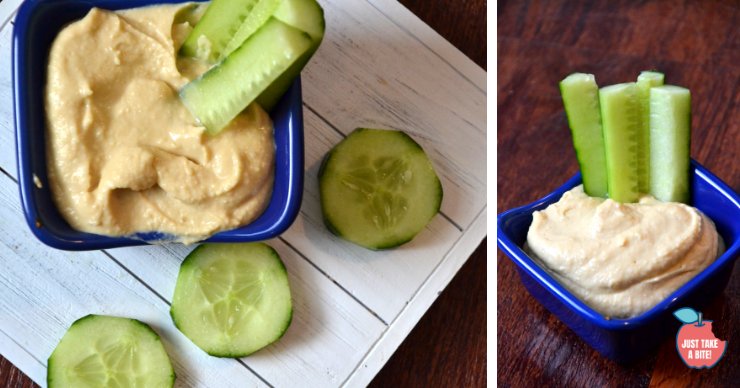
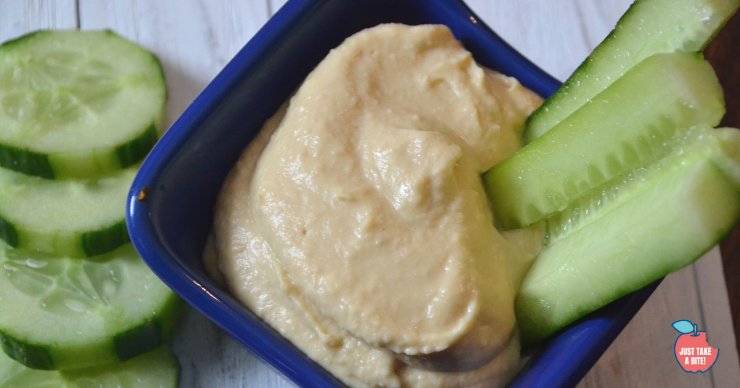
Whether you need a simple snack or a nourishing side dish, this simple hummus is VAD Diet approved and very kid friendly. Plus it's ready in less than five minutes!

The Easiest Hummus Recipe Ever

Whether you need a simple snack or a nourishing side dish, this simple hummus is very kid friendly. Plus it’s ready in less than five minutes!Whether you need a simple snack or a nourishing side dish, this simple hummus is VAD Diet approved and very kid friendly. Plus it's ready in less than five minutes!

Hummus is a staple in our house. Being dairy free we use this as our go-to veggie dip. It also works well as a pasta sauce or even a cheese replacement for pizza (we love this gluten free crust).

I think I’ve only ever made traditional hummus once. Then the jar of tahini sat in my pantry.

Over the years I’ve simplified my hummus so much. It literally takes three minutes to make. And my kids go crazy for it!

Kid-Approved Hummus

My kids will eat this hummus by the spoonful. This is seriously the easiest hummus recipe ever. Three ingredients. Three minutes. Done.

There are so many things to dip in hummus:

You can even use hummus as a simple salad dressing!

Whether you need a simple snack or a nourishing side dish, this simple hummus is VAD Diet approved and very kid friendly. Plus it's ready in less than five minutes!

How to Make Easy Hummus

Canned or boxed chickpeas will work just fine for a super quick hummus. I do this when I don’t plan ahead. Take note that it will increase your resistant starch intake. If you want a healthier and more frugal option simply cook your own! Dried beans are so cheap. If you have an Instant Pot, cooking beans is a snap too. That’s my favorite method. Check out this guide for cooking beans in an Instant Pot.

Aside from beans all you need is oil and salt.

Sometimes I add organic garlic powder and onion powder for a little more flavor. But my kids love it either way.Whether you need a simple snack or a nourishing side dish, this simple hummus is VAD Diet approved and very kid friendly. Plus it's ready in less than five minutes!

Hummus Adds Protein

Since adequate protein is such an important part of a healthy diet, hummus makes a great addition to any snack or meal. Beans have a lot of protein. Not to mention they are loaded with fiber to help fill those little bellies and feed the good bacteria.

I try my best to give my kids a balance of protein, carbohydrates and fat at both meals and snacks. Veggies or crackers with hummus meets all three requirements! And it is easy to pack in a school lunch. That is my definition of a winning food.

Ready for some delicious snacking or need an easy lunch addition? This super simple hummus is kid-friendly and loaded with nutrition.Whether you need a simple snack or a nourishing side dish, this simple hummus is VAD Diet approved and very kid friendly. Plus it's ready in less than five minutes!

Three Ingredient Hummus

Prep Time 3 minutes
Servings 8
Author Mary | Just Take A Bite

Ingredients

  • 1 1/2 cups canned, boxed or cooked garbanzo beans (chickpeas), drained, liquid reserved
  • 4 Tbsp. avocado oil
  • 4 Tbsp. bean liquid
  • 1/4 tsp. salt
  • 1/4 tsp. organic garlic powder optional
  • 1/4 tsp. organic onion powder optional

Instructions

  1. Combine all of the ingredients in a blender.

  2. Blend on high until smooth, adding extra oil or bean liquid if necessary.

  3. Adjust seasoning to taste.

  4. Serve immediately or refrigerate for up to a week.

Although the media and drug companies make it seem like every little virus or illness will kill you, that's not true. As a matter of fact you shouldn't fear sickness at all.

Why You Shouldn’t Fear Sickness

Although the media and drug companies make it seem like every little virus or illness will kill you, that’s not true. As a matter of fact you shouldn’t fear sickness at all.Although the media and drug companies make it seem like every little virus or illness will kill you, that's not true. As a matter of fact you shouldn't fear sickness at all.

Growing up I don’t ever remember being scared of sickness. Sure, it felt rotten to throw up. No, it wasn’t fun to have the chicken pox on Easter. Yearly ear infections were definitely an annoyance for me.

But sickness was never something that caused fear. Everyone gets sick. You get through it and move on.

Sick Babies

Fast-forward to when I became a mom almost eleven years ago. I still didn’t have a fear of sickness. But when my oldest was about nine months old she got her first real illness. A bug that was going around.

She was so stuffy that she couldn’t nurse. She didn’t take bottles. I was scared.

Then after a few days she was lethargic and not very responsive. I panicked. We took her to the ER. They tried to do an IV, but couldn’t get it in. They did a chest x-ray.

Diagnosis…gas. She had a painful belly full of gas from mouth breathing and not eating much. It was scary in the moment. But once we knew the reason our fears subsided. And of course she got over it.

Ever since then I’ve had some anxiety related to sickness. Especially when I have a baby in the house. Any time an older child gets sick I immediately panic, worrying the baby will catch it.

For the past eleven years I have been scared of sickness.

Why You Shouldn’t Fear Sickness

Until this year.

This year the fear of sickness has disappeared.

We have had some viruses through the winter. And each time it hasn’t bothered me one bit, even though we do have a little one. And yes, he has caught some of the bugs too.

What’s the difference? My knowledge of the truth.

Last year the kids and I studied anatomy and physiology. Even an elementary-level science book can tell you how the body fights illness.

And as a Christian I believe God designed our bodies so perfectly that they can heal themselves and recover from illness. We are the problems. Not God’s creation.

  • We have covered our food in toxins like glyphosate.
  • We have raised our kids on a diet of processed, fake “food.”
  • We have polluted our waters and our homes with chemicals.
  • We have thought we know best by using more and more drugs to override our body’s natural defense mechanisms.
  • We have tried to sanitize our world and eliminate exposure to germs.
  • We have created genetically engineered “food” to try to make something superior to what God gave us.

We (humans) have messed up big time. And we don’t even know how things are supposed to work anymore.Although the media and drug companies make it seem like every little virus or illness will kill you, that's not true. As a matter of fact you shouldn't fear sickness at all.

How the Body Heals and Benefits From Sickness

When you are sick, you get a fever. That is a defense mechanism. The body generates heat to kill the virus, bacteria, foreign invader. But we are told to immediately medicate and stop a fever…because fevers are “scary.”

Sickness is like exercise for the immune system. It’s GOOD FOR YOU to get sick once in a while. But we are told to try to avoid sickness at all costs…because sickness is “scary.” In reality you should try to care for your body daily so that when you do get sick it is just a mild workout.

Have you ever taken note of how you feel after you have been sick? I just got over a weekend of mastitis. If you’ve ever dealt with it, you know it’s no walk in the park. But now that it is over I feel amazing! You never know if there are idle viruses or bacteria in your body causing a bit of irritation. Getting sick and having a fever can wipe them all out. You get a fresh start. God’s perfect design in action…if we don’t stop it.

If we try to avoid sickness as much as possible we’ll end up sicker than ever. Our immune systems won’t be maintained, and we won’t be able to fight when the inevitable sickness finally does hit.

Bottom line – It is HEALTHY to GET SICK.

Let that sink in. It is good for you to get sick. Not scary. Healthy.

What You Should “Fear”

What is not good for you?

  • Chemicals
  • Toxins
  • Heavy metals
  • Pesticides
  • Lack of fresh air and sunshine
  • Lack of movement/a sedentary life
  • Too much stress
  • EMF exposure
  • Lack of quality sleep
  • Feedlot animals
  • Genetically modified food

I’m sure the list could go on. But you get the idea. We have tried to manipulate God’s beautiful creation and this is where it has gotten us. Our children are sicker and more diseased than ever before. So why do people think we need MORE drugs and MORE manipulation?

The definition of insanity is doing the same thing over and over expecting different results. It’s not going to happen. If we want our children to get healthier we need to change our strategy.

We Need Truth

My kids and I were just studying the Renaissance in history. It was a beautiful description of an awakening…an awakening where people started thinking for themselves instead of blindly following the crowd.

Long-standing beliefs about the world and how it worked were challenged (think Galileo and Copernicus). The scientific method was created…to keep learning and adjusting our views. Not to claim that anything is settled. If science could be settled then we would have no more need for research and learning. We’d still be using leaches for medical treatment and prescribing cigarettes. But it doesn’t work that way. Science is NEVER settled. We always have more to learn. And sometimes it is the exact opposite of what we’ve been doing.

I truly believe we need another Renaissance.

Be Fearless

The idea for this post came to me while feeding and rocking my little guy in nursery at church yesterday. My mind was whirling with all of the insanity about taking away our freedoms – our freedom of speech, our freedom to parent how we choose, our freedom of religion, our freedom to choose medical treatment.

And as I was thinking about it and praying about it God laid it on my heart to write this. And I did as soon as I was home and my son was napping! I learned in a Bible study years ago that when the Holy Spirit nudges, you should act immediately. If not you’ll find excuses and get too busy to act on it. So I’m acting.

Over the last few years He has told me over and over to BE FEARLESS. And it dawned on me that fear is exactly what the devil is using to destroy our nation right now. Satan is sneaky. He will make you think you are doing the right thing while feeding you lies.

The past few weeks every time I get in the car I hear songs about fear and its (his) lies. Every time I open my email I see my daily devotional and it is about fear and worry.

Every time I get on social media or watch tv I see the drug companies using fear to manipulate people into making poor choices.

The devil is smart. Make no mistake. He knows exactly how strong fear is.

  • Fear is the opposite of trust.
  • Fear is the opposite of worship.
  • Fear is the opposite of peace.
  • Fear is the opposite of truth.
  • Fear is Satan’s tool to destroy God’s creation and create discourse between his people.

Don’t fall for it!

Look for Truth

When you hear that there are measles outbreaks and that measles is a deadly disease, don’t fear. Neither is true. Stop the panic and look for the truth. There are a few cases this year…just like every other year. HERE is data directly from the CDC with number of cases per year (please take a look). Facts. Does it look like there is a new measles epidemic to you? I personally don’t see the need for so much hysteria with fewer cases than last year.

And we use the term “outbreak” because it is a strong word. But an “outbreak” can mean as few as THREE cases. That’s like saying if three out of four of my kids has a cold there is an outbreak in my house. So when you hear that there is a “measles outbreak,” don’t start to panic. Look for the truth. According to a CDC data sheet from 2016, the “outbreaks” that year “ranged in size from 6 to 32 cases.” In a country with billions of people do you think 32 people with an illness is worth widespread panic?

Measles is not a deadly disease to be feared. In most people it is a very mild sickness. The percentage of deaths from measles is so low that is almost ZERO. In a country with millions of people, when ONE person dies of an illness in a year, should that incite panic for the entire population? You have a better chance of being killed by getting in your car and driving today. But you don’t panic about that, do you? It’s irrational fear. NOT truth. Based on the CDC and VAERS here are some statistics you should see (if you want actual facts and not just fear-based hype).

When I was growing up everyone got chicken pox. Nobody was scared of it. So why are you scared now? The illness has not changed. Just our perception of it.

Does everyone panic when kids get strep throat, pink eye or hand, foot, mouth disease? Do we say there are outbreaks? No. Yet there are far more cases of those illnesses than measles every year. Illogical fear. Not truth.

Let’s put an end to this madness! You shouldn’t fear sickness. That is a lie that Satan is spreading.

Satan is the Liar

But you know what? He’s scared too. He knows that God is so much bigger and more powerful than he is. The devil knows his schemes can’t change God’s plans.

Satan is so scared right now. He’s throwing everything he’s got at us. He’s trying to create a culture of panic and fear.

Let’s all tell him loud and clear, “NOT TODAY, SATAN!” Take your fear and get out of here.

I struggled with anxiety for many, many years. I worked with a psychologist for over ten years to work through it. The treatment is called cognitive behavioral therapy. It is basically combating fears with truth. Fear is another word for lie.

My doctor had me make two columns on a piece of paper. On one side I wrote my fears…the lies that were in my head. On the other side I wrote what was actually true. Then I read them over and over until the I started believing the truth instead of the lies. I used logical thinking to see what was reality and what was just irrational fear.

When we know the truth, the lies are powerless. The truth truly will set you free. Free from fears. Free from worry.

So when fear is the driving force behind decisions and actions take a step back. Search for truth (and quickly, before it is all censored). When you know the truth, the lies can’t control you.

Let’s put an end to Satan’s lies and the fears they generate.

I truly believe the devil didn’t even want me to write this post. Saturday my site totally broke. That has never happened before. Thankfully I know amazing people that can help (check out The Blog Fixer!). This morning I’ve been dealing with a fussy baby earlier than he usually wakes up. I’m supposed to be working right now. I have so many new projects and usually get started first thing Monday morning. But I’m spending my time here. I am not deterred.

God is good. God is all powerful. God’s creation is amazing. We don’t need more and more drugs to be healthy. We need better care for our environment and our bodies, our holy temples. We need to live the way God intended.

When we stop fearing sickness, we can get back to thinking clearly about how to support our bodies with real food, proper rest, an active life and time outside in God’s creation. We can support and love each other instead of spreading hatred.

Fear is a liar. Don’t fear sickness. The truth is that God created our bodies to handle sickness. It is a beautiful and amazing thing to witness. Feed on God’s truth and God’s Word. Not the fears of our sinful world.

Does fear play a part in how you view sickness? Could seeking more information and finding truth relieve those fears?

Ever struggle with gas, bloating or any other digestive upset? Ever been told to just eat more fiber only to feel worse? It may not be the fiber that's the problem. It could be that resistant starch is hurting you.

Why Resistant Starch is Bad for You

VAD Diet update
Ever struggle with gas, bloating or any other digestive upset? Ever been told to just eat more fiber only to feel worse? It may not be the fiber that's the problem. It could be that resistant starch is hurting you.

“I feel like my stomach is going to burst.”

I can’t even count the number of times I’ve said that to my husband in our 15 years of marriage (poor guy). Bloating and gas have been my biggest health complaints for a LONG time.

Actually since I was very little. Though back then I didn’t know what it was. I just knew my tummy didn’t feel good. The constant pressure on my bladder that it created, making me have to use the bathroom over and over was what started my anxiety around the age of FIVE!

As you can imagine I’ve tried just about everything over the years to get rid of it. Every diet. Every supplement. Every exercise. You name it, I’ve probably tried it. Everything from prescription anti-spasmodics to anti-depressants (yes, my doctor prescribed that for my GI problems) to prescription Miralax. And of course all of the natural stuff too (after I learned about natural health).

And guess what? None of it worked.

By trial and error I did learn some of my worst offender foods. So I strictly avoided those. Which helped some. But having to avoid a bunch of foods for your whole life just to not be bloated does not seem like a solution.

Ever struggle with gas, bloating or any other digestive upset? Ever been told to just eat more fiber only to feel worse? It may not be the fiber that's the problem. It could be that resistant starch is hurting you.

What is Resistant Starch?

Everyone was talking about resistant starch for a while, claiming it’s health benefits for the gut. In fact, if you do a search for resistant starch that’s all you see – health claims. I haven’t heard about it as much lately. And probably for a good reason. It’s not doing you any favors.

But before I dig into the why, let’s back up and talk about what resistant starch is.

As the name suggests it is starch. The unique part is that it goes through your digestive tract undigested! It is resistant to digestion. So it’s acts sort of like soluble fiber. But it isn’t the same as soluble fiber. Some call it a third type of fiber.

When resistant starch reaches your colon it feeds your bacteria. This in turn produces gas (eek!) and short-chain fatty acids. The most notable short-chain fatty acid is butyrate. You can read a little more detail about the process and the four types of resistant starch here.

What does Resistant Starch Do?

So resistant starch helps your body produce butyrate. If you’ve been around the natural health world long enough that’s probably a term you’ve heard too. In a good way. Some claim it helps fight cancer, inflammation, weight gain, and insulin resistance. Those are all great benefits.

The hardest part for me to handle is the fermentation. Hello, gas and bloating!

Whenever I hear a health claim I also like to look back and compare our modern thoughts with how people used to eat. If resistant starch is mostly found in pre-cooked/leftover food it makes sense that it was not consumed in large quantities. People didn’t used to have refrigerators. You cook and eat. Whatever is left you toss. They also didn’t have processed foods like chips and pasta.Ever struggle with gas, bloating or any other digestive upset? Ever been told to just eat more fiber only to feel worse? It may not be the fiber that's the problem. It could be that resistant starch is hurting you.

What Foods Contain Resistant Starch?

Are you wondering if you are eating a lot of resistant starch? It’s easy to do! Do you eat leftover rice or potatoes? Are you a fan of the cook once, eat twice method? Do you like some green on your bananas? Then you are in the high resistant starch camp.

The foods highest in resistant starch are:

  • oats (especially raw or cooked then cooled)
  • cooked and cooled rice
  • raw potatoes or cooked and cooled potatoes
  • cooked and cooled or canned beans and lentils
  • potato starch
  • corn
  • green bananas and banana flour
  • cooked and cooled grains
  • nuts (especially cashews) and seeds

As I look back on my eating habits over the past (almost) 40 years I know I’ve been eating a high resistant starch diet! It’s no secret that I am the leftover queen. I think macaroni and cheese tastes better leftover…and cold! Even as a child I would snack on cold leftovers. My salads used to consist of lettuce topped with all of my kids random leftovers from the week. In college I lived on canned beans and granola. As in HAD to have them every day.

Want to know the foods I eventually cut out of my diet by trial and error?

  • oats
  • potatoes
  • bananas
  • beans
  • corn
  • nuts
  • seeds

Notice any similarities there? Yep. I had cut out a lot of resistant starch without even knowing it! 

How to Avoid Resistant Starch

What exactly is the right way to eat the foods that could be high in resistant starch? It’s simple…but not easy. Unfortunately it requires more effort. Sorry, no cooking a big batch of oatmeal at the start of the week to reheat every morning. But it is worth it to not have all the gas and bloating!

Here are my tips for avoiding resistant starch without completely eliminating some favorite foods:

  • Only eat freshly cooked grains and potatoes (this likely eliminates potato chips).
  • Avoid granola and overnight oats. Freshly cooked rolled or steel cut oats are ok. Steel cut are better because they are not as processed.
  • Avoid leftover or canned beans and lentils. Freshly cooked are fine.
  • Only eat fully ripened bananas.
  • Avoid prebiotics like inulin.

Baked goods are ok as the resistant starch is greatly reduced in the baking. When the structure of the food is changed (puffed rice, bread, etc.), the resistant starch is broken. I think this also holds true for my homemade rice milk since the blending destroys the starch. I’m not sure about pasta. You’ll have to see how your body responds to it.

This does make you wonder if this is a factor in why some people feel better on a grain-free diet. Or even on some healing diets that eliminate grains, legumes and potatoes! The resistant starch is removed.

Ultimately you have to watch your own resistant starch intake and take note of symptoms to see how much you can handle. But if you are struggling with gas and bloating, resistant starch could be contributing. Working on gut health and improving the health of your microbiome may help you tolerate more resistant starch.

My Resistant Starch Intake

I’m learning more and more about my own digestive system. Along with resistant starch I had cut a lot of fiber out of my diet for many years. I need to find a middle ground. I need the fiber to help with gut motility. BUT I can’t have too much resistant starch. Funny how all of the foods I figured out caused my problems years ago are the ones high in resistant starch!

I’ve been able to add most of them back in to my diet. But I have to do it the right way. I can eat beans without getting gassy…as long as they are freshly cooked. But canned beans cause problems. I’m curious to see how this impacts my nursling’s tummy as well since he often has a lot of gas.

A few months ago I started eating a low histamine diet. That excludes leftover proteins. And now low resistant starch means no leftover grains. Basically I need a diet of freshly cooked whole foods. Mind blowing, huh? But it is hard in our fast-paced world. We tend to reach for convenience. Let’s get back to natural. Let’s get back to fresh. Have your kids help cook (learn how here). Make it a family affair. Freshly cooked, whole foods as much as possible. Let’s step away from convenience and towards better health.

Do you eat a high resistant starch diet? Have you noticed any digestive problems from it?